The arrival of the cherry blossoms (sakura) is Japan’s most anticipated natural event, marking a cultural and psychological shift from the cold “lull” of winter into the vibrancy of spring. The blossoming typically begins in Kyushu in mid-March and reaches Tokyo toward the end of the month. While the 21st or 22nd is the historical average, nature is unpredictable; in some years, the first buds don’t open until the final days of March. To provide a definitive start date, the Japan Meteorological Agency monitors a specific representative cherry tree in the grounds of Yasukuni Shrine to officially declare the season open.
Once the first blossoms appear, it takes roughly 7 to 10 days to reach full bloom (mankai). During this brief, week-long peak, Tokyo’s parks and riverbanks transform into festive communal spaces. This is the time for hanami (花見)—the centuries-old pastime of cherry blossom viewing. For the people of Tokyo, this is more than just sightseeing; it is a time for picnicking, photography, and celebrating the ephemeral beauty of life under a canopy of pink and white.
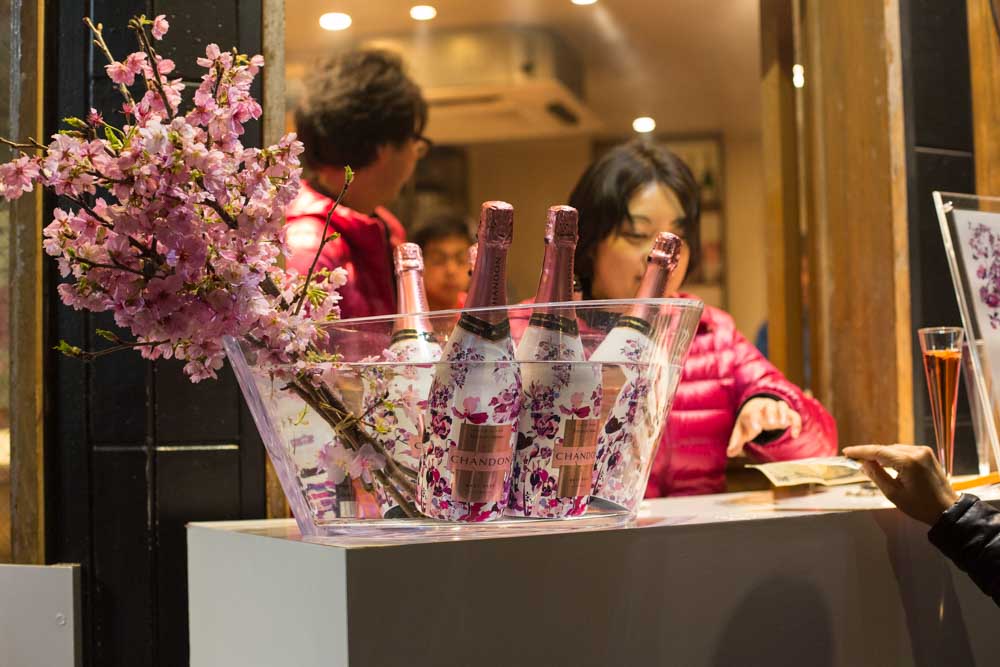
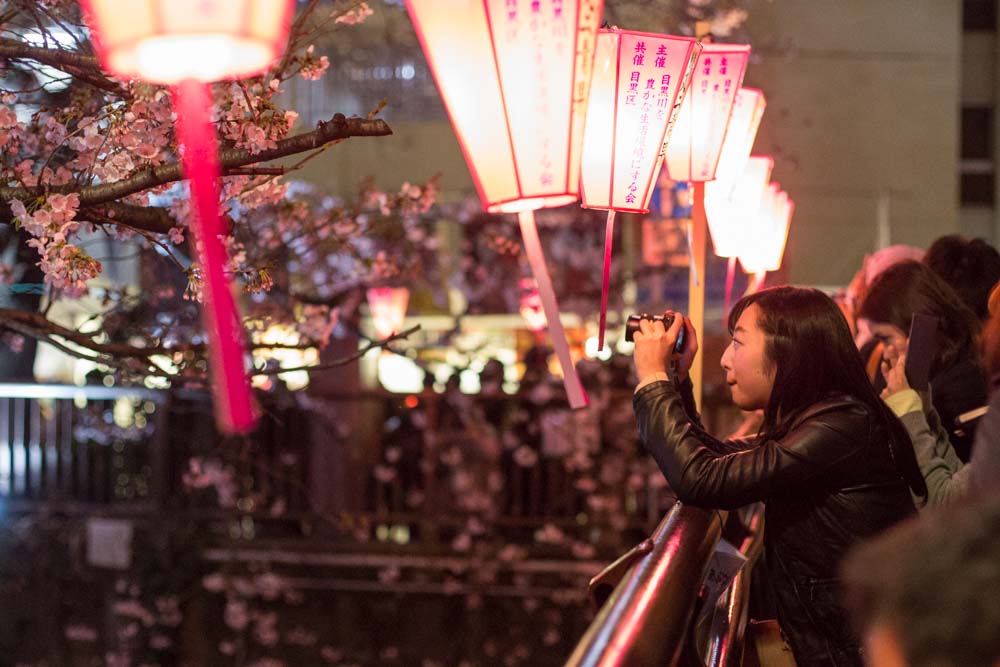
While almost every neighborhood in Tokyo has its own local park, certain spots offer a truly spectacular experience. Yoyogi Park and Ueno Park are the most popular for those seeking a festive atmosphere, as they allow for large groups to picnic with alcohol under the trees. Conversely, Tokyo’s landscaped gardens, such as Shinjuku Gyoen, offer a more serene environment where alcohol and sports are prohibited. For a nocturnal perspective, several locations offer “Light Ups” or night-time illuminations. The illuminations along the Meguro River are perhaps the most famous, where the festive spirit is heightened by street vendors selling pink champagne by the glass.
Top Cherry Blossom Spots in Tokyo
The following locations are the essential hubs for hanami. Be aware that these spots—particularly the public parks—can become incredibly crowded. To secure a good spot or to take photographs without the throngs of people, arriving in the early morning or visiting on a weekday is highly recommended.
Shinjuku Gyoen【新宿御苑】
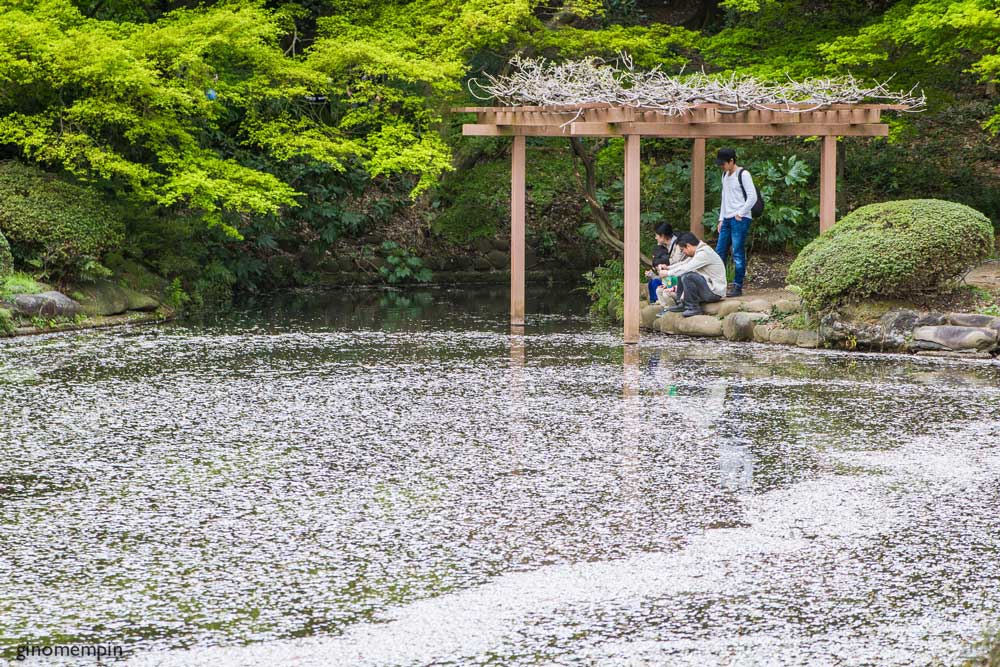
With over 1,000 trees representing 65 different varieties, Shinjuku Gyoen is arguably the most diverse sakura destination in the city. Because different species bloom at slightly different times, the mankai period here is more spread out than in other parks, often lasting well into April. It is a more refined experience compared to the rowdy parties of Ueno, perfect for those who want to appreciate the horticultural beauty of the trees.
Nakameguro【中目黒】
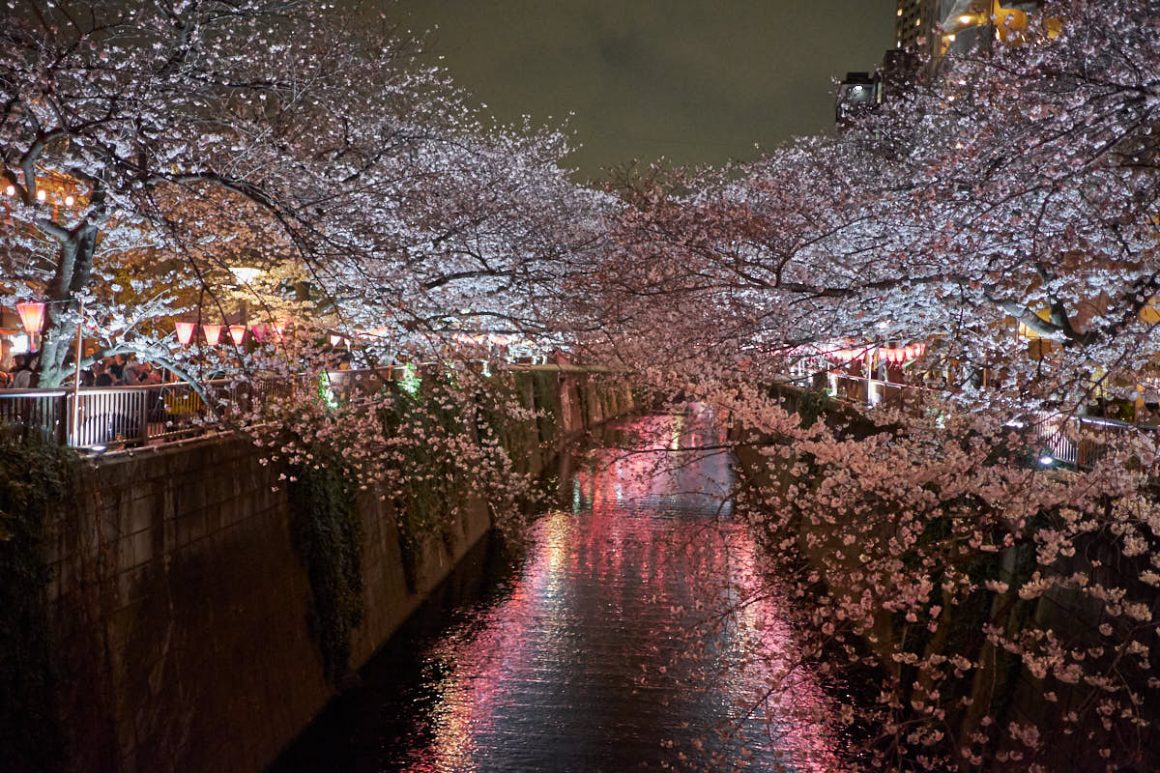
Approximately 800 trees line a four-kilometer stretch of the Meguro River, their branches leaning over the stone banks to form a pink tunnel above the water. While it is a beautiful walk during the day, the area truly comes alive after sunset. The night illuminations near Nakameguro Station draw massive crowds who come for the festive street food and the iconic pink sparkling wine. See here for more details and photographs.
Chidorigafuchi【千鳥ヶ淵】
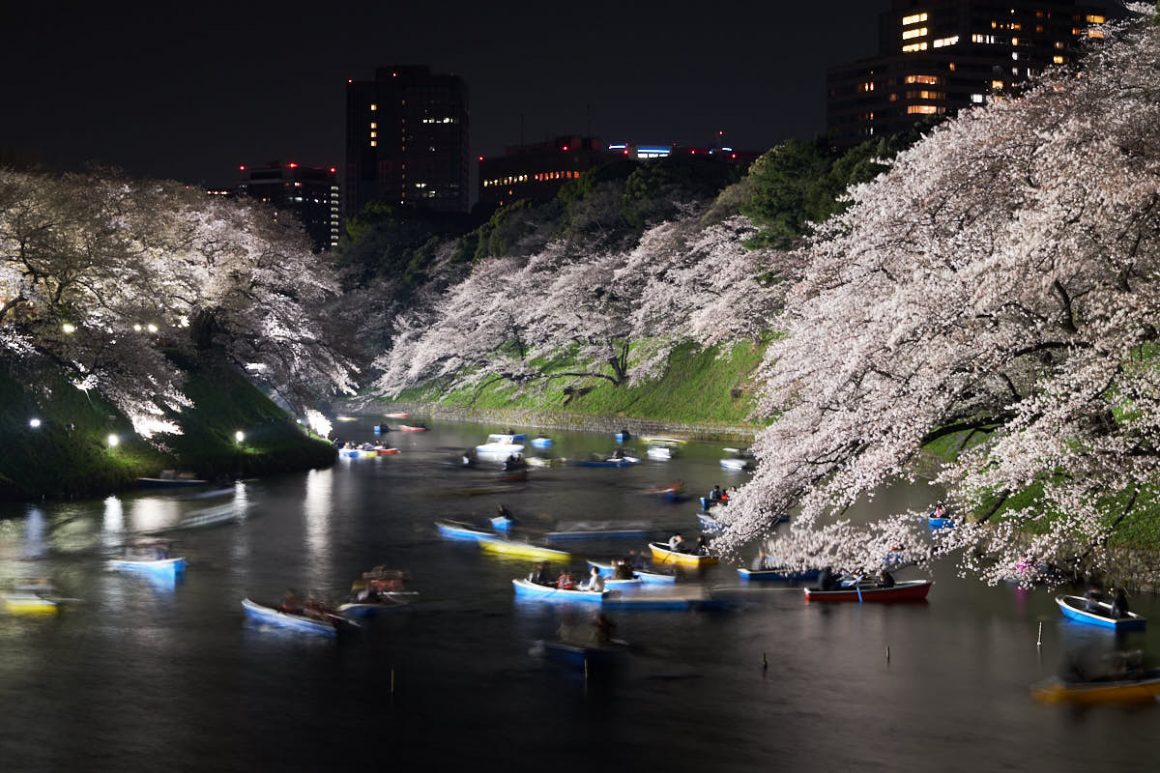
Located along the moat of the former Edo Castle (now the Imperial Palace), Chidorigafuchi offers one of Tokyo’s most picturesque views. Hundreds of trees drape over the water, and the most popular way to view them is from below. Couples often rent rowboats to navigate the moat, providing a perspective that is impossible to get from the crowded pedestrian paths above. See here for more details.
Asukayama Park【飛鳥山公園】
One of Tokyo’s oldest and most historic cherry blossom spots, Asukayama Park was designated as a public viewing area by the eighth Shogun, Tokugawa Yoshimune, in the 18th century. Located on a hill in Kita Ward, the park is home to over 600 trees and is particularly popular with families. A unique feature is the “Asukarugo,” a tiny, free monorail that takes visitors up the steep incline. From the top, you can enjoy the blossoms while watching the Toden Arakawa streetcars—Tokyo’s last surviving tram line—pass by below.
Inokashira Park【井の頭恩賜公園】
Located in the trendy Kichijoji neighborhood, Inokashira Park is a quintessential Tokyo hanami spot centered around a large pond. The cherry trees line the water’s edge, reflecting their pink petals in the surface. Like Chidorigafuchi, boat rentals are a major draw here, specifically the famous swan-shaped pedal boats. The park has a relaxed, community-focused vibe that makes it a favorite for local families and students.
Koishikawa Korakuen【小石川後楽園】
For those looking for a traditional Japanese garden setting, Koishikawa Korakuen is peerless. While it has fewer trees than the larger parks, it is home to several spectacular shidare-zakura (weeping cherry trees) that bloom slightly earlier than the common Somei Yoshino variety. The contrast of the pink blossoms against the garden’s historic stone bridges and ponds creates a scene that feels like a step back into the Edo period.
Ueno Park【上野恩賜公園】
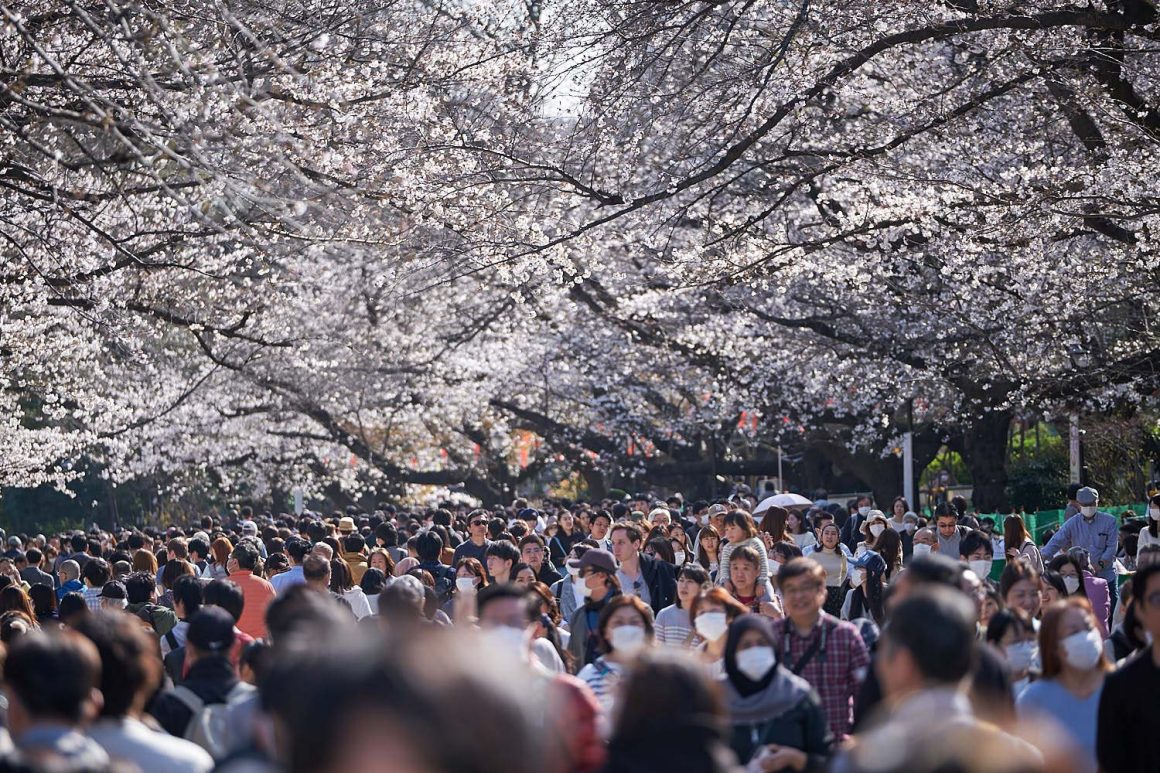
Ueno Park has been a center for cherry blossom viewing for centuries. It is the site of the city’s most boisterous hanami parties, with roughly 800 trees lining the central path. While the atmosphere is undeniably high-energy, the large crowds and barricades can make it feel a bit chaotic. However, the proximity to Tokyo’s top museums makes it a perfect cultural day trip. See here for more details.
Shiba Park & Zojoji Temple
For the definitive “Tokyo” photograph, head to Zojoji Temple in Shiba Park. The temple’s grand wooden gates and main hall are framed by cherry blossoms, with the orange-and-white Tokyo Tower soaring directly behind it. It offers a unique juxtaposition of the city’s ancient spiritual roots and its modern architectural ambitions.
Yoyogi Park【代々木公園】
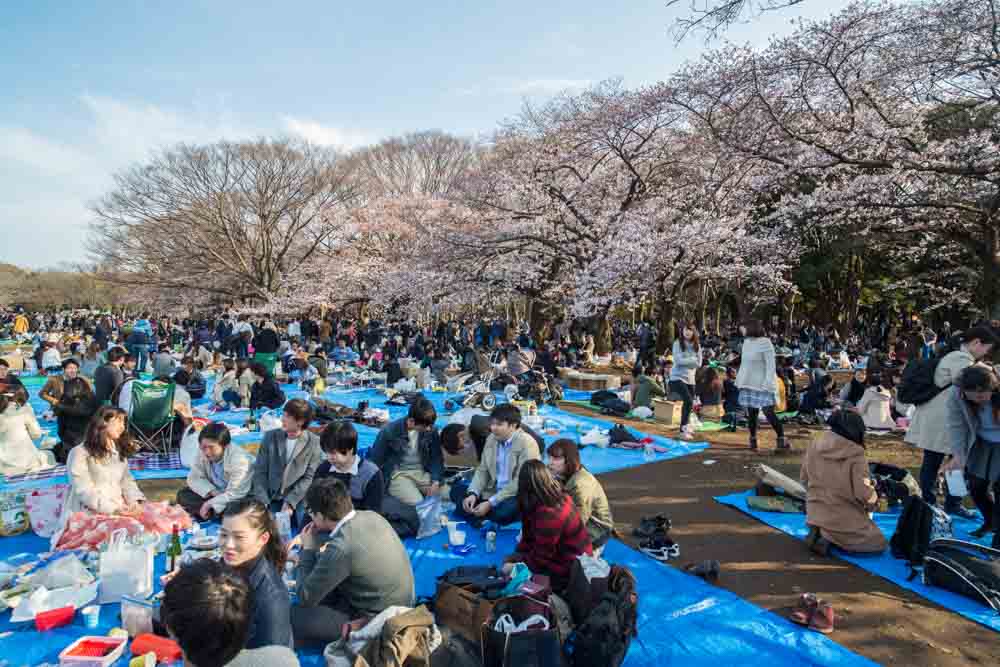
Yoyogi Park is the best choice for those who want to spread out a blue tarp and spend the whole day relaxing. Because it lacks the manicured garden rules of Shinjuku Gyoen, the atmosphere is much more casual. It’s a great place to see the diversity of Tokyo’s residents, from office workers in suits to musicians and performance artists, all enjoying the “lull” of the season together.
Sumida Park【墨田公園】
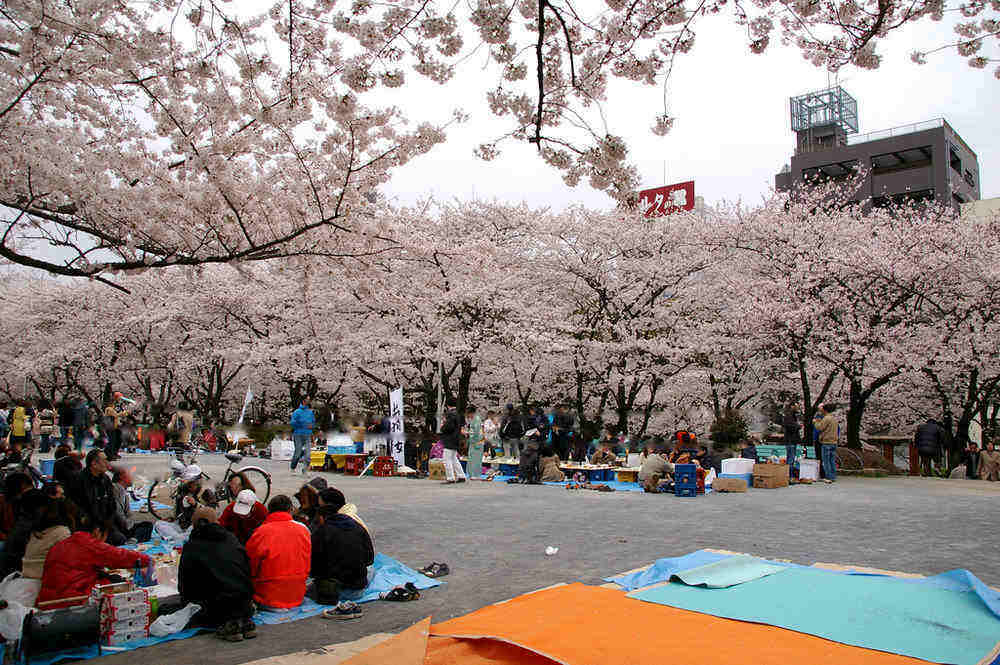
Stretching along both sides of the Sumida River near Asakusa, Sumida Park offers over 1,000 trees planted during the reign of Tokugawa Yoshimune. This is the premier spot for capturing the blossoms with the Tokyo Skytree in the background. Many visitors also opt for a cruise on a yakatabune (traditional dinner boat) to view the blossoms from the river itself. See here for more details.
Rikugien【六義園】
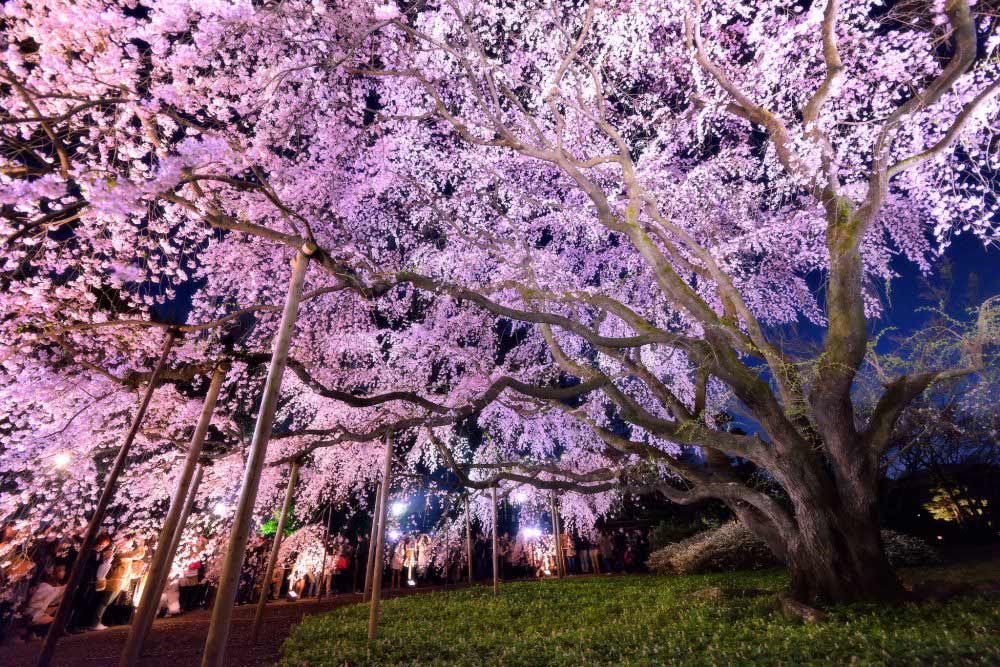
While Rikugien is best known for its autumn colors, its massive weeping cherry tree is a legend in its own right. The tree’s branches flow nearly to the ground, and during the peak season, the garden extends its hours for a dramatic night illumination. It is a quiet, contemplative spot that focuses on the singular beauty of a few extraordinary trees. See here for more details about the light-up.
Aoyama Cemetery【青山霊園】
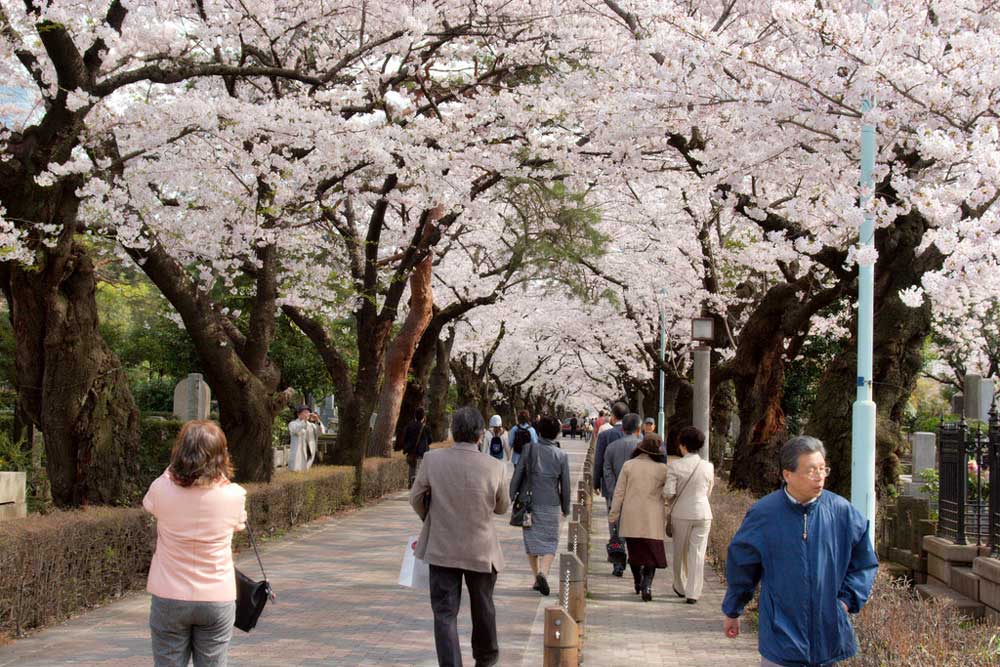
Though it may sound unusual, Aoyama Cemetery is one of the most beautiful and peaceful spots for hanami. A long road runs through the center of the grounds, lined with over 300 massive trees that form a thick pink canopy. It is a place of profound quiet, offering a respectful and serene way to appreciate the seasonal change away from the festival crowds.
Tokyo Midtown
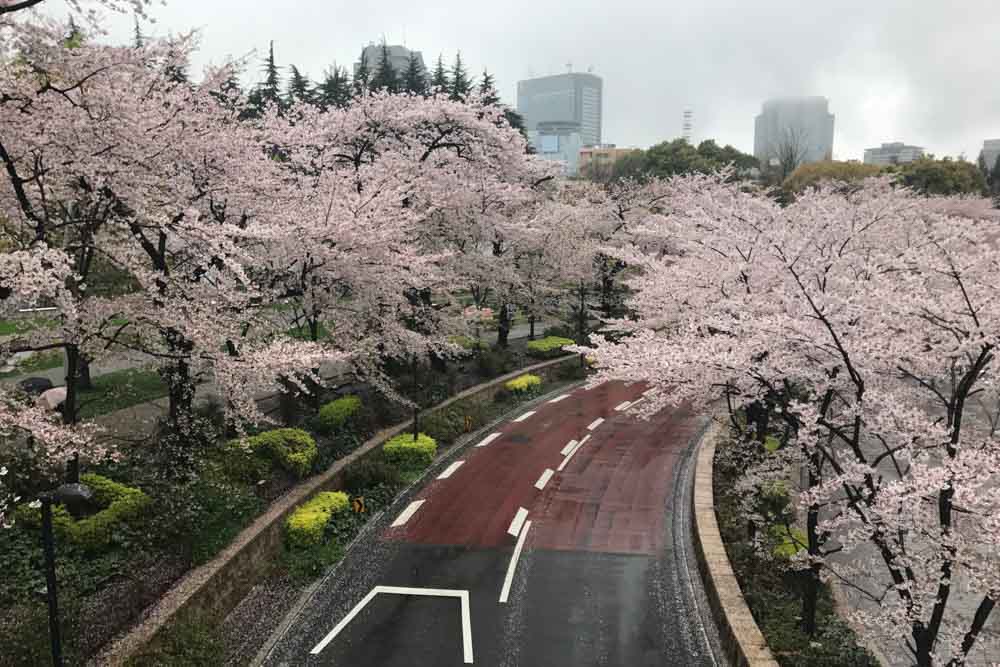
Tokyo Midtown provides a luxury hanami experience. The bridge at the back of the complex offers a “bird’s-eye” view of the cherry trees lining the road below. The illuminations here are particularly stylish, often using pink and white LEDs to enhance the natural colors of the blossoms. It is an ideal spot for those who want to combine flower viewing with high-end dining and shopping.
Shibuya: Sakura Dori
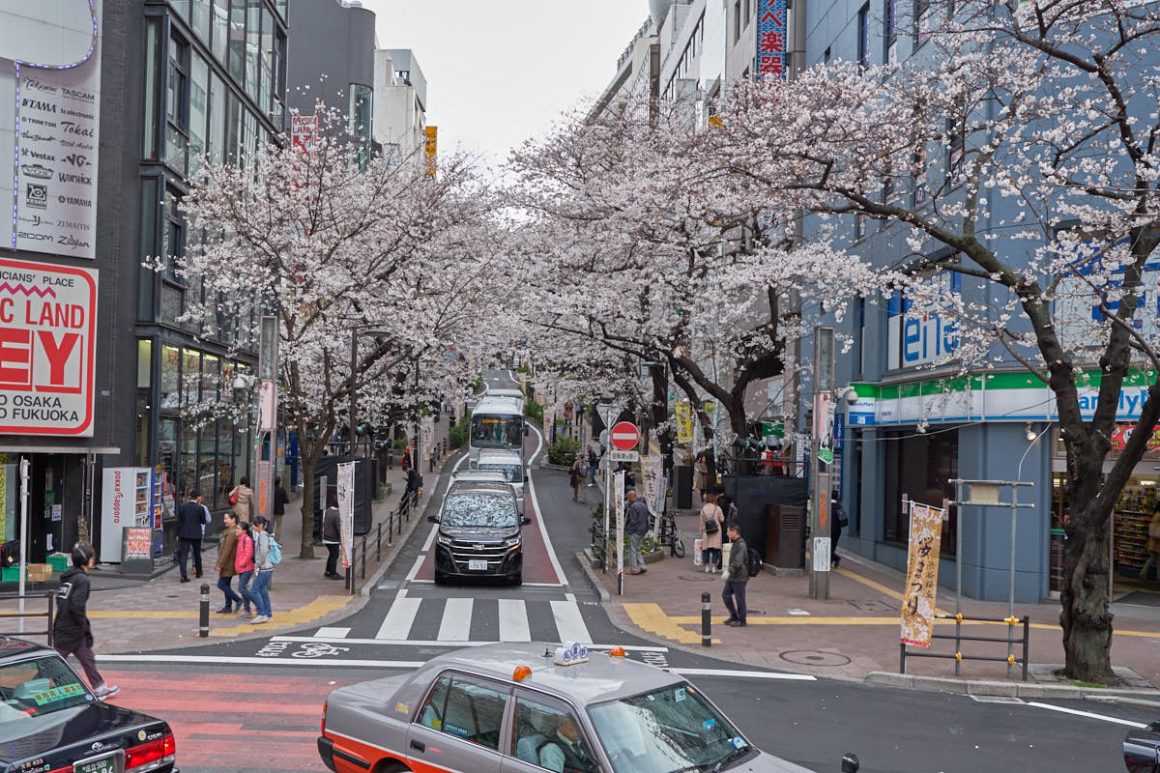
Just a three-minute walk from the Shibuya Station South Exit lies Sakura Dori, a hidden-in-plain-sight gem. This sloping street is lined with trees whose branches nearly touch across the road, creating an intimate tunnel of pink. It is a favorite for local office workers who gather at the small bars and eateries that line the street, making it one of the most accessible and atmospheric urban spots in the city.