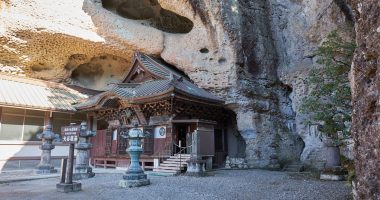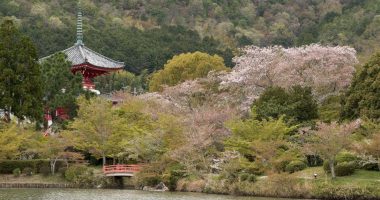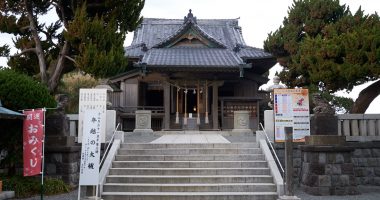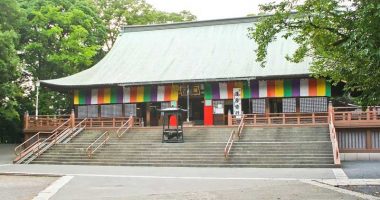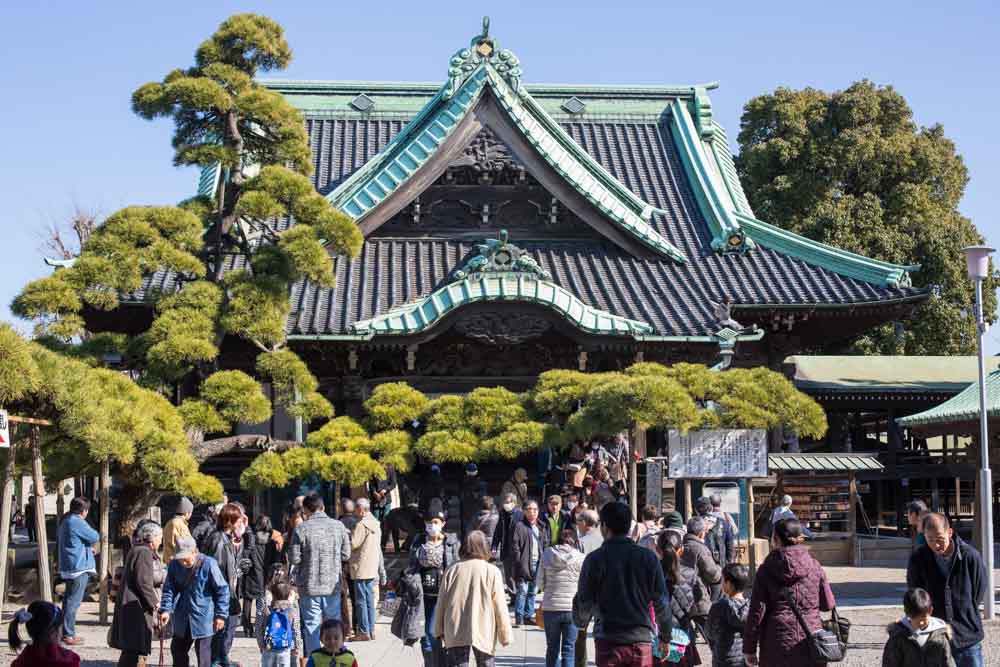

Founded in 1629, Taishakuten Daikyoji Temple (officially Kyoeizan Daikyoji) is the spiritual anchor of the Shibamata district. Located at the end of a bustling, nostalgia-filled shopping street, the temple gained national fame through the Otoko wa Tsurai yo film series, but its cultural value extends far beyond its cinematic associations. Recognized as one of the “100 Landscapes of Heisei,” the temple is a rare survivor of pre-modern craftsmanship, offering a profound sense of the shitamachi (old downtown) devotion that once defined the northern reaches of the capital. Don’t miss the Japanese garden (suikeien) located at the back of the temple, as well as the wood carvings on the exterior walls of the prayer hall.
The Sculptural Masterpiece: The Wood Carving Gallery
While the temple’s Nitenmon Gate is an impressive feat of architecture, the true treasure lies within the Wood Carving Gallery at the rear of the main hall. The exterior walls of the Taishakudo are encased in glass to protect a series of incredibly intricate wood carvings. These panels, completed by master craftsmen over several decades starting in the late Taisho era, depict ten scenes from the Lotus Sutra. The depth and detail are staggering; individual figures, swirling clouds, and mythical creatures are carved with a three-dimensional precision that makes the wood appear almost fluid.
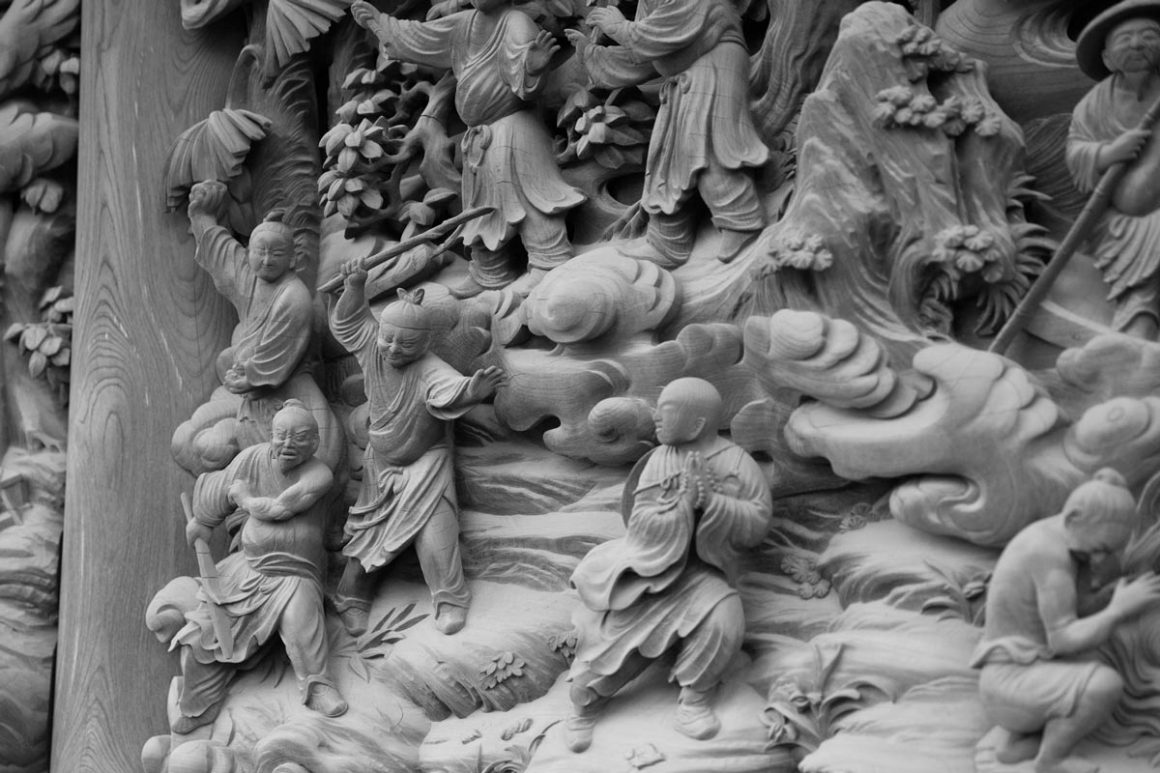
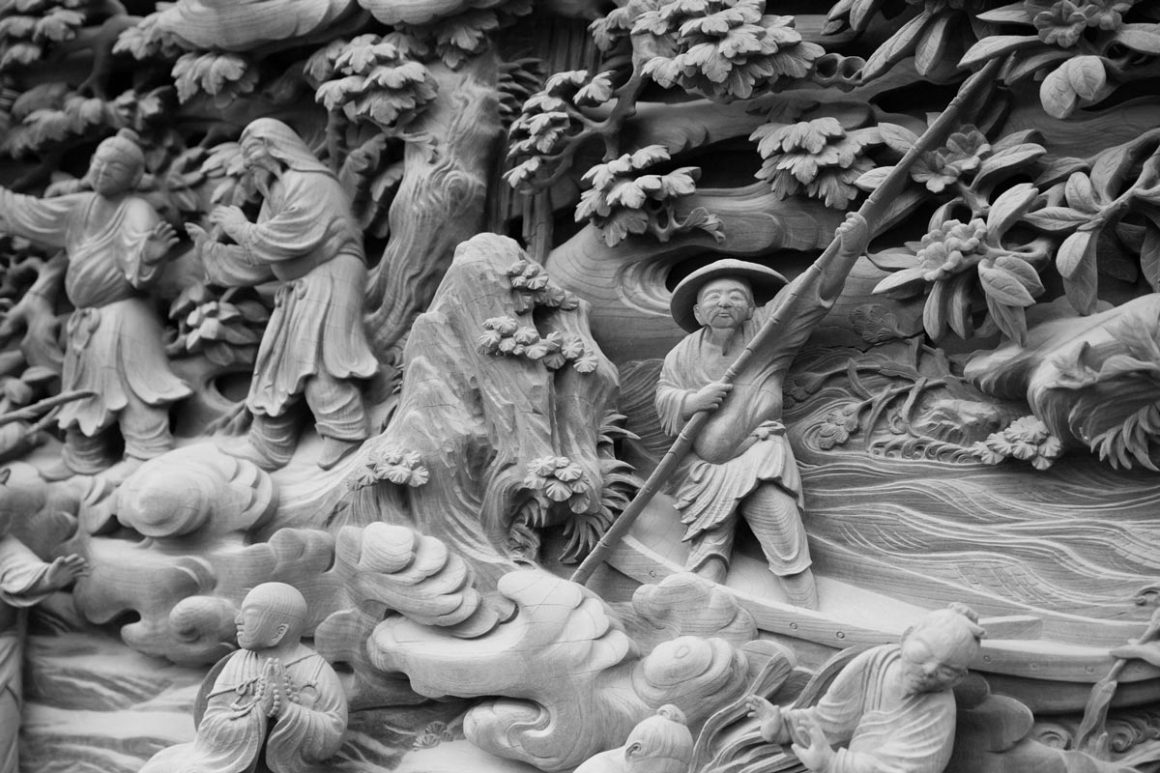
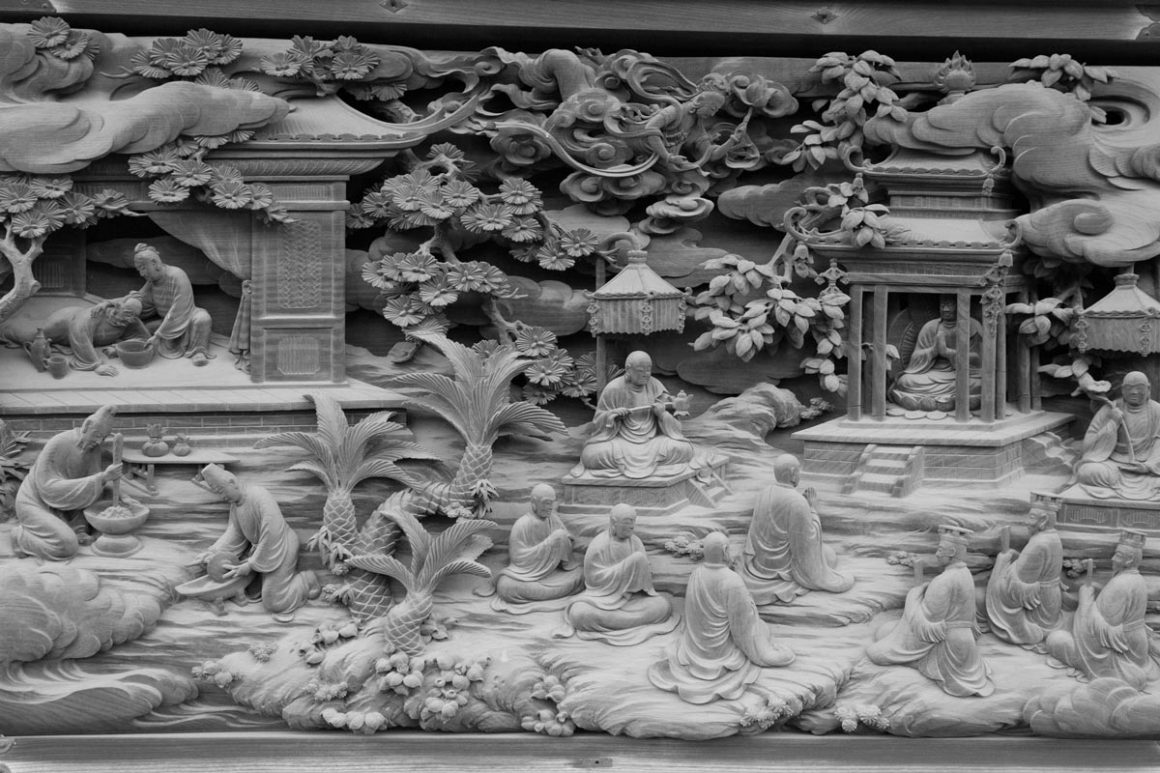
This gallery is widely considered one of the finest examples of late-period Buddhist wood carving in Japan. Visitors can walk along a raised corridor that provides an up-close view of the panels, allowing for an appreciation of the minute textures and facial expressions of the carved deities. It is an extraordinary display of patience and artistic mastery that has earned the temple its reputation as a “sculpture gallery” in its own right.
The Suikeien Garden
Behind the ornate halls lies the Suikeien, a traditional circular stroll garden that offers a quiet sanctuary from the noise of the shopping street. The garden is designed to be viewed from an elevated wooden walkway that encircles the central pond and waterfall. This design allows visitors to appreciate the landscape from multiple angles without stepping onto the mossy ground. The meticulously pruned pines, including the famous Zuiryu-no-matsu (Auspicious Dragon Pine) near the temple entrance, complement the Zen-like stillness of the garden. Whether you are there for the religious history, the cinematic nostalgia, or the sheer artistic brilliance of the woodwork, Taishakuten Daikyoji remains an essential pillar of Tokyo’s cultural heritage.
| Visitor Information | |
|---|---|
| Address | 7-10-3 Shibamata, Katsushika-ku, Tokyo 125-0052 (Google Maps) |
| Opening Hours | 9:00 AM – 4:00 PM (Garden and Carving Gallery) Closed: Open daily |
| Price | Grounds: Free / Garden and Carving Gallery: ¥400 |
| Website | Visit Website |
| Access | ||
|---|---|---|
| Station | Line(s) | Access Details |
| Shibamata Station | Keisei Kanamachi Line | 5-minute walk via the main shopping approach |
| Shin-Shibamata Station | Hokuso Line | 12-minute walk |