Hamarikyu Gardens
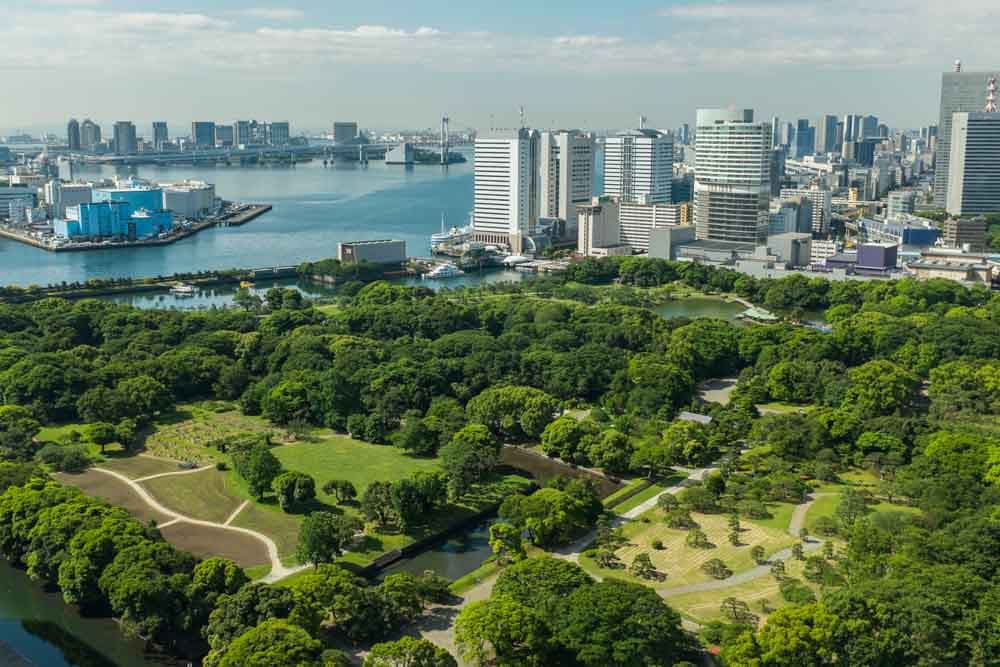
Hamarikyu Gardens (浜離宮恩賜庭園) lie on land that was reclaimed in the late 17th century by Tokugawa Tsunashige. But it was his son, Ienobu, who renovated and landscaped the area into something closer to what we see today. Originally serving as a private villa and duck-hunting ground for the Tokugawa Shogunate, the garden stands today as a resolute guardian of Edo-period aesthetics, offering a sophisticated “lull” amidst the towering glass and steel of the modern Shiodome district.
The Shio-iri Pond and the 300-Year Pine
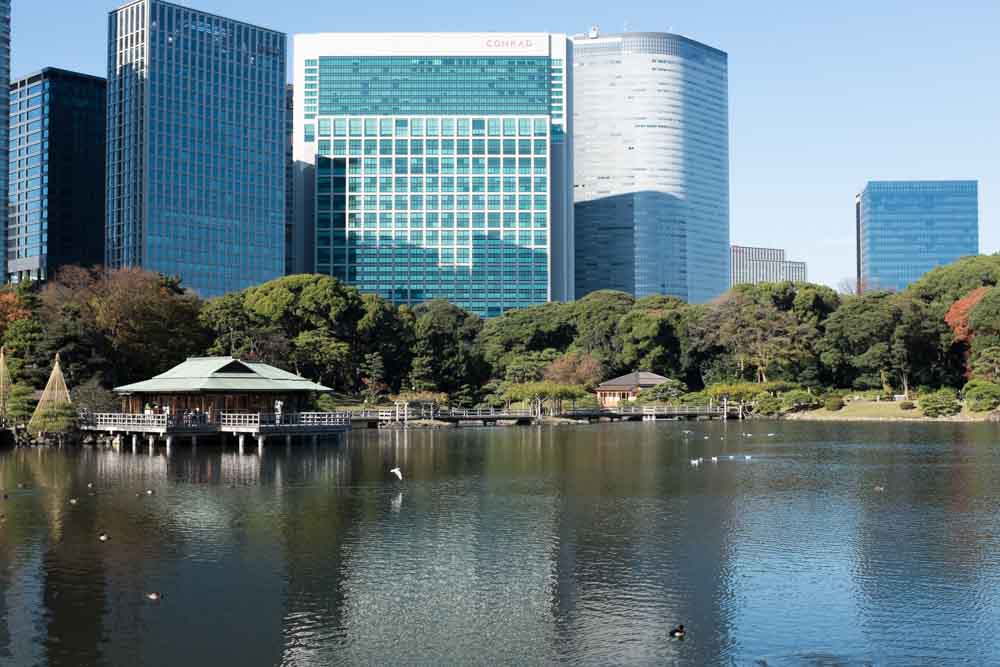
The most distinctive feature of Hamarikyu is the Shio-iri-no-ike (Tidal Pond). It is the only remaining seawater pond in Tokyo that still draws water directly from the sea, allowing the water level to rise and fall with the tides of Tokyo Bay. This creates a dynamic “vibe” where the scenery subtly shifts throughout the day. Near the main entrance stands another marvel: a massive 300-year-old pine tree. Planted by Ienobu to commemorate the garden’s renovation, its thick, low-hanging branches are meticulously supported by wooden poles, showcasing the peak of Japanese horticultural craft.
In the center of the tidal pond sits the Nakajima No Ochaya teahouse, connected to the shore by elegant cypress-wood bridges. Visitors can enjoy matcha and traditional sweets while looking out over the water, a perspective that highlights the striking juxtaposition between the ancient garden and the futuristic skyscrapers of the city skyline. The grounds also contain two historical duck-hunting sites (kamoba), complete with small trenches and blinds that were used by the Shoguns and their guests for sport, further emphasizing the garden’s history as a place of elite recreation.
A Legacy of Imperial Diplomacy
The stone house that once stood in the gardens was used to entertain foreign dignitaries before the completion of the Rokumeikan in 1883. Guests included Germany’s Crown Prince Friedrich III and U.S. President Ulysses S. Grant. It was here that Grant famously met with Emperor Meiji to discuss Japan’s modernization, a pivotal moment in the nation’s diplomatic history. Under the orders of the Allied Headquarters following the war, the grounds were donated to Tokyo City in 1945 and the following year the garden were opened to the public. Since then, it has been designated as a Special Historic Site and a Special Place of Scenic Beauty.
Exploring the gardens today provides a multi-layered experience, from the vibrant flower fields that bloom with cosmos and rapeseed to the ancient stone moats that once protected the Shogunal retreat. The garden also serves as a water bus stop, allowing travelers to arrive or depart via the Sumida River, offering a unique approach that mimics the way the Shoguns themselves would have entered the villa. Whether you are there for the historical significance or the peaceful atmosphere, Hamarikyu remains one of the most high-value cultural destinations in the heart of Tokyo.
| Visitor Information | |
|---|---|
| Address | 1-1 Hamarikyuteien, Chuo-ku, Tokyo 104-0046 (Google Maps) |
| Opening Hours | 9:00 AM – 5:00 PM (Last entry 4:30 PM) |
| Price | ¥300 (approx.) |
| Website | Official Website |
| Access | ||
|---|---|---|
| Station | Line(s) | Details |
| Shiodome Station | Oedo / Yurikamome Lines | 7-minute walk from the Shiodome Exit. |
| Tsukijishijo Station | Oedo Line | 7-minute walk from Exit A1. |
| Shimbashi Station | JR / Subway / Yurikamome | 12-minute walk. |