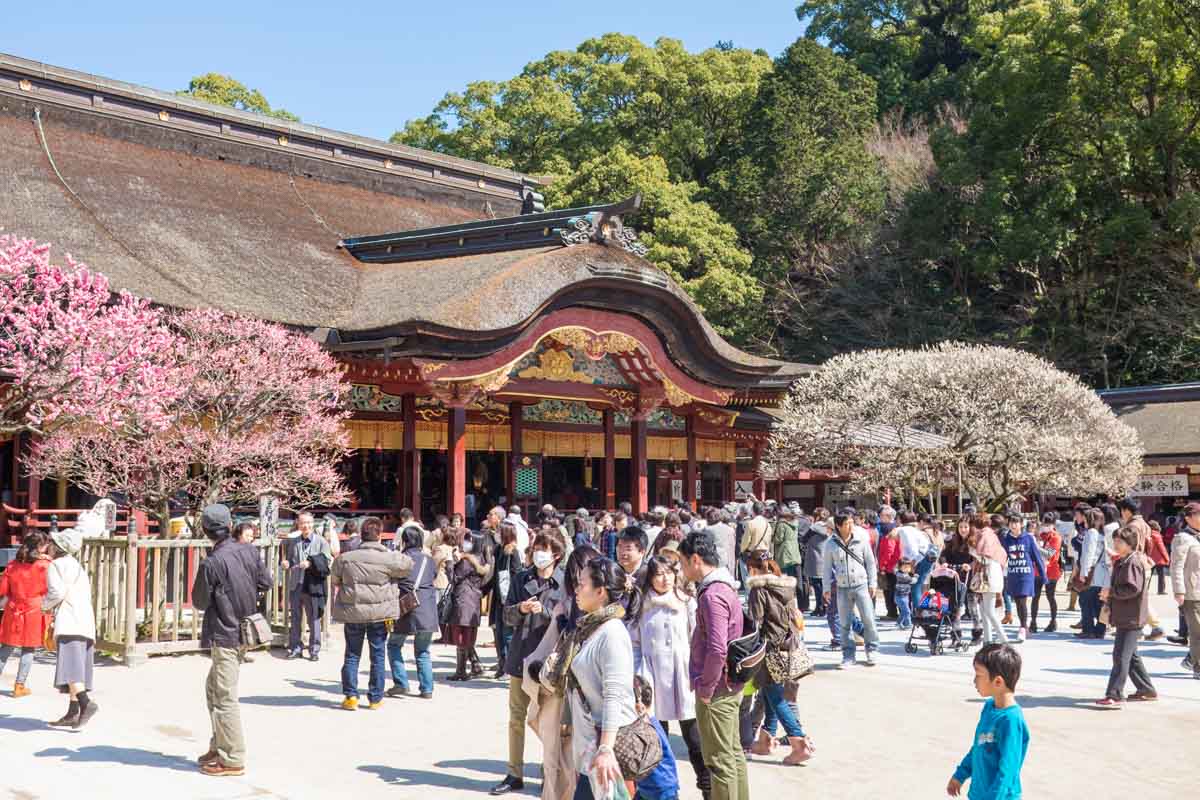
Dazaifu Tenmangu
Dazaifu Tenmangu Shrine (大宰府天満宮) is one of Japan’s most significant Shinto landmarks. It enshrines the spirit of Sugawara no Michizane, a brilliant Heian-period scholar and poet who is today worshipped as Tenjin, the god of learning. While there are over 14,000 Tenmangu shrines across the country, this Fukuoka site is of paramount importance because it was built directly over Michizane’s grave following his death in 903 CE.
Michizane was born into a prestigious family of scholars in Kyoto and displayed immense talent from childhood. However, political rivalry at the imperial court led to his unfair demotion and exile to a minor post in Dazaifu in 901. Despite his displacement, he remained dedicated to his studies until his passing two years later. After his death, Kyoto was struck by a series of devastating plagues and lightning strikes, which the court interpreted as divine retribution for his mistreatment. To appease his spirit, his titles were posthumously restored, and this grand shrine was established in his honor.
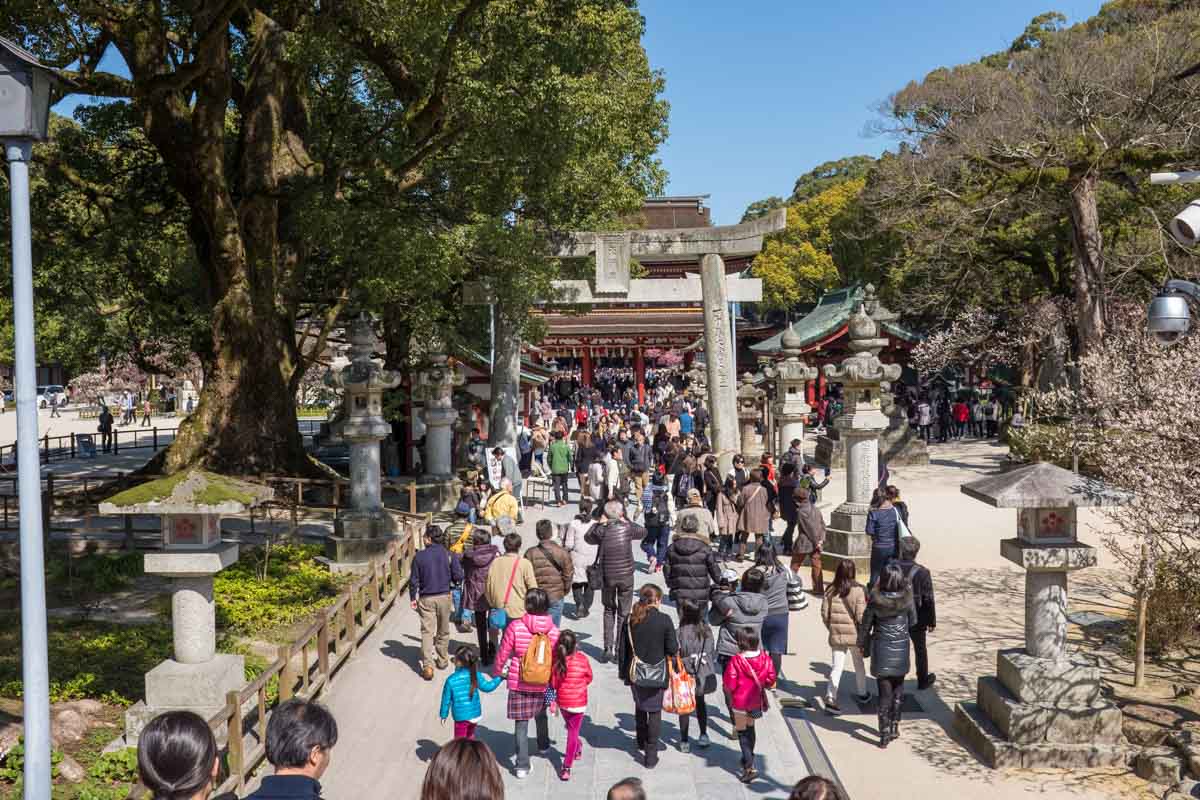
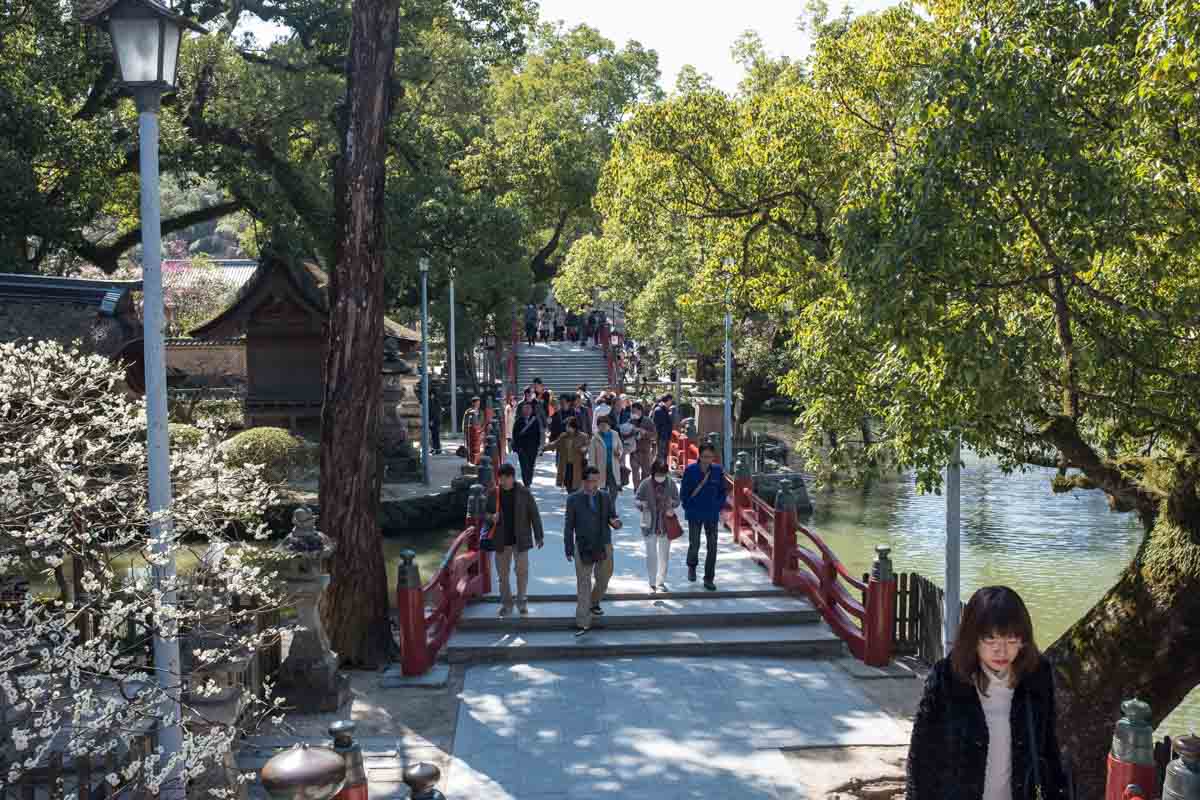
The shrine is world-famous for its 6,000 plum trees, particularly the Tobiume (Flying Plum Tree) standing next to the main hall. Legend says this tree was so loyal that it uprooted itself and flew from Kyoto to Dazaifu to be with Michizane. The grounds also feature the Taiko-bashi—three vermilion arched bridges spanning a heart-shaped pond. Each bridge represents the past, present, and future; crossing them is a symbolic act of purification before reaching the sacred precinct.
The approach to the shrine is a vibrant experience, featuring a 200-meter street lined with teahouses and stalls selling Umegae Mochi—a toasted rice cake filled with sweet bean paste and stamped with a plum blossom. Visitors should also look for the bronze bull statues; it is said that rubbing their heads will grant the visitor Michizane’s wisdom, a ritual that makes the shrine a popular destination for students during exam season.
| Visitor Information | |
|---|---|
| Address | 4-7-1 Saifu, Dazaifu, Fukuoka 818-0117 (Google Maps) |
| Opening Hours | 6:00 AM – 7:00 PM (Varies slightly by season; open 24 hours on New Year’s) |
| Price | Grounds: Free / Treasure House: ¥500 |
| Website | Visit Website |
| Access | ||
|---|---|---|
| Station / Stop | Line / Bus | Access Details |
| Dazaifu Station | Nishitetsu Dazaifu Line | A 5-minute walk through the Omotesando shopping street. |
| Nishitetsu Fukuoka (Tenjin) | Nishitetsu Omuta Line | Take an express train to Futsukaichi, then transfer to the Dazaifu Line (approx. 30 mins). |
| Hakata Station | “Tabito” Bus | Direct bus from Hakata Bus Terminal (approx. 40 mins). |