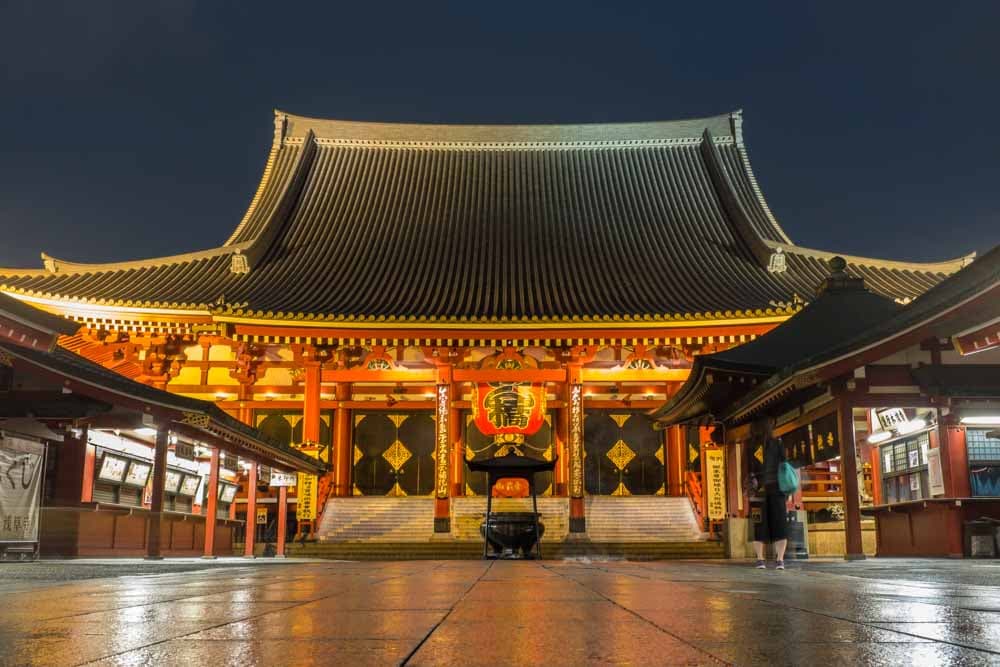
Sensoji Temple
The legend of Sensoji Temple (浅草寺) begins in the year 628 CE, when two brothers, Hinokuma Hamanari and Takenari, discovered a small golden statue at the bottom of the Sumida River while out fishing. Despite attempting to return the figure to the water, it continually reappeared in their nets. Upon bringing the object home, the village headman, Hajino Nakatomo, recognized it as a representation of Kannon, the Buddhist deity of mercy. Moved by the discovery, he entered the priesthood and transformed his own residence into a modest temple to house the icon. This humble origin marked the birth of Tokyo’s oldest and most significant Buddhist site, which today serves as the spiritual heart of the Asakusa district.
The Ritualistic Approach: Kaminarimon to the Hondo
While the temple is the undeniable centerpiece of the neighborhood, the full experience requires approaching from the south via the Kaminarimon (Thunder Gate). Guarded by the fierce statues of the gods of wind and thunder, the gate features a massive, iconic red lantern that serves as the threshold between the mundane city and the sacred grounds. Beyond the gate lies Nakamise-dori, a 250-meter shopping street that has provided snacks and souvenirs to pilgrims for centuries. Walking this path is a sensory experience defined by the scent of fresh ningyo-yaki cakes and the vibrant array of traditional crafts. The street culminates at the Hozomon Gate, a two-story structure that houses the temple’s treasures and provides a grand frame for the main hall beyond.
The Hondo (Main Hall) is where the legendary Kannon statue is said to be enshrined, though it remains hidden from public view. Visitors traditionally gather at the jokoro, a massive bronze incense burner positioned in front of the hall. It is customary to waft the sacred smoke over oneself, as it is believed to have healing properties and provide spiritual clarity. Inside the hall, the atmosphere is heavy with the sound of chanting and the ringing of bells as devotees offer prayers and coins. The current structure, rebuilt in 1958 after the previous hall was lost to the firebombing of World War II, stands as a symbol of the city’s resilience and its enduring devotion to the “Asakusa Kannon.”
Architectural Icons and Spiritual Traditions
To the west of the main hall stands the Five-storied Pagoda, a soaring 53-meter structure that is particularly striking when illuminated at night. Rebuilt to resemble its Edo-period predecessor, the pagoda contains a fragment of Buddha’s ashes and remains one of the most recognizable silhouettes in northern Tokyo. The temple grounds also feature various sub-temples, statues, and a small, meticulously maintained Japanese garden. For many visitors, a highlight is the omikuji (fortune-telling) stalls, where for a small donation, one can receive a slip of paper predicting their future. Whether you are visiting for the historical grandeur or the vibrant street life of the surrounding alleys, Sensoji Temple remains an indispensable pillar of Japanese cultural identity.
| Visitor Information | |
|---|---|
| Address | 2-3-1 Asakusa, Taito-ku, Tokyo 111-0032 (Google Maps) |
| Opening Hours | 6:00 AM – 5:00 PM (Oct–Mar 6:30 AM start / Grounds open 24 hours) Closed: Open daily |
| Price | Free admission |
| Website | Visit Website |
| Access | ||
|---|---|---|
| Station | Line(s) | Access Details |
| Asakusa Station | Ginza, Asakusa, Tobu Skytree | 1-minute walk from the station exits |
| Asakusa Station | Tsukuba Express | 10-minute walk |