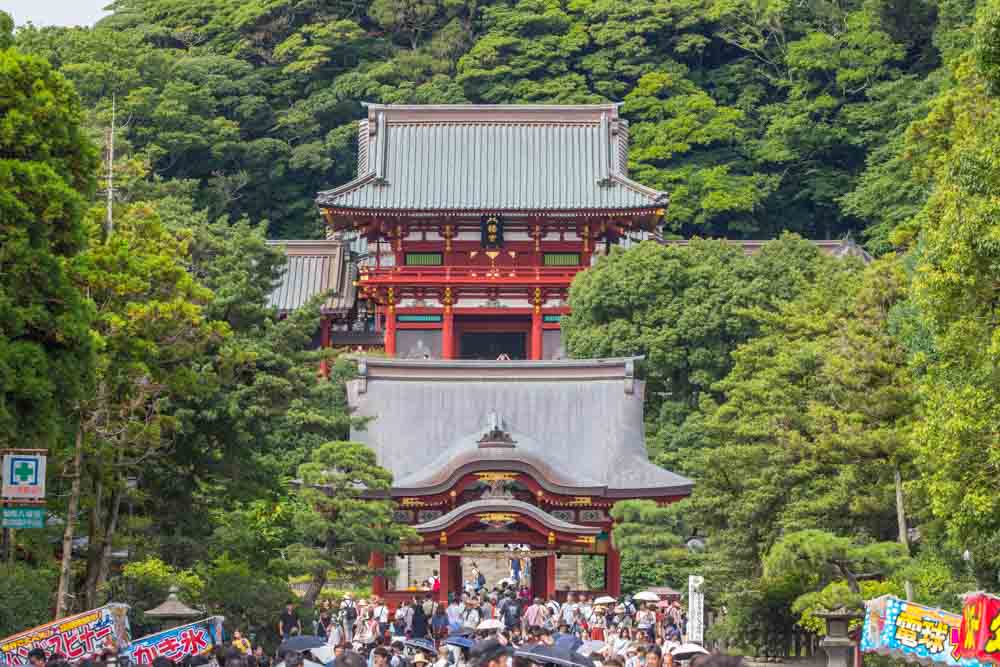
Tsurugaoka Hachimangu
Tsurugaoka Hachimangu (鶴岡八幡宮) is the physical and spiritual anchor of Kamakura. When Minamoto no Yoritomo established the Kamakura Shogunate in 1185, he meticulously designed the city’s layout to radiate from this very point. Originally founded by his ancestor Yoriyoshi in 1063 closer to the coast, Yoritomo moved the shrine to its current prominent hillside position in 1180 to serve as the divine guardian of the new military capital. It enshrines the spirit of Hachiman, the god of war and protector of the Minamoto clan, marking the transition of power from the imperial court in Kyoto to the samurai class in the east.
The approach to the shrine is arguably the most grand in all of Japan. Starting near the coast, the Wakamiya Oji avenue leads visitors through three massive torii gates. The central, raised pedestrian path, known as Dankazura, is lined with hundreds of cherry blossom trees that create a breathtaking pink tunnel in early spring. As you enter the grounds, you’ll cross over two ponds: the Genji Pond (featuring three islands, symbolizing life) and the Heike Pond (with four islands, a play on the Japanese word for “death,” shi). This was Yoritomo’s subtle, permanent way of expressing his distaste for the rival Heike clan.

At the base of the grand staircase stands the Maiden, a lower worship hall used for weddings and traditional dance performances. Ascending the 61 stone steps brings you to the Hongu (Senior Shrine), a stunning example of vivid Momoyama-style architecture. Once at the top, take a moment to look back; the view provides a perfectly straight line of sight down the city’s main axis all the way to the Yuigahama shore. The grounds also house the Kamakura Museum of National Treasures and several smaller sub-shrines dedicated to everything from academic success to safe childbirth.
Note: Keep an eye out for the “reborn” ginkgo tree to the left of the stairs. The original 1,000-year-old giant—famed as the hiding spot of an assassin who killed the third Shogun—fell in a 2010 storm. New shoots from the original roots are now several meters tall, standing as a symbol of the shrine’s resilience.
| Visitor Information | |
|---|---|
| Address | 2-1-31 Yukinoshita, Kamakura, Kanagawa 248-8588 (Google Maps) |
| Opening Hours | 5:00 AM – 9:00 PM (Oct–Mar: Opens at 6:00 AM) |
| Price | Grounds: Free / Museum: ¥600 |
| Website | Visit Website |
| Access | ||
|---|---|---|
| Station / Stop | Line / Transport | Access Details |
| Kamakura Station | JR Yokosuka / Enoden | A 10-minute walk through Komachi Dori or Wakamiya Oji. |
| Hachimangu-mae | Keikyu Bus / Enoden Bus | Frequent buses from Kamakura Station drop you right at the entrance. |