
At first glance sumo is nothing if not bizarre: overweight men dressed in an enormous thong pushing each other inside a small ring where the pre-ceremony is usually longer than the actual fight. However, delve a little deeper and you will find a unique and technical sport with a rich history and wrestlers whose rigorous training regime and dedication cannot fail to impress.
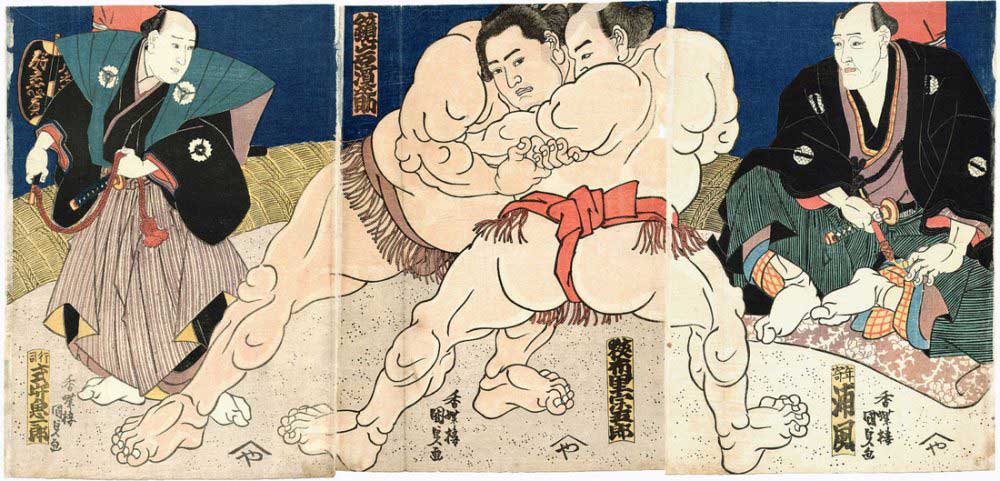
Sumo is said to have its roots in a Shinto ritual dance where the most powerful men displayed their strength in front of the kami (gods or spirits) as a sign of respect and gratitude to bring in a good harvest. Later it was used as a way to compare strength and determine those fighters most adept in hand-to-hand combat. It wasn’t until the Edo period that professional sumo wrestlers emerged from the ranks of amateurs and regular competitions began to take place. The best fighters began to gain a celebrity-like status and sumo’s popularity quickly spread amongst the masses—the true beginning of the sport as it is known today.
The sumo wrestlers are known as rikishi in Japanese (the two characters of the kanji meaning “strength” and “warrior”). There are around 650 rikishi in the six divisions of sumo:
- maku-uchi
- juryo
- makushita
- sandame
- jonidan
- jonokuchi
The maku-uchi (the 42 best rikishi) naturally receive the most media attention. At the top of this pile sits the yokozuna, the grand champion. This position is typically achieved by winning two honbasho (major tournaments that determine rankings) in a row. There are six honbasho annually, one on each odd month of the year, and they last for 15 days. Throughout the entire history of the sport, there have only been 73 yokozuna, which provides an idea of the extreme difficulty of achieving this rank. Rikishi from the top two divisions (known collectively as sekitori) wrestle every day of the major tournaments.
Sumo is unique in that the pre-match ceremony and pageantry can be just as fascinating as the bout itself. The day before each major tournament the dohyo—the 4.55 metre diameter clay platform housing the ring in which the bout takes place—is “cleansed” to pray for the safety of the rikishi. This involves placing salt, cleansed rice, dried chestnut, dried kelp, dried cuttlefish, and nutmeg berry in a small hole made in the middle of the ring as offerings to the gods.
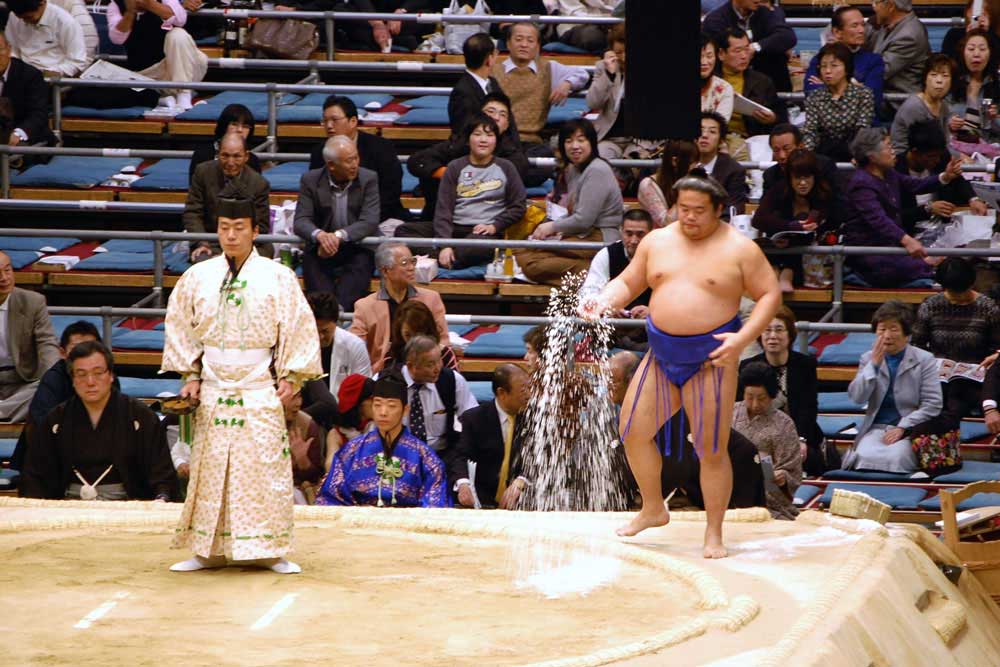
The rikishi step onto the dohyō from the east and west, the east side rikishi entering first. They enter the ring and perform a ritual called shiko—the leg raising and stomping that is likely the act most commonly associated with the sport internationally. This is more than just warming up: the clapping of hands is to attract the attention of the gods, the raising of arms to the sky is to show they carry no weapons, and the leg raising and stomping is intended to crush any lingering evil spirits.
With the shiko finished the rikishi leave the circle and cleanse themselves. The first ritual is called chikara-mizu (literally “strength water”), where each rikishi receives water from the opponent they defeated last. Like the cleansing process at shrines and temples, each rikishi takes a handful of water and swills it in their mouth. Next, they take a handful of kiyome-no-shio (cleansing salt) and throw it over the ring before entering.
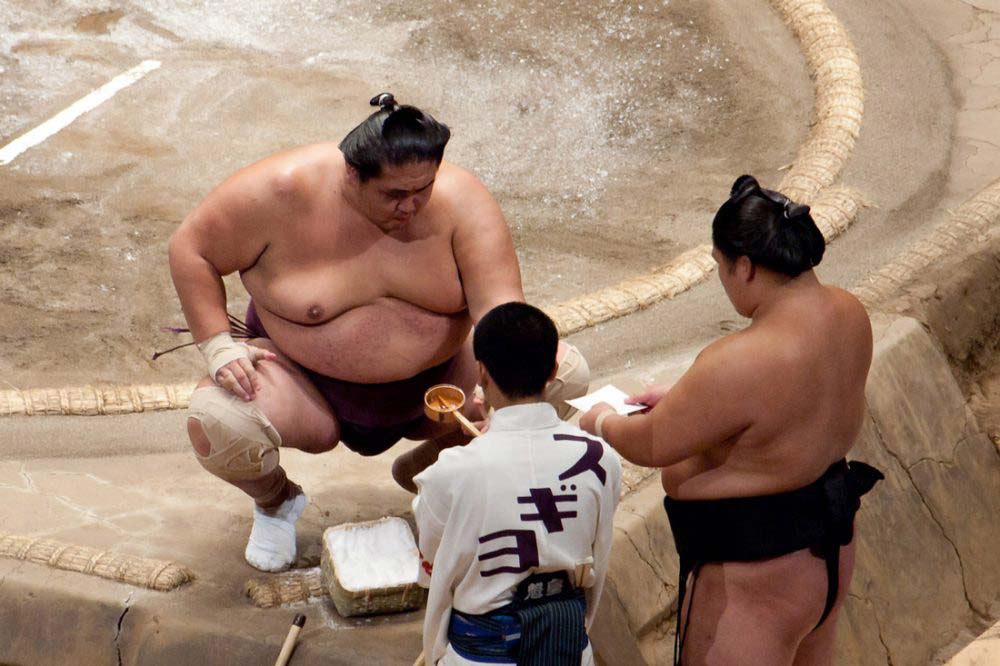
Once the referee (gyōji) gives the signal for the bout to begin, each rikishi crouches behind a white line called the shikirisen on their half of the ring. The fight begins when both rikishi have clenched fists resting on or behind their shikirisen.
Because the rikishi ultimately decide the start of the bout, the moments before can be incredibly tense. They often crouch for several seconds, waiting to see what their opponent does, before standing again to recompose themselves. They may exit the ring to their respective corners, but if they do so, they must once again cleanse the ring with salt before re-entering. One bout decides the victor, and as the initial collision often determines the winner, the pre-bout deliberations are frequently the most intense moments of the fight.
Officially there are 82 techniques called kimari-te (“deciding hand”) by which a rikishi can win the match. Once a winner emerges, both rikishi stand at either side of the ring and bow to each other without showing emotion, before the defeated rikishi leaves and the gyōji officially declares the winner.
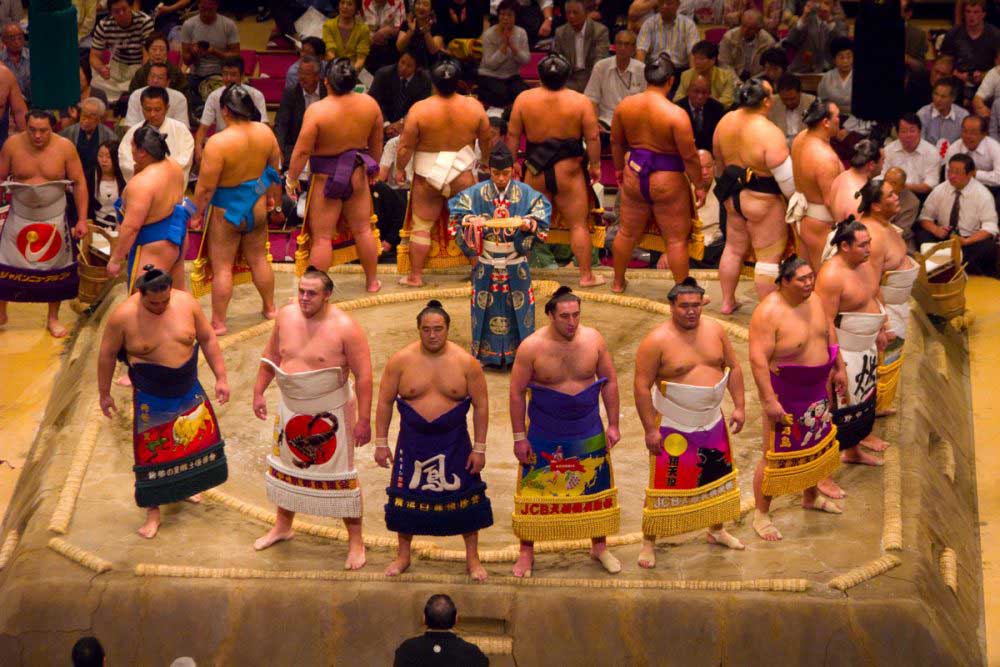
Each day of the competition starts with the lower-ranking bouts before moving onto the juryo and maku-uchi matches. Each round of bouts is preceded by a special procession called dohyō-iri where the rikishi stand outside the circle of the dohyō wearing their mawashi (silk loincloth) and perform a ritual to show they hide no weapons and to symbolize the cleansing process.
Yokozuna get their own ring-entering ritual, a more elaborate and prolonged version of the shiko, performed with a gyōji and two other rikishi present on the dohyō.
The Rules
The basic rule is simple: if any part of your body other than your feet touches the ground, or you step outside the straw ring, the match is over and your opponent is declared the winner. During the bout, the following acts are prohibited:
- Hair pulling
- Eye gouging
- Hitting with closed fists (slapping is permissible)
- Choking (thrusting with open palms at the throat is allowed)
- Grabbing the crotch area of an opponent’s mawashi
There are no weight classes. Agility can be just as important as size; smaller rikishi often use an opponent’s momentum against them by stepping aside or slipping behind a larger fighter.
While historically a Japanese-dominated sport, foreigners are now a staple of the professional circuit. The rikishi who holds the record for the most major tournament wins is the Mongolian wrestler Hakuho Sho. Foreign-born wrestlers continue to represent a significant and often dominant percentage of the top divisions.
How Can I Watch the Sumo?
See here for details on how to buy sumo tickets.
Some Sumo Facts
- Longest match? 32 minutes with two mizu-iri (short breaks when action has reached an impasse).
- Most consecutive victories? 69 wins held by Futabayama Sadaji (1912–1968).
- Heaviest sumo wrestler in history? Orora Satoshi, a Russian wrestler who reached a peak weight of approximately 292 kilograms.
- How much do they earn? Base salary is decided by rank. Yokozuna earn approximately ¥3 million per month, while juryo division wrestlers earn approximately ¥1.1 million per month.
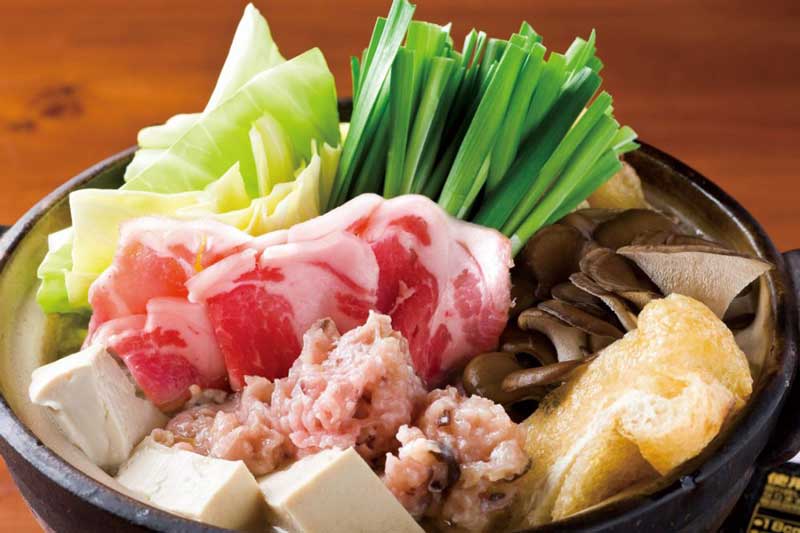
- What do they eat? The staple of their diet is chanko-nabe: a protein-rich stew of fish, meat, and vegetables in a chicken broth designed specifically for weight gain. You don’t have to be a wrestler to enjoy it; many restaurants specialize in this hearty stew.