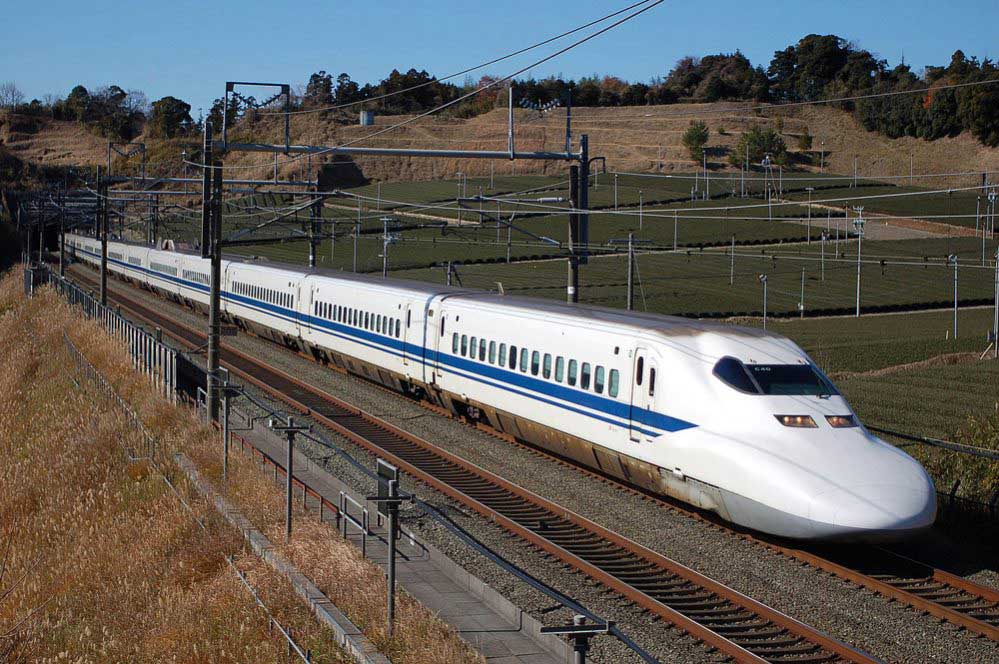

The Shinkansen (新幹線) is a network of high-speed railway lines that operates across most of Japan. These famous “bullet” trains—so named because of their aerodynamic fronts and incredible speeds—began service in 1964 with the Tokaido Shinkansen, a 500-kilometer track connecting Tokyo and Osaka. Today, there are nine primary Shinkansen routes with several more planned. Trains operating on the major routes, such as the Tohoku and Sanyo lines, reach speeds of up to 320km/h.
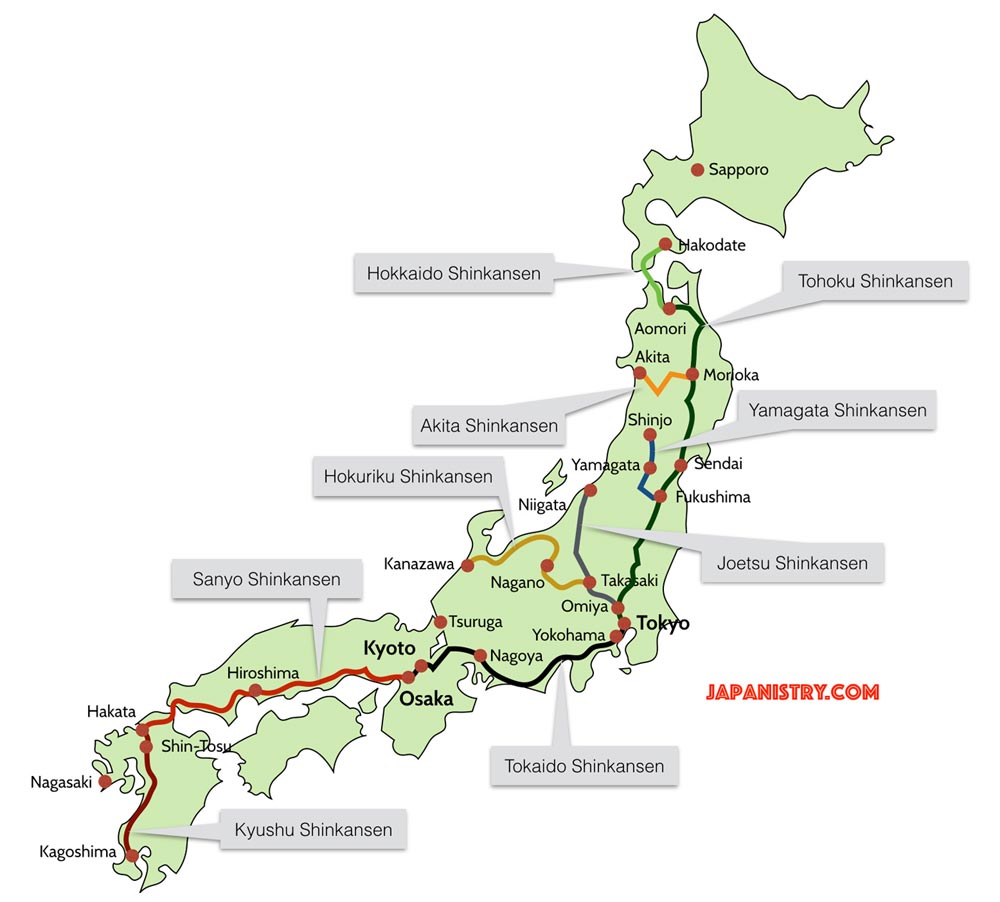
While they are no longer the absolute fastest in the world, the Shinkansen remains one of the world’s busiest and safest transit systems. Carrying over 150 million passengers annually, the network has maintained a perfect record of zero passenger fatalities due to derailments or collisions since operations began. They are a global symbol of Japanese reliability and engineering, known for an average annual delay of less than one minute.
Train Categories (Tokaido Line)
On the most popular route between Tokyo, Nagoya, Kyoto, and Osaka, three types of trains operate. While they all look similar, they differ in the number of stops they make:
- Nozomi: The fastest service, stopping only at major stations. It reaches Kyoto from Tokyo in 2h 15m. Note: Standard JR Pass holders must pay an additional “top-up” fee to use this train.
- Hikari: The mid-tier service. It makes a few more stops than the Nozomi but is fully covered by the JR Pass.
- Kodama: The slowest service, stopping at every station along the route. It is ideal for reaching smaller, local cities.
How much does the shinkansen cost?
Pricing for the Shinkansen is broken down into a basic fare and a super express surcharge. Most routes offer three classes of service:
- Ordinary (普通車): Standard seating, comparable to high-quality economy class.
- Green Car (グリーン車): Comparable to business class, featuring wider seats and more legroom.
- Gran Class (グランクラス): A luxury first-class experience available on newer lines like the Hokuriku and Tohoku routes.
Popular Routes and 2026 Prices
| Route | Duration | Approx. Price |
|---|---|---|
| Tokyo to Nagoya | 1h 40m | ¥11,300 |
| Tokyo to Kyoto | 2h 15m | ¥14,100 |
| Tokyo to Osaka (Shin-Osaka) | 2h 30m | ¥14,700 |
| Tokyo to Kanazawa | 2h 30m | ¥14,200 |
| Tokyo to Hiroshima | 4h 00m | ¥19,400 |
| Tokyo to Fukuoka (Hakata) | 5h 00m | ¥23,400 |
Practical Tips for Riders
Mount Fuji Views: If you are traveling from Tokyo toward Kyoto/Osaka, book a Seat E (or Seat D in some configurations) on the right-hand side of the train to catch a view of Mount Fuji. If traveling toward Tokyo, book the left-hand side.
On-Board Facilities: Modern Shinkansen (like the N700S) feature power outlets at every seat and free Wi-Fi. Note that traditional cart-based food sales have been discontinued on many routes; you should purchase an “Ekiben” (station bento) before boarding, or use the mobile QR-code ordering system available in Green Cars.
Gate Procedures: When entering the Shinkansen gates, you may have two separate paper tickets (a base fare and a surcharge ticket). You must insert both tickets together into the same slot at the turnstile. They will be processed and popped back out at the other end. If you are using a digital IC card or the Smart EX app, simply tap your phone or card.
Where can I buy tickets?
Tickets can be purchased at JR Ticket Offices (Midori no Madoguchi), characterized by their green signs, or via multi-lingual ticket machines at any major station. Digital booking via the Smart EX app (for Tokaido/Sanyo/Kyushu lines) or the JR-East Train Reservation site is also highly recommended.
Essential Travel Policies
The Japan Rail Pass: The 7-day Ordinary Japan Rail Pass is currently priced at ¥50,000. Always perform a cost-benefit analysis before purchasing, as individual tickets are often cheaper for simple “Golden Route” itineraries.
Oversized Baggage Rules: If your luggage total dimensions exceed 160cm, you must reserve a specific “Seat with Oversized Baggage Area.” These are free if reserved in advance, but boarding without a reservation results in a ¥1,000 penalty fee.