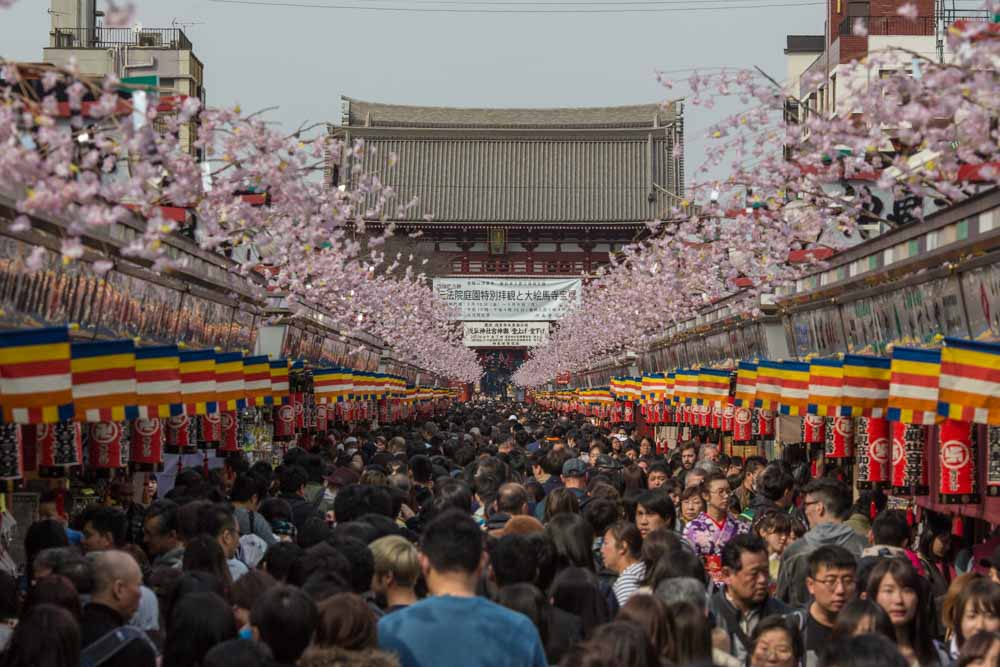

Stretching 250 meters from the Kaminarimon Gate to the Hozomon Gate, Nakamise (仲見世通り) is much more than a colorful approach to Sensoji Temple. While many first-time visitors might initially dismiss it as a modern tourist thoroughfare, it is actually one of the oldest shopping streets in Japan, with a mercantile history that spans several centuries. For generations of pilgrims, this path has served as a sensory gateway to the sacred, providing a constant flow of customers that has sustained local families and traditional craftsmen since the early Edo period.
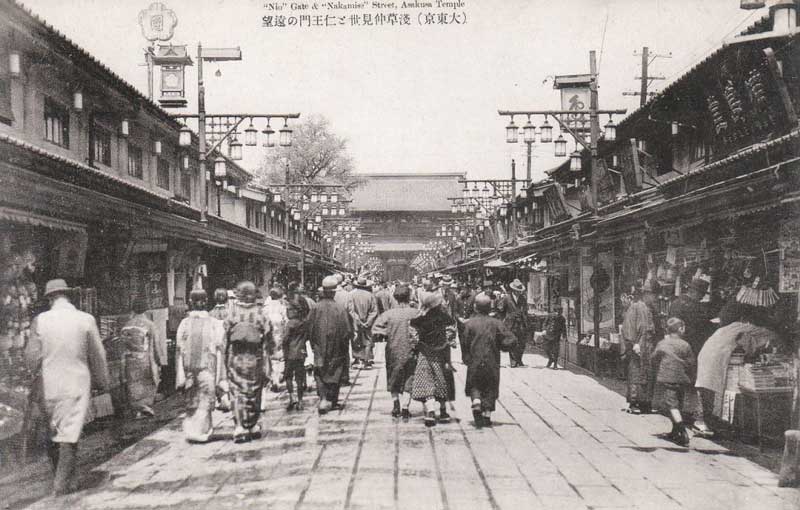
A Legacy of Edo-Period Commerce
The origins of Nakamise date back to the late 17th and early 18th centuries. As Senso-ji grew in popularity as a pilgrimage site, the Tokugawa shogunate granted permission to the people who lived in the vicinity of the temple to set up shops in the approach. These early vendors primarily sold tea and snacks to weary travelers, but the market quickly expanded to include toys, accessories, and religious items. In 1885, the government replaced the original wooden stalls with modern red-brick buildings in a Western-inspired style, marking a significant shift in the district’s aesthetic. However, the street was completely razed during the Great Kanto Earthquake of 1923 and later decimated by the firebombing of World War II. The current concrete structures, while relatively modern in construction, were designed to evoke the traditional atmosphere of the late 19th-century streetscape.
Today, the street is home to approximately 89 shops—roughly 54 on the east side and 35 on the west—each operating within meticulously assigned plots. This rigid organization maintains the historical “lull” between the chaotic modern city and the temple grounds. Even when the shops are closed, Nakamise remains a cultural destination; the heavy metal shutters of the stalls are painted with a series of murals known as the “Asakusa Emaki.” These paintings depict the history of the temple, the changing seasons, and the various traditional festivals of the Taito ward, turning the shopping street into a silent, nocturnal art gallery for those who visit after dark.
Culinary Traditions and Cultural Craftsmanship
The true heart of the Nakamise experience is found in its traditional snacks, many of which have been prepared using the same recipes for over a century. Visitors should look for ningyo-yaki (small, doll-shaped cakes filled with sweet red bean paste) which are often molded into the shapes of the Five-storied Pagoda or the Kaminarimon lanterns. Another staple is kaminari-okoshi, a crunchy, sweet puffed-rice snack that has been sold here since the mid-Edo period. The air is often thick with the scent of toasted senbei (rice crackers) and the sound of vendors skillfully preparing taiyaki—fish-shaped pancakes that are a favorite among local residents and tourists alike.
Beyond the food, the stalls offer a diverse range of Japanese craftsmanship that reflects the district’s artisan heritage. This includes hand-painted paper umbrellas, folding fans (sensu), authentic Japanese swords, and intricately woven tabi socks. While the street is undeniably crowded, particularly on weekends and during major festivals, it remains an essential pillar of the Asakusa identity. It is a place where the commercial spirit of old Tokyo survives, ensuring that every visitor who walks toward the temple participates in a ritual of consumption and culture that has remained unbroken for over three hundred years.