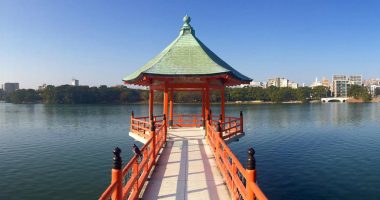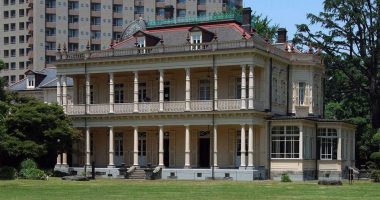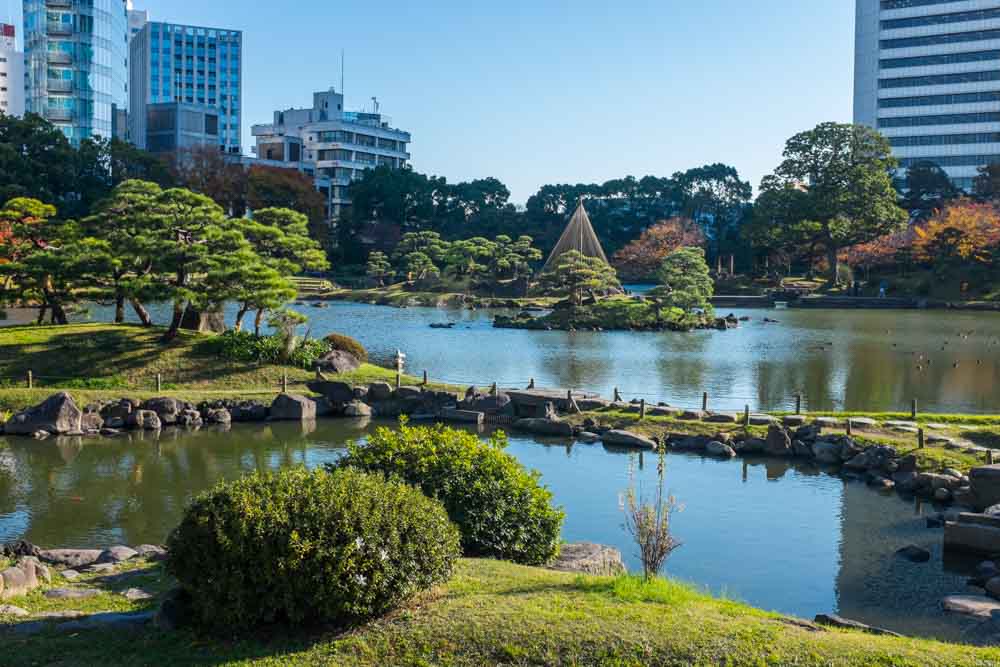
Kyu Shiba Rikyu Garden (旧芝離宮, Kyū Shiba Rikyū) was, like Rikugien and Koishikawa Korakuen, once a private garden of a high-ranking samurai official. Standing on land reclaimed from Tokyo Bay, high-rise mansions and office blocks now peer down on the pond and stone bridges of the garden which is regarded by some as the most beautiful in Tokyo. It was donated to Tokyo City in 1924 following the Great Kanto Earthquake and has since served as a vital cultural sanctuary in the Minato ward.
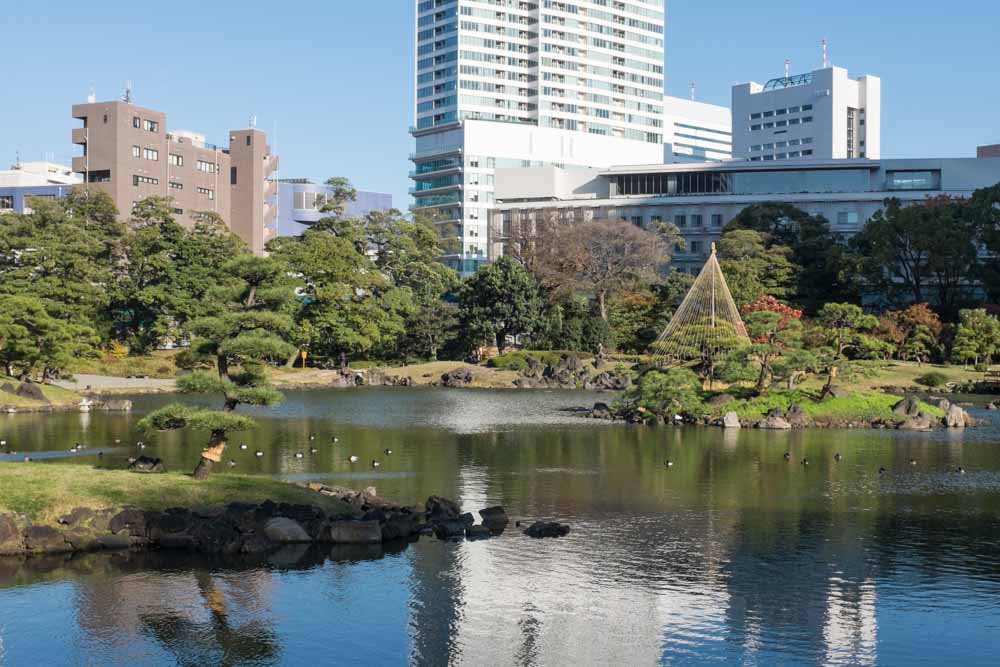
The garden was originally established in the late 17th century by Inaba Masanori, the chief counselor to the Shogun. Its design is a classic example of a “daimyo garden” (stroll garden), but what makes it unique is its foundation. As one of the earliest instances of large-scale land reclamation, the garden’s central pond was once a salt-water feature that rose and fell with the tides of the bay. While it is now a freshwater pond, the dramatic “vibe” of the rugged stone arrangements, particularly the “Horai-san” rock formation representing a mythical island of eternal youth, remains as powerful as it was three centuries ago.
Walking through the grounds provides a rare architectural lull where the ancient and the modern collide. The garden features intricate stone bridges and a man-made hill that offers a panoramic view of the water, framed against the glass facades of the Hamamatsucho skyscrapers. This contrast highlights the garden’s role as a resolute guardian of Tokyo’s Edo-period aesthetics. Despite the encroachment of the surrounding city, the garden remains a serene destination for those looking to appreciate the meticulous stone craft and peaceful solitude of a traditional samurai retreat.
| Visitor Information | |
|---|---|
| Address | 1-4-1 Kaigan, Minato-ku, Tokyo 105-0022 (Google Maps) |
| Opening Hours | 9:00 AM – 5:00 PM (Last entry 4:30 PM) |
| Price | ¥150 (approx.) |
| Website | Official Website |
| Access | ||
|---|---|---|
| Station | Line(s) | Details |
| Hamamatsucho Station | JR Yamanote / Keihin-Tohoku | 1-minute walk from the North Exit. |
| Daimon Station | Oedo / Asakusa Lines | 3-minute walk from Exit B2. |