A Complete Guide to Renting in Japan
Renting in Japan can be a daunting process. Contract terms are long, initial costs are high, and documentation can feel seemingly never-ending. However, while the terms may seem onerous, they are also designed to protect the tenant. This allows many in Japan to rent securely, knowing the owner will not perform intrusive inspections and that they do not have to live under a cloud of uncertainty regarding sudden eviction notices.
Viewing Properties
Before you begin your search, it is worthwhile to familiarize yourself with the different types of properties in Japan, as well as the terminology used to describe layouts and measurements.
Popular sites and apps for viewing properties include Chintai.net, Homes.co.jp, and Suumo.jp. There is almost complete overlap in available properties between these platforms, so there is little reason to check them all. You can book a viewing through these sites or visit an estate agent directly. In Tokyo, estate agents are ubiquitous; walk out of any station and you are almost guaranteed to find one within 100 meters. Most are independent operations utilizing the same national database (REINS) to search for listings.
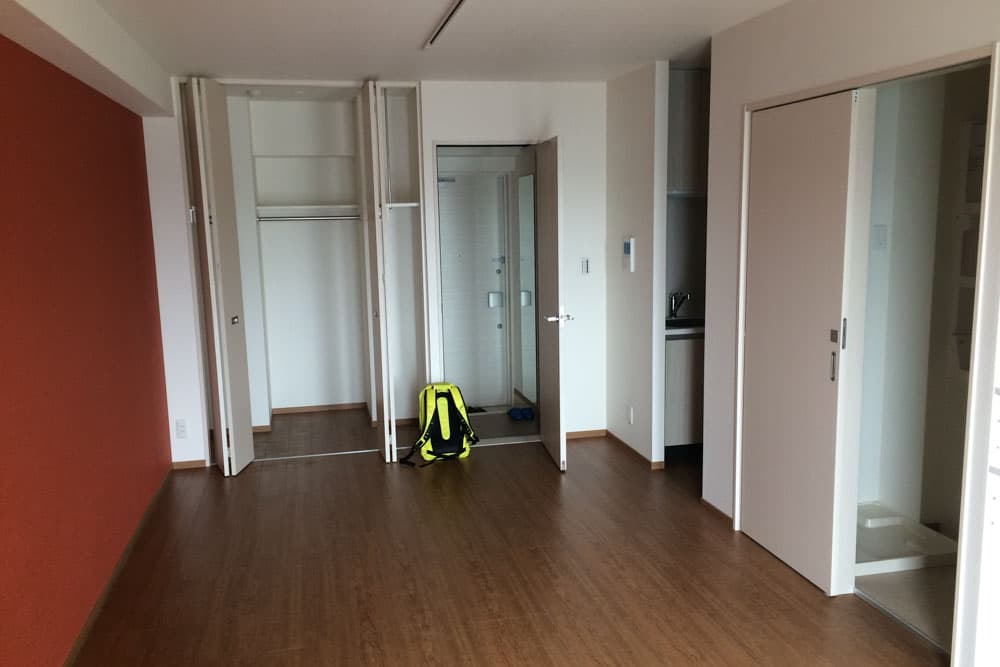
If a property is vacant and cleaned, viewings can often be arranged on the spot, though it is advisable to book an appointment in advance. As properties are professionally cleaned, you must remove your shoes at the entrance (genkan); agents typically provide slippers for customers.
- Is high-speed internet included? By 2026, most newer condominiums include free fiber-optic (FTTH) or Wi-Fi 6/7 internet. This saves the hassle of a separate contract, which typically costs around ¥5,000 per month.
- Is there an air-conditioning unit? Usually, at least one AC unit is included, but some rooms require you to buy and install them yourself.
- Is there an allotted space for a bicycle? Most buildings include one slot per apartment, though some may charge a small monthly fee.
- Does the property allow pets? Most properties strictly prohibit pets. You must inform the agent if you have any animals, as “pet-friendly” rentals often require a higher deposit.
Regrettably, some owners still hesitate to accept applications from international residents. To avoid a wasted journey, it is best to ask the agent to confirm in advance that the owner is open to foreign applicants. If your spouse is Japanese, you are unlikely to face this hurdle.
Securing a Property
Once you have found a property, you must submit an application form (moushikomisho) with basic details: name, workplace, salary, and an emergency contact. You will also need to provide a copy of both sides of your residence card. The agent sends these to the management company for a credit check, which usually takes about a week. You may be asked for a tax withholding slip (gensen chōshū hyō) or recent pay slips.
The IT Jūsetsu (Digital Orientation)
In 2026, the traditional requirement for the tenant to meet the agent in person for the “Explanation of Important Matters” has been replaced by the IT Jūsetsu. This is an online video call where a licensed real estate agent explains the contract details. To complete this, you will need the following:
- The Jūyō Jikō Setsumeisho: A physical or digital copy of the “Important Matters Explanation” document provided by your agent.
- Identity Verification: You must hold your physical Residence Card or Passport up to the camera during the session.
- Digital Signature: Most agencies now use DocuSign or CloudSign, though some still require a physical inkan (seal) to be mailed back.
The Costs
The initial cost of renting in Japan typically ranges from 3 to 6 months’ worth of rent. Here is a breakdown of common fees:
Base Rent & Maintenance
Monthly rent is called yachin. Additionally, you will pay a kanrihi (maintenance fee) for the upkeep of common areas like elevators and lobbies.
Reikin & Shikikin
Reikin (Key Money) is an upfront payment to the landlord that is not returned. Shikikin (Deposit) is usually one month’s rent and is used for cleaning and repairs when you move out.
Guarantor Company Fee
In 2026, using a guarantor company (hosho-gaisha) is mandatory for almost all rentals. This has largely replaced the need for a personal Japanese guarantor. The initial fee is typically 50% to 100% of one month’s rent, with a small yearly renewal fee thereafter.
Brokerage Fee
The estate agent’s fee (chūkairyō). By law, this is capped at one month’s rent plus tax. This is often the most negotiable part of your initial costs.
The Contract
There are two types of rental agreements in Japan:
- Standard Rental Agreements (Futsū Shakuya): Usually for two years and renewable indefinitely at the tenant’s discretion.
- Fixed-Term Rental Agreements (Teiki Shakuya): For a set period and cannot be renewed automatically.
Finally, remember that apartments are leased “bare.” You will need to provide your own fridge, washing machine, curtains, and sometimes even ceiling lights.