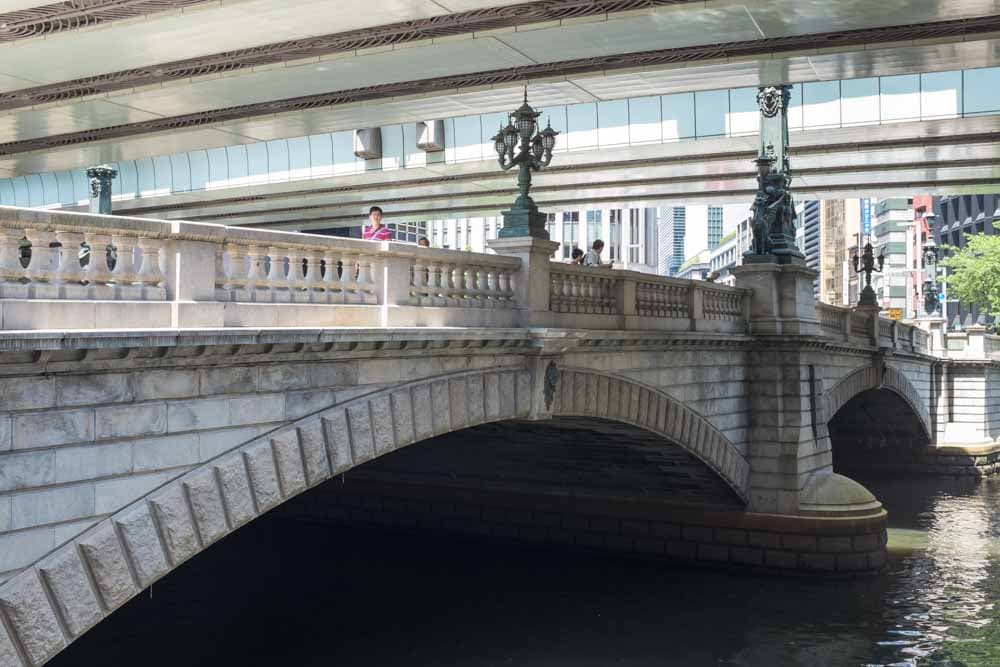
Nihombashi Bridge
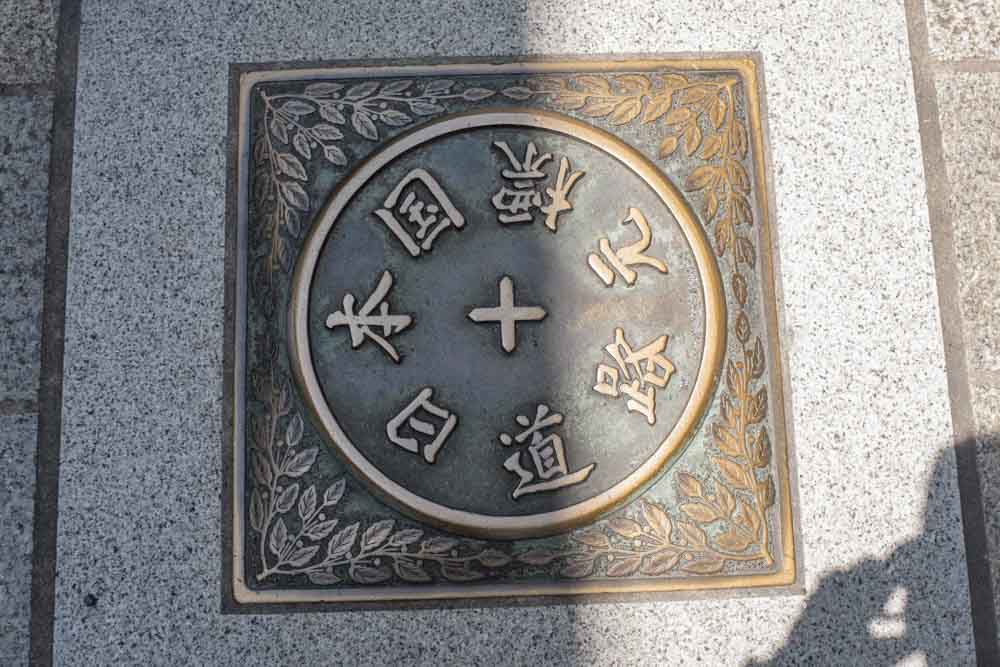
Nihombashi (日本橋), or “Japan Bridge,” is the symbolic heart of Tokyo and the historical “Kilometer Zero” of the nation. When Tokugawa Ieyasu established the Shogunate in Edo, he designated this spot as the starting point for the Gokaido—the five major highways connecting the capital to the provinces. Even today, a bronze “Road Origin Marker” (Nippon-koku Douro Genshyo) remains embedded in the center of the road, serving as the official point from which all distances to Tokyo are measured.
The original bridge, constructed of wood in 1603, was a bustling hub of commerce and the focal point of the city’s merchant district. The current structure, completed in 1911, is a double-arched stone bridge designed in a grand Western Renaissance style, reflecting the architectural ambitions of the Meiji and Taisho eras. It is adorned with intricate bronze castings that carry deep symbolic meaning. The Kirin (winged mythical creatures) at the center of the bridge are unique for having wings, symbolizing the bridge as a point from which one takes flight into the rest of Japan. Meanwhile, the Shishi (lion-dogs) at the ends of the bridge hold the emblem of Tokyo, standing as guardians of the city’s prosperity.
For decades, the bridge’s aesthetic “vibe” and historical significance have been overshadowed by the Metropolitan Expressway, a massive concrete highway built directly overhead to facilitate the 1964 Olympics. This infrastructure has long acted as a visual ceiling, trapping the bridge in shadow and disconnecting it from the sky. However, a major urban revitalization project is now underway to move this section of the expressway underground. This long-term effort aims to peel back the layers of 20th-century concrete and restore Nihombashi to its rightful place as a sunny, open-air landmark, finally allowing the mythical Kirin to “fly” once again against a clear Tokyo sky.