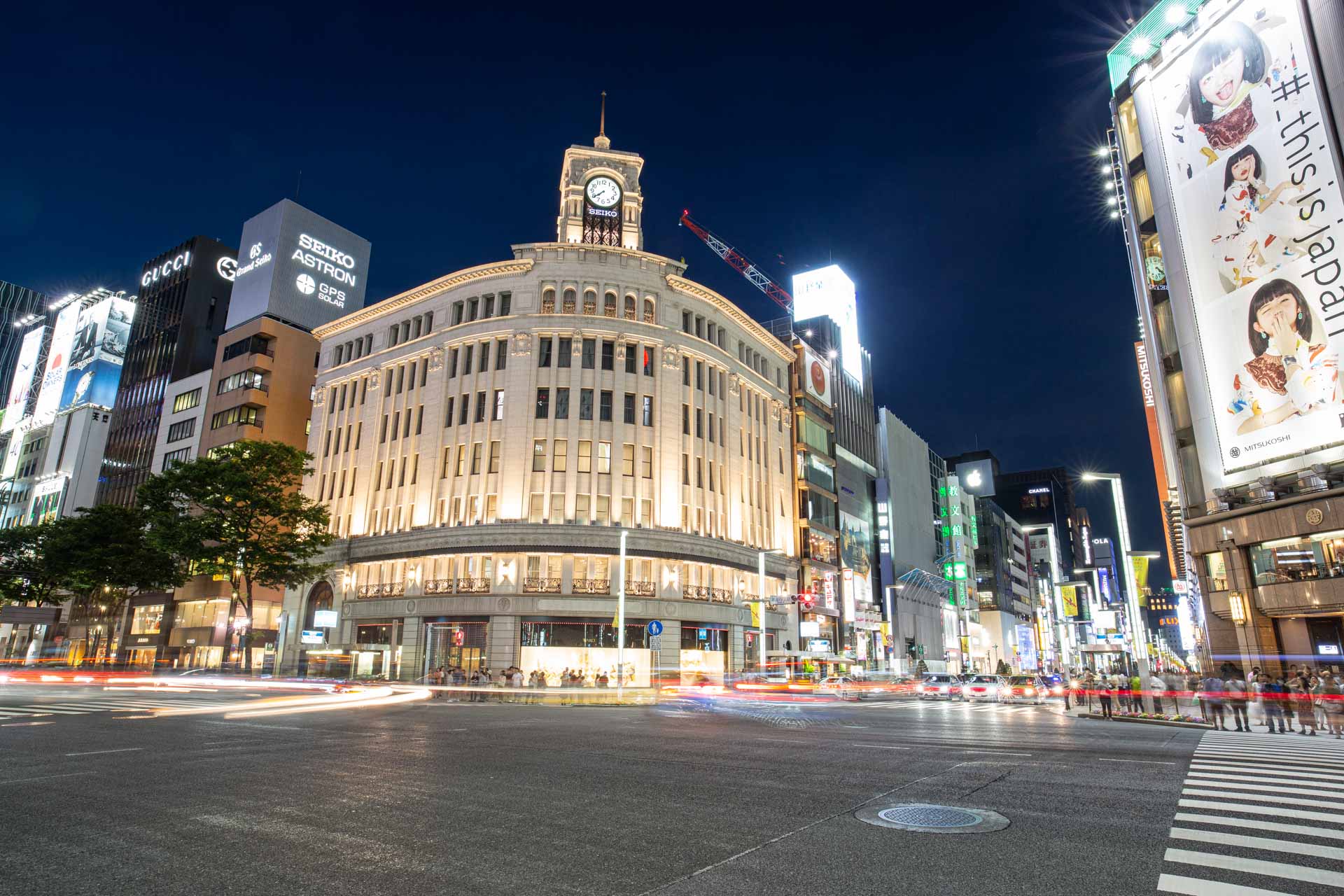

Standing as the dignified sentry of Tokyo’s most prestigious intersection, the Wako Department Store (recently rebranded as SEIKO HOUSE GINZA) is perhaps the most iconic architectural symbol of the Ginza district. While the surrounding neighborhood has transformed into a canyon of glass and steel, Wako remains a rare survivor of the early 20th century. The current building was completed in 1932 in a distinctive Neo-Renaissance style, featuring a curved granite facade that follows the contour of the 4-chome crossing. It was commissioned by Kintaro Hattori, the founder of Seiko, to replace the original clock tower that had been damaged during the Great Kanto Earthquake of 1923. Because of its sturdy construction and strategic importance, the building survived the firebombing of World War II and was subsequently requisitioned by the U.S. military during the occupation to serve as a Post Exchange (PX).
Since returning to Japanese hands in 1952, Wako has reclaimed its title as the “face of Ginza.” Unlike the massive, multi-block department stores found elsewhere in the city, Wako specializes in highly curated luxury goods, including world-class watches, bespoke jewelry, and high-end interior decor. Its window displays are legendary in the Japanese design world, often featuring avant-garde artistic installations that change with the seasons. The building’s crowning glory is the Seiko Clock Tower, which has kept time for the district for nearly a century. Every hour, the clock sounds the Westminster Chimes, a deep, melodic sequence that momentarily pierces through the ambient noise of the bustling Ginza traffic below.
For visitors, the experience is one of refined, old-world hospitality. The interior maintains many of its original elegant flourishes, offering a quieter and more intimate shopping atmosphere than the modern megastores nearby. The rooftop, which houses the clock tower, is typically closed to the general public but is occasionally opened for exclusive events or exhibitions. Even if you do not step inside to browse its luxury collections, standing at the Ginza 4-chome intersection to hear the clock strike the hour is a fundamental Tokyo experience that bridges the gap between the city’s imperial history and its modern commercial identity.
| Visitor Information | |
|---|---|
| Address | 4-5-11 Ginza, Chuo-ku, Tokyo 104-8105 (Google Maps) |
| Opening Hours | 11:00 AM – 7:00 PM Closed: Open daily (Except New Year holidays) |
| Website | Visit Website |
| Access | ||
|---|---|---|
| Station | Line(s) | Access Details |
| Ginza Station | Ginza, Hibiya, Marunouchi Lines | Directly outside Exit A4 |
| Ginza-itchome Station | Yurakucho Line | 5-minute walk from Exit 9 |
| JR Yurakucho Station | JR Yamanote, Keihin-Tohoku Lines | 10-minute walk from the Ginza Exit |