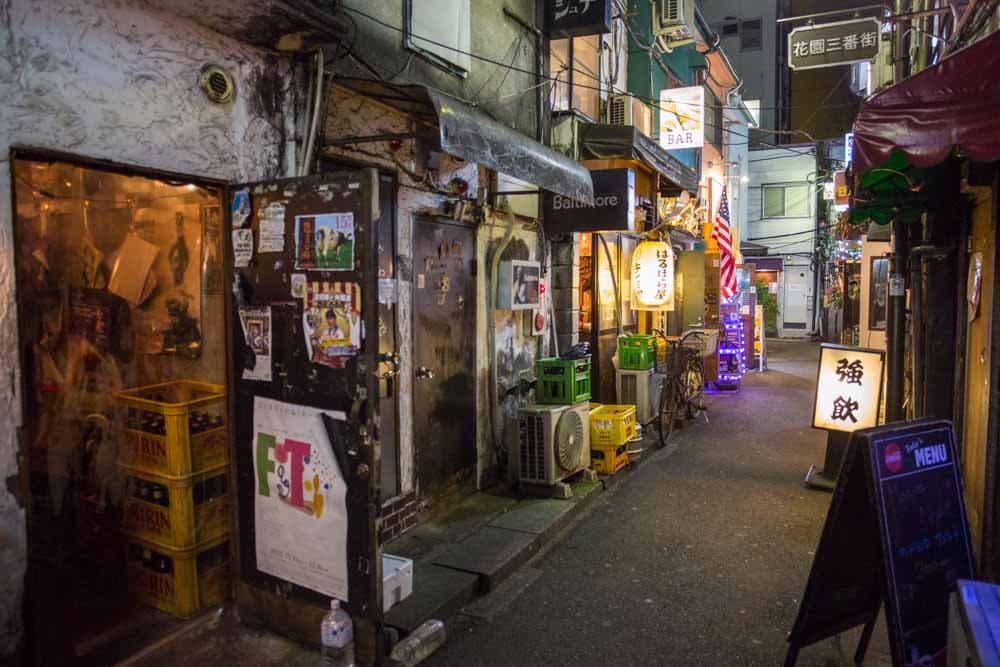
Golden Gai
Golden Gai (ゴールデン街) is an area of Shinjuku that has fought off modernization with aplomb. Tucked away in a small corner near the neon-drenched Hanazono Shrine and the chaos of Kabukicho, the bars in the six narrow alleys that make up Golden Gai look like they would collapse with the faintest shudder. Yet, these two-story wooden shacks are some of the most resilient structures in the city, standing resolutely as the glass-and-steel canyons of Shinjuku rose up around them.
Historically, this district emerged from the black markets and brothels of the late 1940s, eventually evolving into a bohemian refuge for musicians, artists, writers, and film directors during the 1960s and 70s. It used to be the case that these establishments would only welcome regular patrons; newcomers would need to be “introduced” by a veteran to even get through the door. However, the area is far more open these days, and many establishments now display English signs and menus to welcome the surge of international interest.
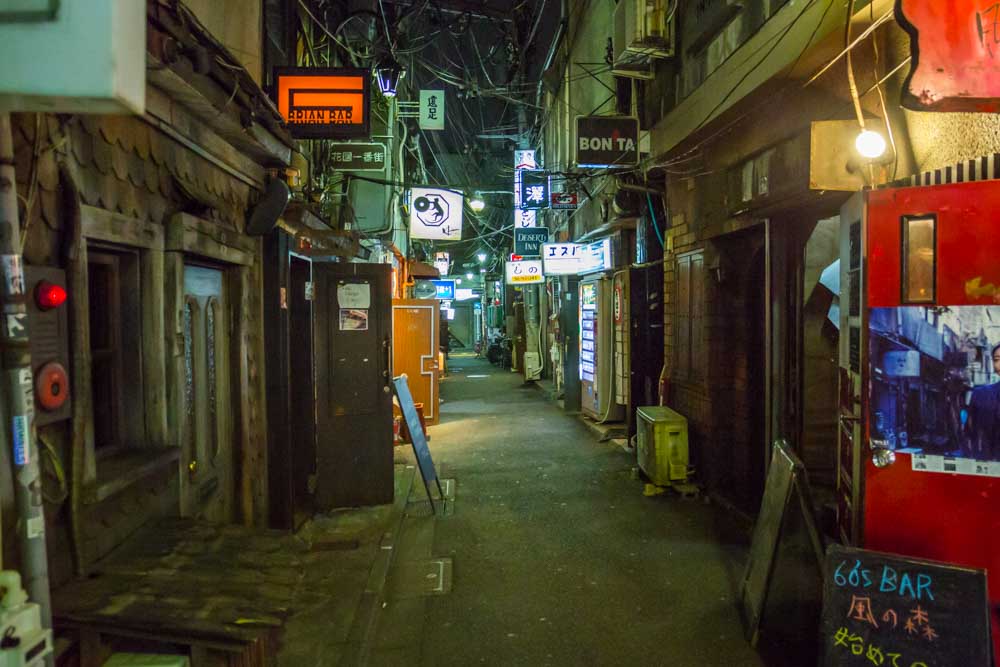
The real charm of Golden Gai lies in its staggering diversity. With over 200 tiny bars squeezed into a single city block, you can find everything from punk rock dives and cinema-themed salons to upscale jazz bars and tiny ramen shops. Each bar has its own distinct “vibe” and personality, dictated largely by the Master or Mama-san behind the counter. Despite its run-down appearance, it is not a place for cheap drinking; most bars maintain the traditional “cover charge” (otoshi) system and expect guests to order at least one drink per hour. This is not a district for rowdy, large-group bar crawls, but rather for intimate conversations and quiet contemplation.
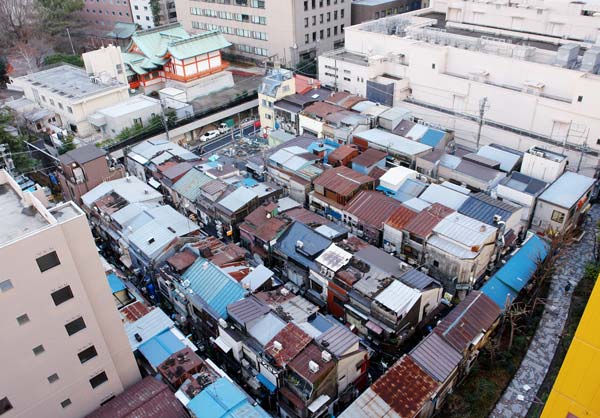
There seems to be perennial talk of Golden Gai being marked for demolition, particularly as real estate values in central Shinjuku continue to soar. However, the complex web of land rights and the district’s status as a cultural icon have protected it thus far. It remains a must-visit for those who want to experience the “low city” (shitamachi) soul of Tokyo—a lively, resolute little area that continues to thrive as the world changes rapidly outside its narrow walls.
| Visitor Information | |
|---|---|
| Address | 1-1-6 Kabukicho, Shinjuku-ku, Tokyo 160-0021 (Google Maps) |
| Opening Hours | Most bars open between 7:00 PM and 8:00 PM; some stay open until 5:00 AM. |
| Note | Keep groups to 3 people or fewer; many bars cannot accommodate larger parties. |
| Website | Official Website (Japanese) |
| Access | ||
|---|---|---|
| Station | Line(s) | Details |
| Shinjuku Station | JR / Subway / Odakyu / Keio | 5-minute walk from the East Exit. |
| Shinjuku-sanchome | Marunouchi / Fukutoshin / Shinjuku Lines | 3-minute walk from Exit E1. |
| Seibu-Shinjuku | Seibu Shinjuku Line | 7-minute walk. |