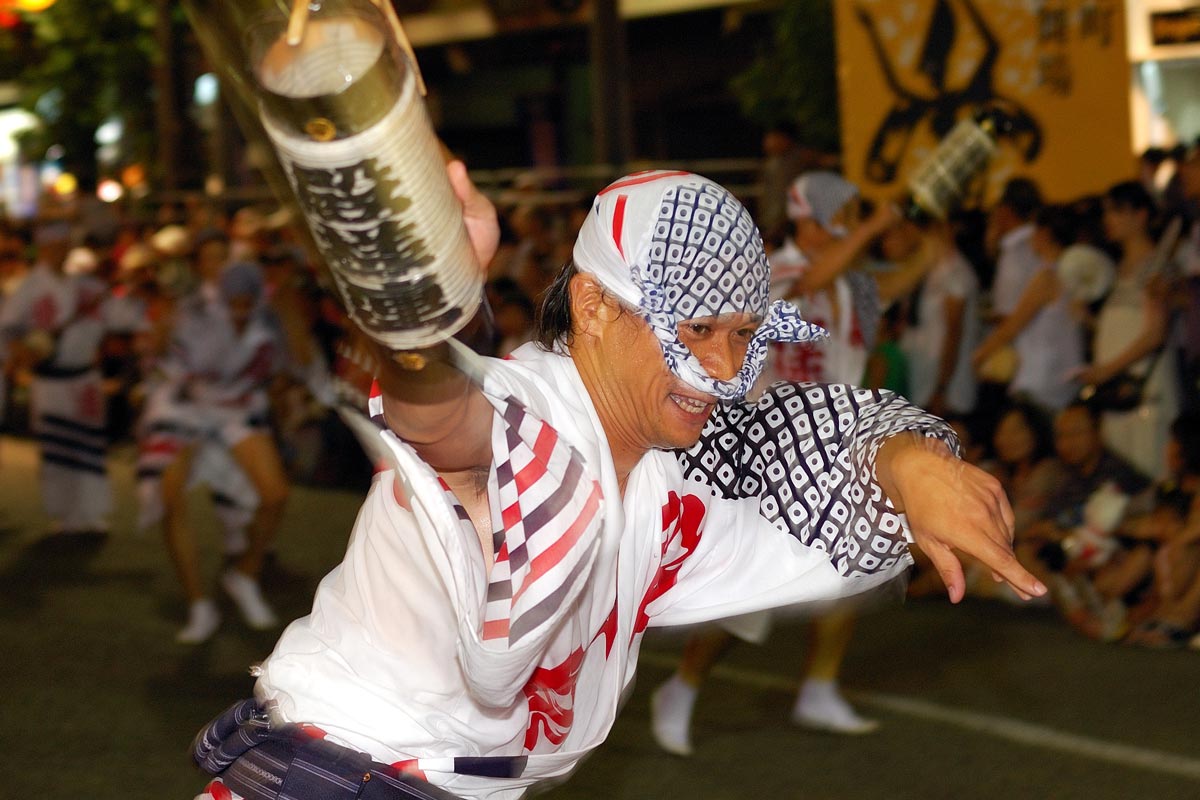
There are hundreds of Awa Odori festivals that take place over the summer in Japan, but the Tokushima Awa Odori (徳島阿波おどり) is the original and the most famous. It is held between August 12 and 15 each year. Incidentally, awa is the former name for the region that encompasses Tokushima and odori means dance. The festival has roots dating back over 400 years, with tradition suggesting it began as a celebration for the completion of Tokushima Castle in 1587.
The lyrics to the dance are iconic: “It’s a fool who dances and a fool who watches! If both are fools, you might as well have fun dancing!” During the peak Obon period, the city’s population of 260,000 swells with over 1.3 million visitors. While professional “Selected Awa Dance” performances are held indoors during the day, the primary spectacle begins at 6:00 PM when the city center is pedestrianized. Dance groups, known as ren, showcase two distinct styles: the vigorous, crouched Otoko-odori (male dance) and the elegant, synchronized Onna-odori (female dance), characterized by dancers wearing high-heeled geta and distinctive amigasa straw hats.
The most popular viewing areas are the four primary paid enba (viewing stands) located in the downtown district; tickets for these tiered seats are sold via a lottery and general sale starting in July and typically sell out within hours. While free viewing areas exist, they are significantly more crowded and require arriving by early afternoon to secure a front-row position on the pavement. Because Tokushima lacks Shinkansen access, transport relies heavily on highway buses and the small regional airport, both of which—along with local hotels—reach maximum capacity months in advance. It is also important to note that the festival’s famous finale, where different ren merge into a chaotic, high-energy street dance, often continues until the local 10:00 PM curfew.


