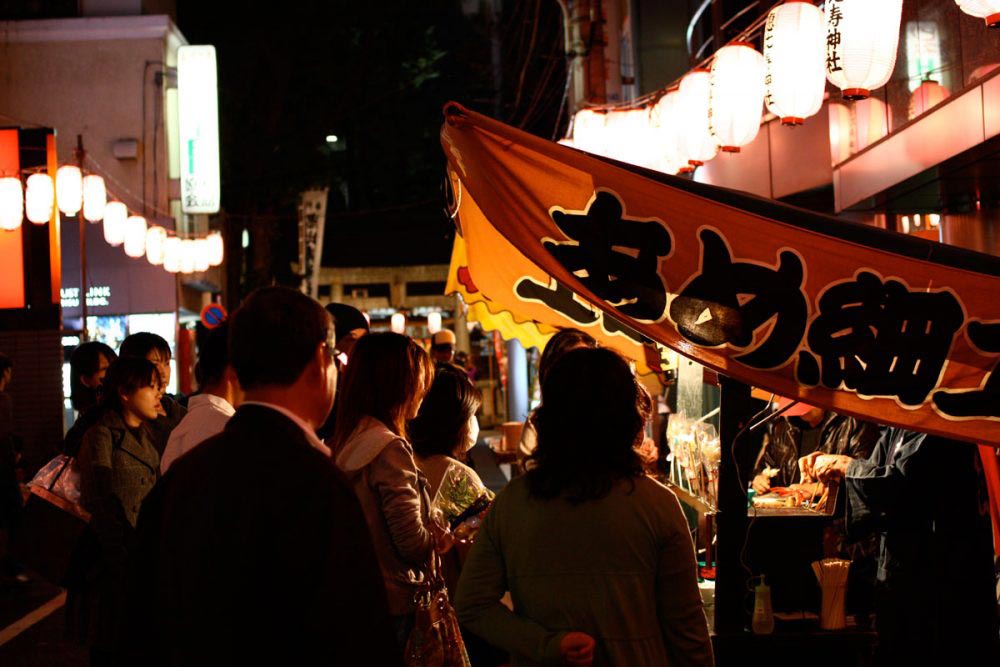
This traditional autumn festival has roots dating back to the beginning of the Edo period and is held on October 19 and 20 annually. The statue of Ebisu was said to be a gift from Tokugawa Ieyasu, and a festival was held in his honor on the 20th. The day before was originally just a market that sold fish and vegetables, but bettarazuke (a Japanese pickled radish) sold particularly well, and over the course of time the market came to be called “bettara ichi.” The Takarada Ebisu Shrine, squeezed between two car parks, is the center of it all, but the stalls continue all along the eastern side of Nihonbashi-Honcho 3-chome. Today, about 500 stalls set up for the two-day event. It is best to visit at night as over 1,500 lanterns light the narrow backstreets. And if pickled radish doesn’t tempt your taste buds, you’ll be glad to know that there are many other stalls selling okonomiyaki, yakisoba, and other familiar festival foods.
The fermentation process of the bettarazuke (using koji rice mold) produces a very strong, sweet, and pungent aroma that permeates the entire festival area. The narrowest sections of the route are immediately surrounding the Takarada Ebisu Shrine; if you wish to see the statue or receive a stamp, expect a slow-moving, single-file line that is strictly managed by marshals to prevent overcrowding. The area is most easily accessed via Kodenmacho Station on the Hibiya Line, which places you directly at the festival’s edge.


