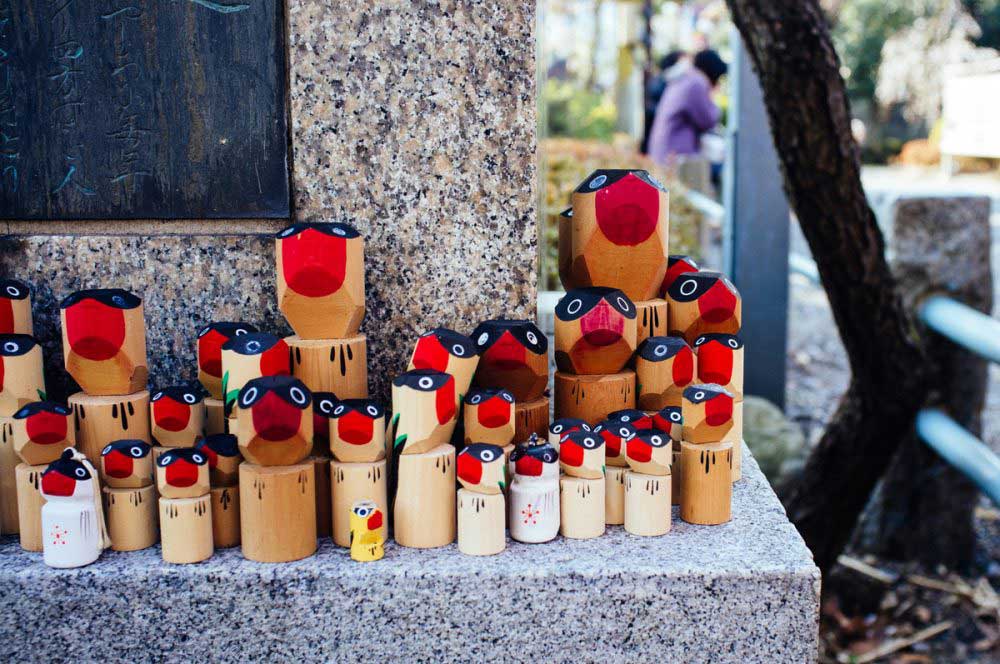
The Kameidoten Usokae Bullfinch Exchange is a traditional cultural event held annually on January 24 and 25 at Kameido Tenjin Shrine in Koto, Tokyo. Originating in the early 19th century, the ritual centers on the exchange of hand-carved wooden bullfinches (uso) to secure good fortune. This practice is based on a linguistic pun: uso signifies both “bullfinch” and “lie” in Japanese. By returning a carving from the previous year, participants symbolically transform past misfortunes and falsehoods into the “truth” and prosperity of the new year. The shrine is dedicated to Sugawara no Michizane, the patron deity of scholarship; the festival’s popularity among students is reinforced by the visual similarity between the archaic character for learning (學) and that for bullfinch (鷽).
Because the festival attracts approximately 30,000 visitors over two days, the wooden carvings are produced in limited quantities and often sell out by the afternoon of the first day. It is highly recommended to arrive at the shrine in the early morning, as wait times in the queue typically exceed two hours. The site is located roughly 15 minutes on foot from Kameido or Kinshicho stations. As the event coincides with the peak of the Japanese school examination season, visitors should anticipate a high volume of students offering prayers for academic success. Those wishing to purchase the carvings or traditional amulets should be prepared to use cash, as most shrine stalls do not accept electronic payments.


