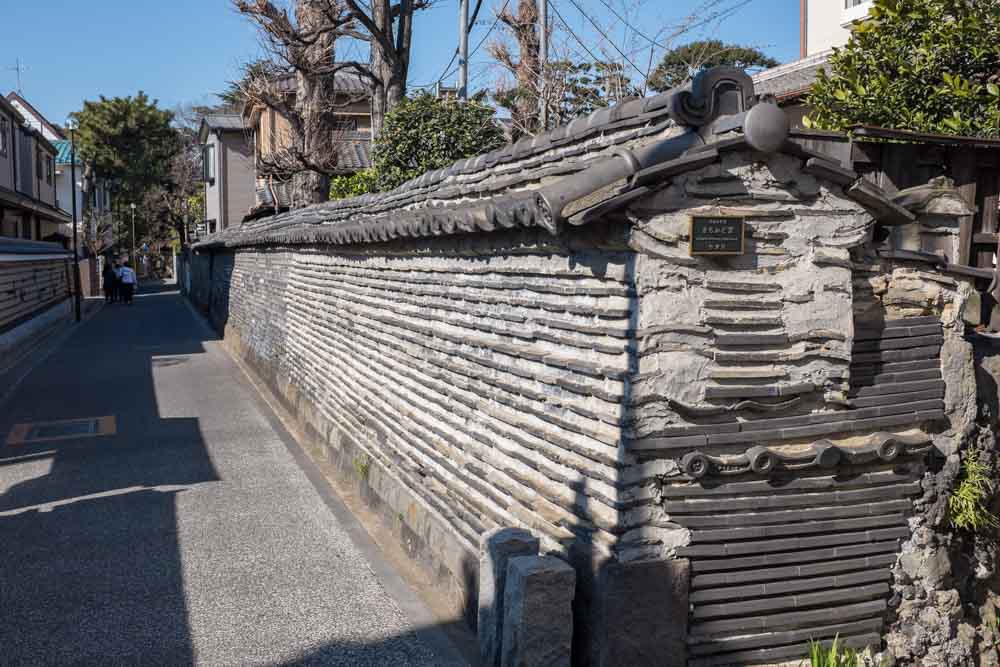
As you wander the streets of Yanesen, make a detour via this mud and tile wall. Built in the latter half of the Edo period, this 40m x 2m section has managed to survive the natural disasters and air raids, and today stands as a perfect representation of how the city would have been divided up in times gone by.
Information
Getting there
Follow the road down from the Asakura Museum of Sculpture and the wall is on your right after about 50 meters
You May Also Like

Yamate District

Yamate was the area where foreigners lived in the years after Yokohama port opened for trade. Harbour View Park located at the top of the hill provides one of the best views of Yokohama port and also has a rose garden and Western-style cemetery. You can walk up the hill from the Motomachi shopping district to the view point at the top which looks over the Minato Mirai area.

Hashima Island ("Battleship Island")

Hashima Island (端島) is an abandoned island and former coal mine located about 15 kilometers from Nagasaki. It…

Yokohama Chinatown

Yokohama Chinatown was established by Chinese immigrants the year after the Harris Treaty ended Japan’s 250 years of isolationism and opened up the country to foreign trade. It is the largest Chinatown in Japan with over 600 restaurants and shops. Kuan Ti Miao Temple in the middle of the area has roots dating back to 1862.

Yamamoto-tei

Former home of a businessman and a superb example of sukiya-zukuri architecture.