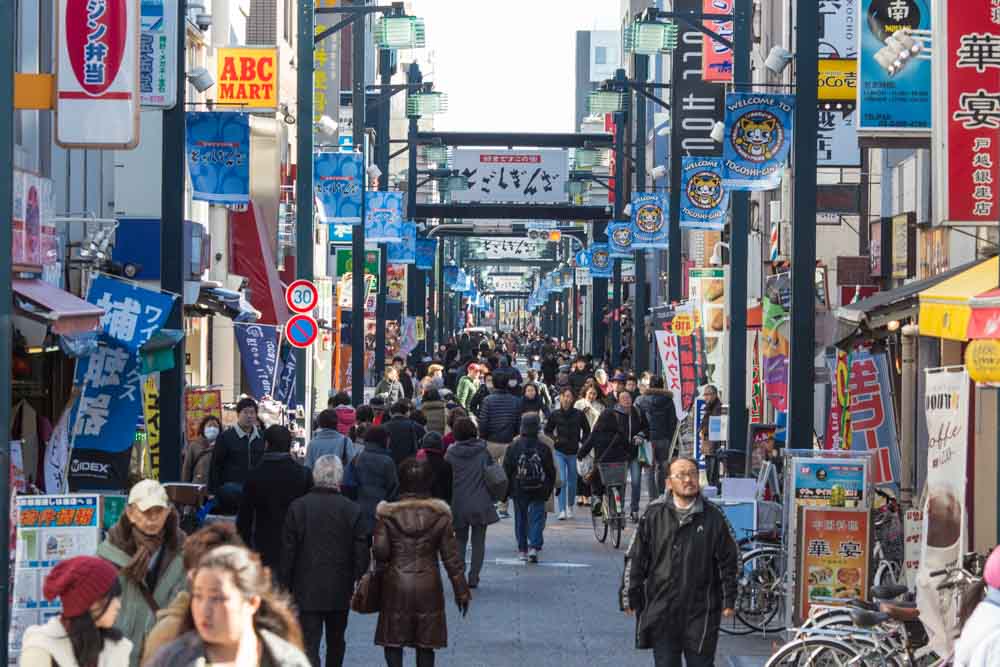

Togoshi-Ginza (戸越銀座) is a legendary fixture of Tokyo’s shitamachi (low city) culture. Located in Shinagawa Ward, it holds the title of the longest shoten-gai (shopping street) in the Kanto region. Spanning approximately 1.5 kilometers, the district is actually a collection of three separate merchant associations that have joined forces to create a seamless, 400-shop corridor. Unlike the curated luxury of the original Ginza, Togoshi-Ginza is a place of daily ritual, where local families and “food tourists” mingle in a vibrant, community-focused atmosphere.
The Original “Ginza” Connection
The name “Ginza” is now used by hundreds of shopping streets across Japan, but Togoshi-Ginza was the very first to adopt it. Following the Great Ginza Fire of 1872, the central Ginza district was rebuilt with Western-style bricks. The leftover bricks and rubble were transported to Togoshi to help improve the drainage and paving of the local marshlands. In a gesture of gratitude and a bid for future prosperity, the local merchants officially added “Ginza” to their name, sparking a national trend that continues to this day.
A Paradise for “Tabe-aruki” (Eating while Walking)
Togoshi-Ginza is arguably most famous for its Korokke (croquettes). The street has turned this simple potato snack into a culinary identity, with over 20 different shops offering their own unique versions—ranging from traditional beef and potato to creative fillings like oden or gyoza. The merchant association even publishes a dedicated “Croquette Map” to help visitors navigate the options. This culture of tabe-aruki (eating while walking) is the defining experience of the district, with vendors selling yakitori, fresh taiyaki, and local pickles directly from their storefronts.
Togoshi Ginjiro and Community Spirit
The neighborhood is represented by its beloved mascot, Togoshi Ginjiro (or “Gin-chan”), a yellow-and-white stray cat often seen on banners and merchandise throughout the street. Gin-chan embodies the friendly, laid-back spirit of the area. Visitors can also find several “power spots” along the walk, including small neighborhood shrines and the Togoshi-Ginza Onsen. This modern public bathhouse (sento) uses natural “black water” (kuro-yu) rich in organic minerals, providing a perfect way to relax after walking the 1.5km length of the market.
Logistics and Best Times to Visit
To experience Togoshi-Ginza at its best, aim for the mid-afternoon. The main street is pedestrianized daily between 3:00 PM and 6:00 PM (and from 2:00 PM to 7:00 PM on Sundays and public holidays), allowing you to stroll down the center of the road in peace. While most shops are open daily, many independent vendors close on Tuesdays or Wednesdays, so a weekend visit usually offers the most lively atmosphere.
| Station | Line(s) | Notes |
|---|---|---|
| Togoshi-ginza | Tokyu Ikegami Line | Drops you directly in the middle of the street. |
| Togoshi | Toei Asakusa Line | A 2-minute walk from the eastern end. |
| Osaki | JR Yamanote Line | A 15-minute walk from the western end. |