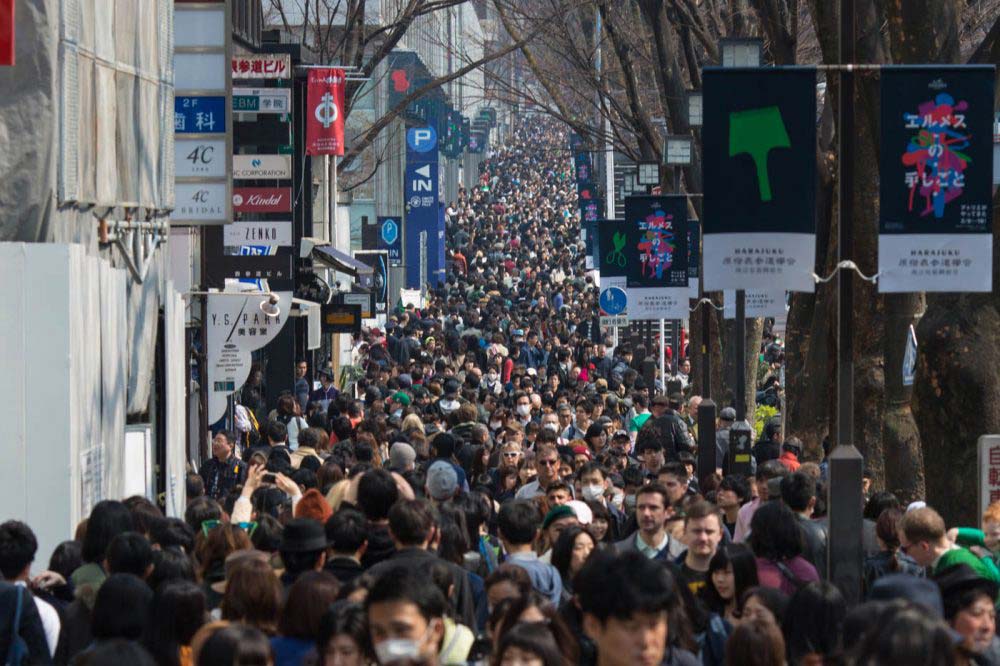

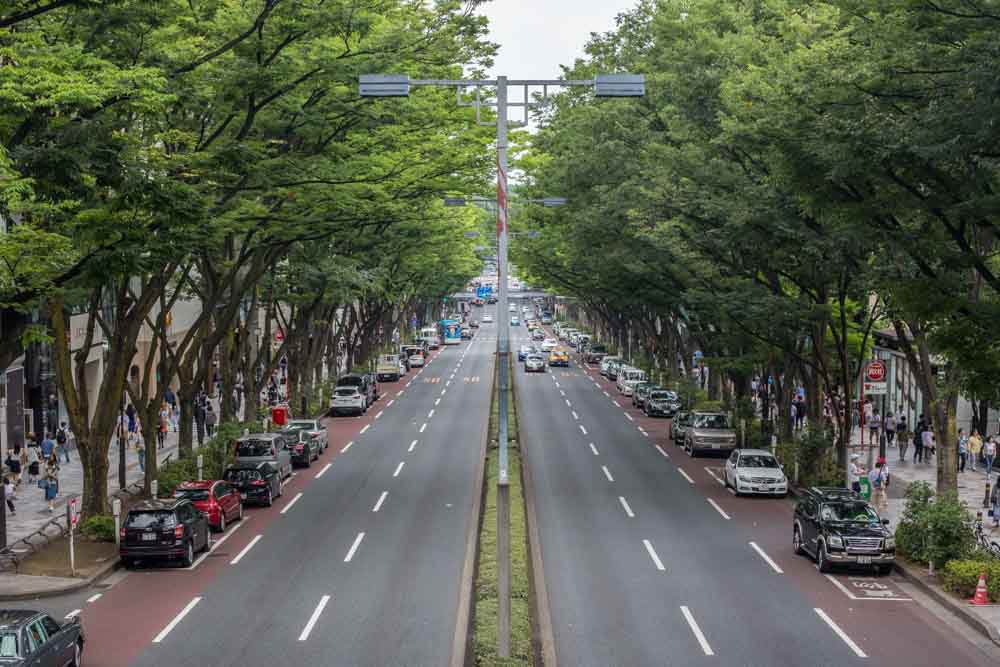
Omotesando (表参道) is Tokyo’s most sophisticated boulevard—a stunning, zelkova-lined avenue frequently called the “Champs-Élysées of Tokyo.” Originally designed as a grand approach to Meiji Shrine, it has evolved into a global center for high fashion and avant-garde architecture. Here, the world’s leading luxury brands compete for attention not just with their window displays, but with the buildings themselves, making the street a virtual open-air museum of modern design.
An Architectural Outdoor Gallery
The district is defined by a concentration of Pritzker Prize-winning architecture that is unmatched in any other retail district in the world. The anchor is Omotesando Hills, a 250-meter-long shopping complex designed by Tadao Ando. The building is famous for its spiraling interior ramps that mirror the natural 3-degree slope of the street outside. However, the architectural trail continues across the boulevard with several other masterpieces:
- Dior Omotesando: Designed by SANAA, this building is wrapped in a transparent glass skin with an inner translucent acrylic screen that mimics the folds of a haute couture dress.
- Tod’s Building: Architect Toyo Ito designed the exterior concrete structure to mimic the silhouette of the zelkova trees that line the street, creating a literal “concrete forest.”
- Gyre: This “swirling” building houses high-end retailers like Chanel and Delvaux, but it is also a cultural hub containing the MoMA Design Store and several avant-garde cafes.
The Intersection of Omo-Hara
The legendary intersection of Omotesando and Meiji-dori is where the district’s “quiet luxury” meets Harajuku’s youthful energy. This area is now defined by two major vertical “villages”: Omokado (Tokyu Plaza) and the newly opened Harakado. Omokado is famous for its kaleidoscopic mirrored entrance and its rooftop “Omo-hara Forest,” which offers a free green space to view the cityscape. Directly opposite, Harakado serves as a creative center, housing a unique “creator’s lounge,” specialized art galleries, and even a modern public bathhouse (sento) in the basement.
The Backstreets and Cat Street
While the main thoroughfare is home to glass-and-steel flagships, the real soul of the area is found in the narrow side streets that splinter off the main road. Cat Street (Ura-Harajuku) is a winding, pedestrian-only path built over the former Shibuya River. It connects Omotesando to Shibuya and is filled with artisanal coffee shops, vintage boutiques, and streetwear icons. This area offers a more relaxed ambiance where independent designers and hidden galleries flourish. Don’t miss the Oriental Bazaar, a landmark for traditional Japanese crafts and souvenirs housed in a building that mimics temple architecture.
Gourmet and Coffee Culture
Omotesando is a pioneer of Tokyo’s international cafe culture. It is the place to find the city’s most famous “all-day breakfast” spots and third-wave coffee roasters. From the minimalist Koffee Mameya—where baristas in lab coats help you select beans like a sommelier—to the lush, floral-themed Aoyama Flower Market Tea House, the district prioritizes sensory experiences. It is also a hub for premium sweets, featuring flagship stores for Pierre Hermé and Number Sugar, a specialized hand-made caramel shop.
History of Omotesando
The name Omotesando literally translates to “Front Approach,” referring to its role as the primary pathway to the Meiji Shrine. The 160 zelkova trees that give the street its iconic character were first planted in 1921. While the street was devastated during the air raids of WWII, it underwent a rapid cosmopolitan transformation during the post-war occupation.
In 1946, the U.S. military established Washington Heights in nearby Yoyogi Park. To cater to the families of American officers, local merchants began opening shops selling Western goods—this era saw the birth of the toy mecca Kiddy Land and the first Western-style apartments in Tokyo. This international foundation paved the way for the district’s evolution into a global fashion capital during the 1970s and 80s.
Logistics and Seasonal Highlights
If visiting in December, Omotesando hosts one of Tokyo’s most spectacular winter illuminations, with nearly all 160 zelkova trees draped in golden LED lights. The district is best explored on foot, and it is a perfect 15-minute walk from either Shibuya or Harajuku.
| Station | Line(s) | Best For… |
|---|---|---|
| Omotesando | Ginza, Hanzomon, Chiyoda | Main boulevard, Luxury shopping, Nezu Museum |
| Meiji-jingumae | Chiyoda, Fukutoshin Lines | Harakado, Omokado, Meiji Shrine access |
| Harajuku | JR Yamanote | Takeshita Dori, Yoyogi Park |