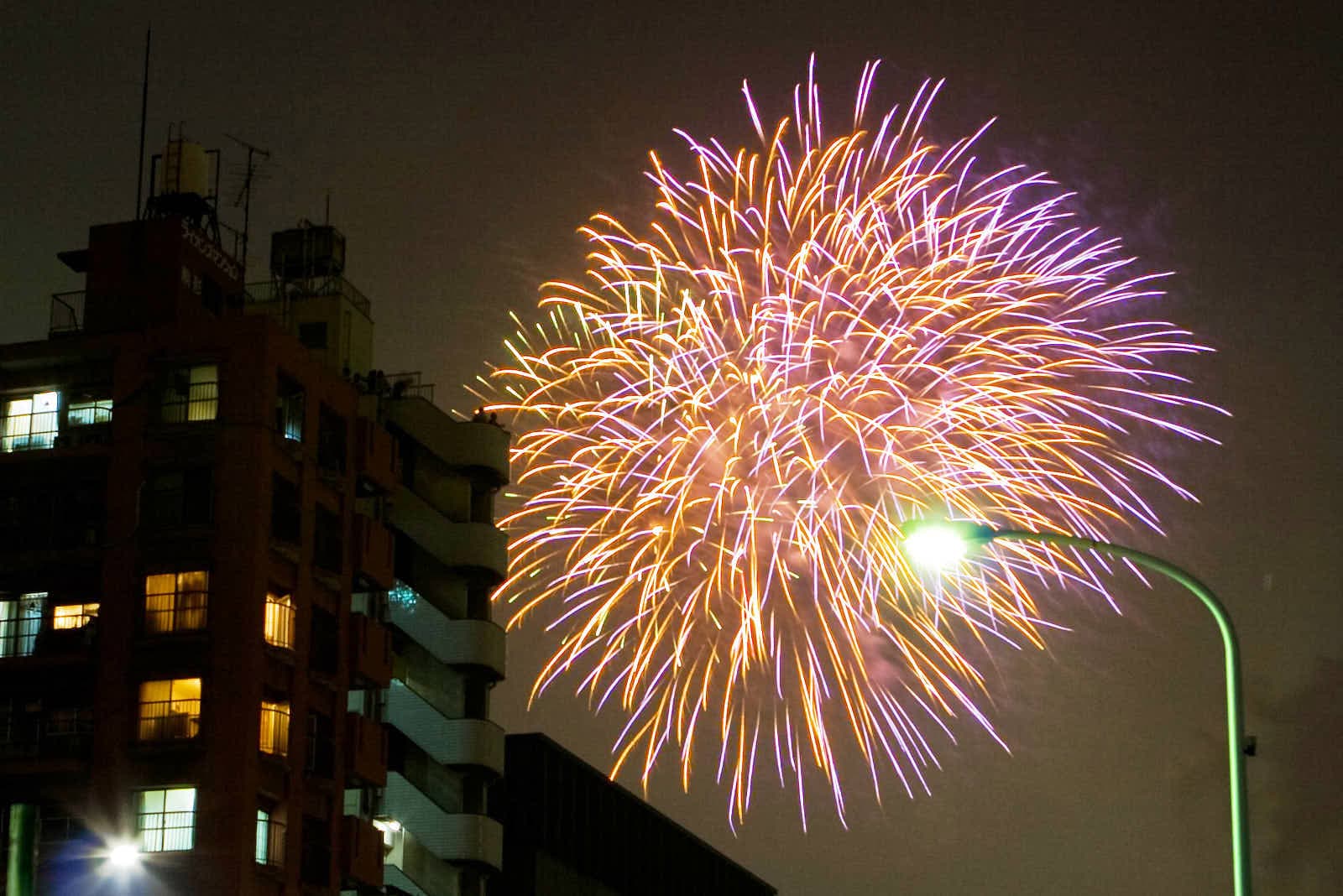
Sumidagawa Fireworks Festival
The Sumidagawa Fireworks Festival (隅田川花火大会) is Japan’s oldest and most storied pyrotechnic display. Its roots date back to 1733, when it was first held during the Edo period to console the spirits of those lost to famine and plague, and to pray for the eradication of pestilence. Historically known as the Ryogoku Kawabiraki, the event became a legendary competition between two rival firework guilds, Kagiya and Tamaya. This rivalry is the reason the festival is still launched from two separate locations today, and why spectators traditionally shout those guild names as shells explode overhead.
Revived in its modern form in 1978, the festival is now a premier event in the Tokyo summer calendar, attracting nearly one million spectators. Approximately 20,000 fireworks are launched across the two sites: the first venue (between Sakurabashi and Kototoibashi) hosts a competition for artistic shells, while the second venue (between Komagatabashi and Umayabashi) focuses on high-volume, creative displays. Because of the immense scale of the logistics and police presence required, the event is rarely postponed; it typically proceeds in light rain but is canceled entirely in the event of severe weather.
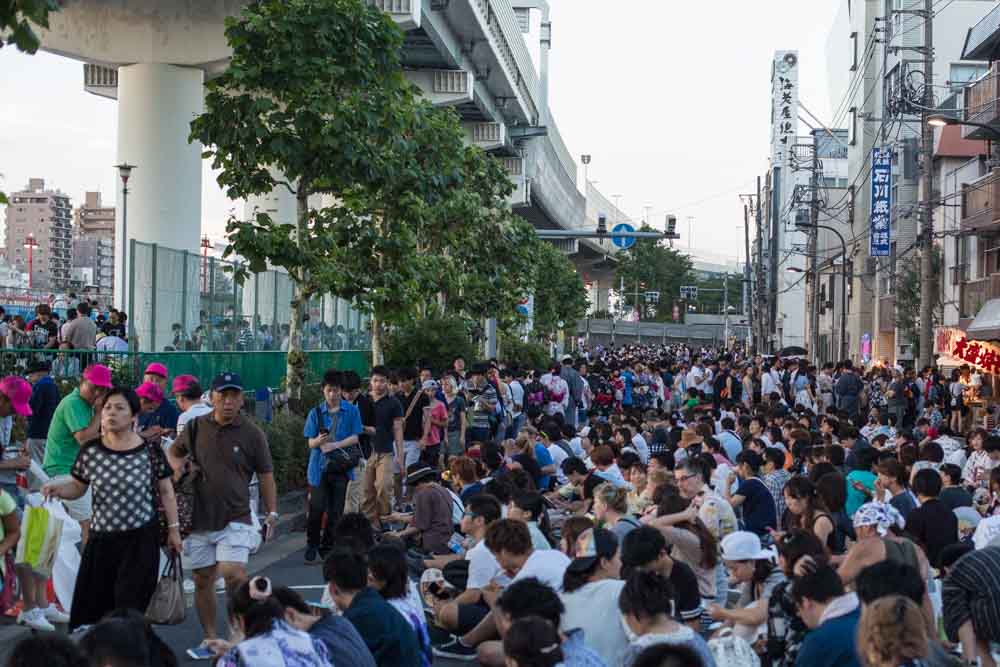
Securing a clear view of the fireworks requires significant planning. While many residents book rooftop terraces months in advance, public viewing is strictly managed to maintain crowd flow. Asakusa, Kuramae, and Ryogoku stations experience extreme congestion; many attendees find it more efficient to alight at nearby stations like Honjo-azumabashi or Hikifune and walk to the riverfront.
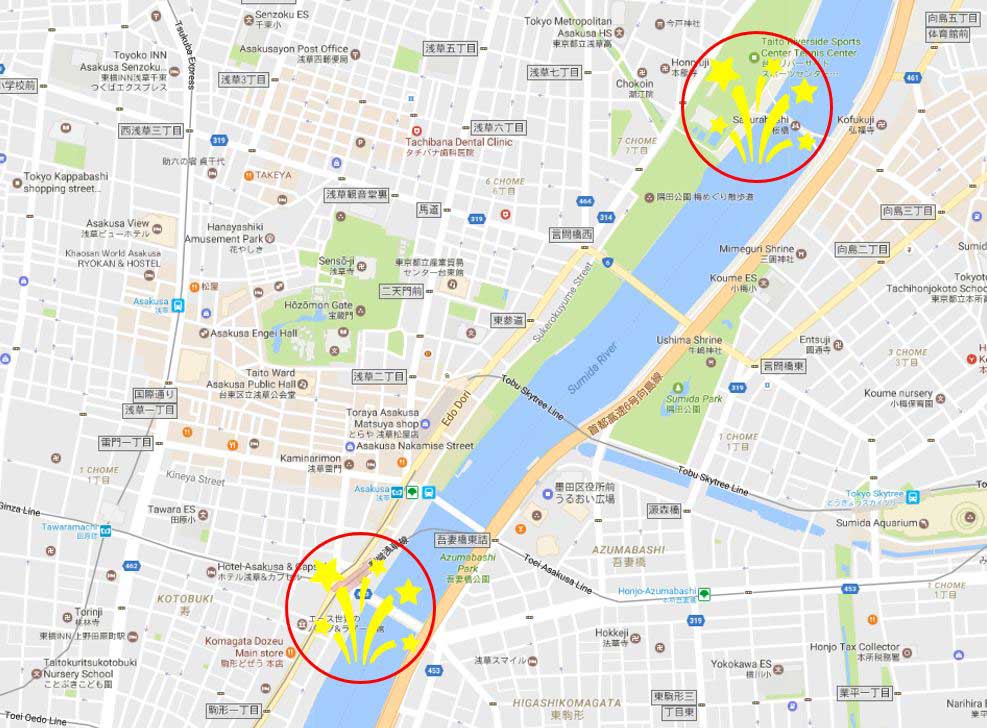
Where are the best spots to see the fireworks?
- The Elevated Expressway: The section under the highway north of the venue near Tsutsumidori Park and Dozohori Park offers some shade, but you must arrive in the morning to secure a spot. Shioiri Park: Located further north, this park provides a more relaxed atmosphere, though the fireworks appear smaller in the distance.
- Sumida Park: This is the most popular land-based viewing area, but it reaches capacity early in the afternoon.
- Kiyosumi-dori: The road east of the second launch venue offers views partially framed by buildings. It is a strategic choice for those wanting a quicker exit route toward Ryogoku after the finale.
- Bridge Crossings: For those without a stationary spot, police manage a “moving viewing” system on the bridges. You can join the queue to walk across the river, which provides a superb, unobstructed view for approximately five minutes before you are ushered along. Check the official event website for the latest pedestrian route maps.
AddressAsakusa Station, 2-20 Kaminarimon, Taito, Tokyo, 111-0034, Japan (Google Maps)
CategoryFireworks
Japanese隅田川花火大会
Official URLOfficial websiteLink
CreditChris Chan