Kanamara Matsuri
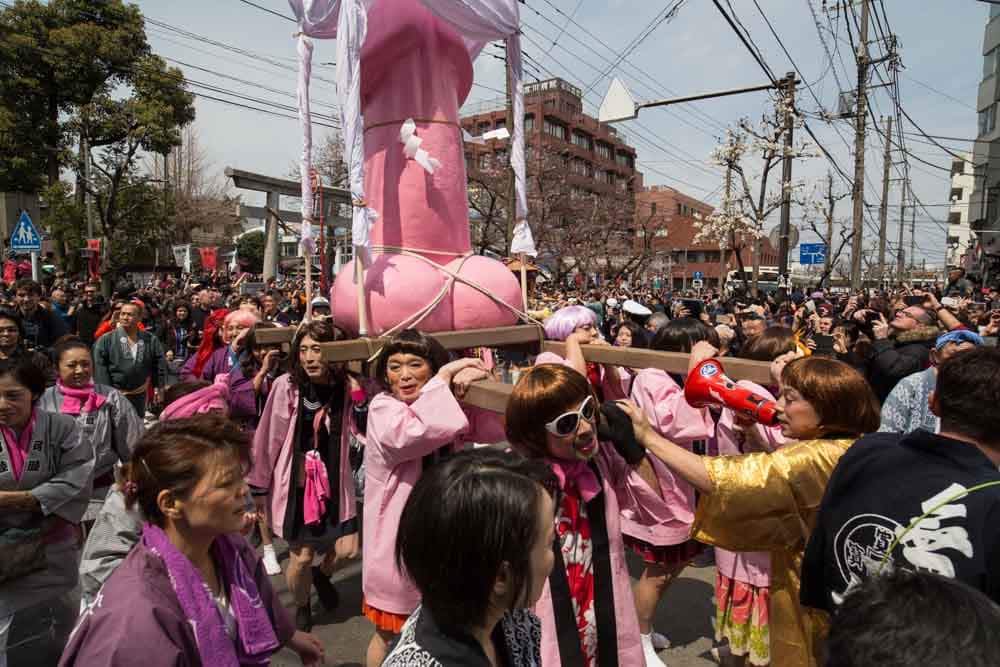
Kanamara Matsuri, also known as the Festival of the Steel Phallus, is an annual event held on the first Sunday of April at Kanayama Shrine in Kawasaki. While the shrine has ancient origins, the modern public festival was revived in 1969. It gained significant international attention through digital media and social platforms, and today it draws approximately 30,000 attendees, with international visitors making up a significant portion of the crowd.
Kanayama Shrine has a long historical association with reproductive health. It enshrines the deities Kanayama-hiko and Kanayama-hime, who are the patrons of blacksmithing and metalworking. Historically, the shrine was a site for prayers regarding fertility and protection against illness. During the Edo period, individuals working at local transit lodges frequently visited the shrine to seek divine protection and health.
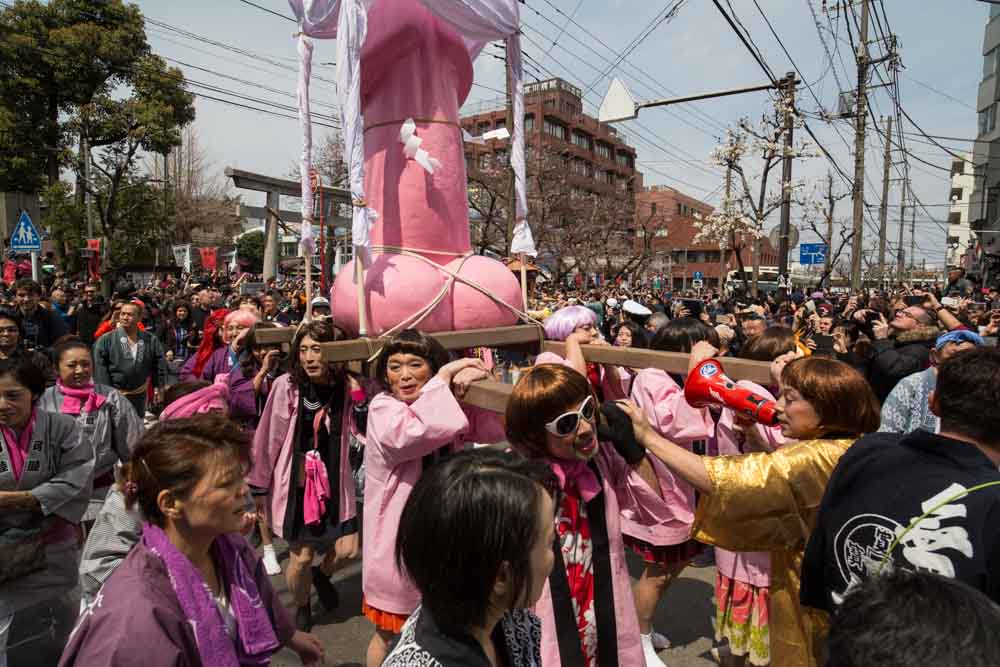
The festival activities typically begin in the morning, though the main procession occurs at midday. Three mikoshi (portable shrines) are carried through the district, passing the local train station before returning to Kanayama Shrine. These shrines are displayed on the temple grounds prior to the parade. Due to the festival’s popularity, organizers may restrict entry to the shrine grounds if capacity is reached. Visitors are encouraged to arrive early in the morning to view the various stalls selling themed merchandise, including apparel, decorative carvings, and traditional confections.
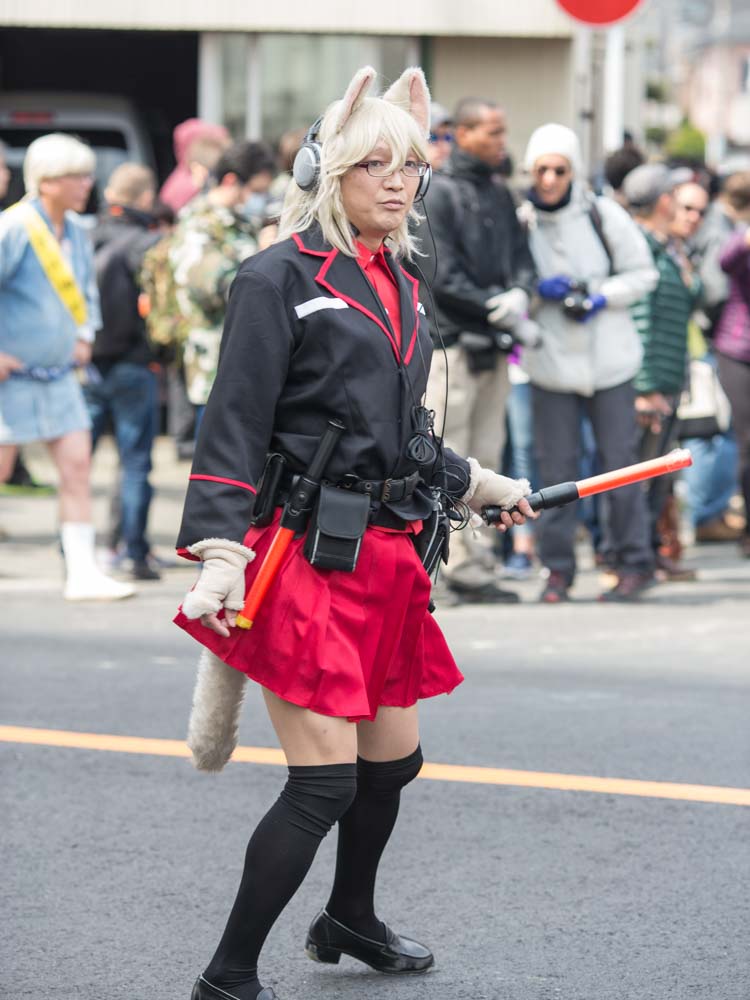
While the event features explicit phallic imagery, it is a traditional religious festival centered on prayers for fertility, easy childbirth, and marital harmony. Proceeds from the sale of festival goods are traditionally donated to HIV and AIDS research and support organizations. Many participants attend in colorful attire, and the grounds host a variety of vendors selling items ranging from candles to hand-carved objects.

The festival is also noted for its inclusion of the LGBT community. The prominent pink mikoshi, named “Elizabeth,” was donated by the Elizabeth Kaikan drag queen club and is traditionally carried by members of the transgender community and their allies.
The nearest transit point is Kawasaki-Daishi Station on the Keikyu-Daishi Line. From central Tokyo, the most direct access is via Shinagawa Station.
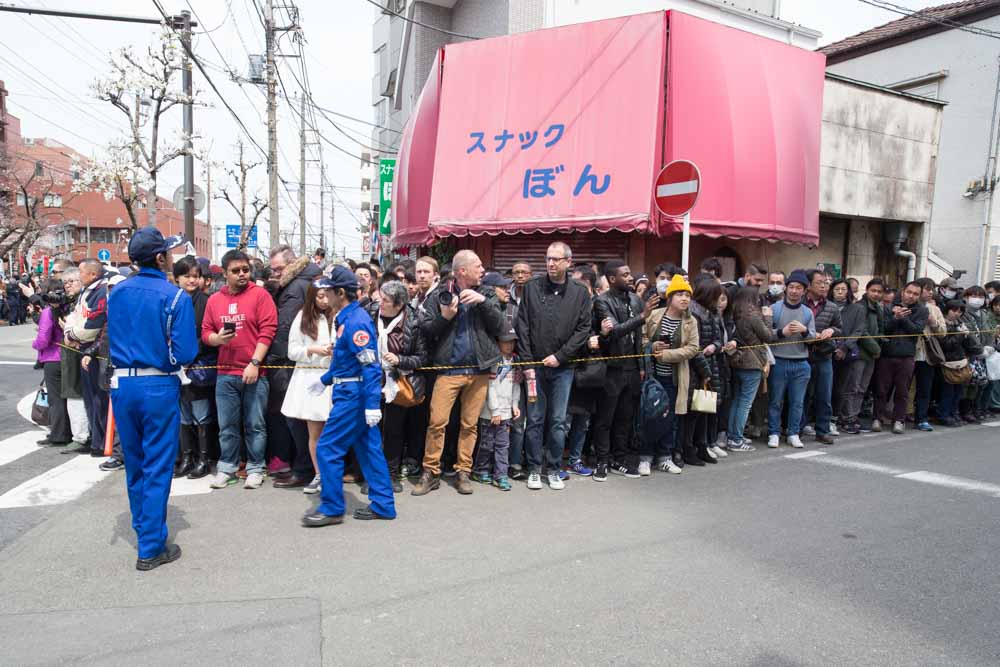
The main parade usually starts at midday, but spectators should arrive well in advance to secure a viewing spot along the narrow streets. Local organizers typically cordon off the sidewalks with rope approximately ten minutes before the shrines arrive to ensure a clear passage. Once the procession has passed a specific point, the barriers are removed, allowing the public to follow the parade. To accommodate the large international presence, safety and informational announcements are provided in both Japanese and English.
AddressKanayama Shrine, 2-13-16 Daishi Ekimae, Kawasaki, Kanagawa, 210-0802, Japan (Google Maps)
CategoryJapanese Festivals
Japanese金山神社 かなまら祭