Edo-Tokyo Museum
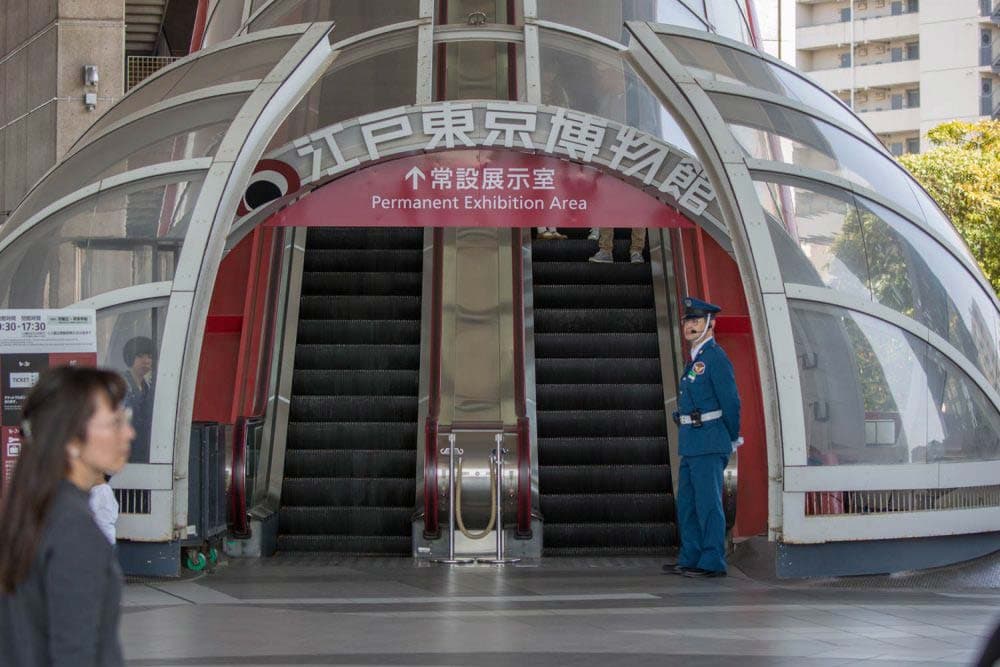
Edo-Tokyo Museum is a cultural facility tracing the history of the capital over the past 400 years. Original artifacts and replicas are on display with English descriptions. Opened in 1993, the building itself is one of Tokyo’s more unique architectural structures. Designed to resemble an elevated traditional storehouse, the massive structure sits on four pillars, leaving a wide open-air plaza beneath it. This design is not only a nod to Japan’s technical ingenuity in modern construction but also serves as a protective “lull” above the bustling streets of Ryogoku, standing at the same 62.2-meter height as the original Edo Castle tower.
From Edo to Tokyo: A Living History
Upon entering the permanent exhibition space via an escalator that feels like a portal through time, visitors are greeted by a life-sized reconstruction of the old Nihombashi Bridge. This replica represents the bridge as it appeared in the Edo period, serving as the symbolic starting point of the five major roads leading out of the city. Crossing the bridge provides a panoramic view of the gallery, where hundreds of meticulously detailed scale models depict the transition from the feudal daimyo mansions and crowded merchant “nagaya” longhouses to the Western-style brick buildings of the Meiji Restoration.
The exhibits are particularly famous for their immersive “vibe,” allowing guests to peer into the daily lives of Edo’s citizens through dioramas that feature thousands of unique, hand-painted figures. As the narrative progresses, the museum chronicles the city’s resilience through a section dedicated to Tokyo during World War II and the subsequent post-war economic miracle. Displays including firebombing artifacts and a reconstructed “apartment of the future” from the 1960s help bridge the gap between the devastation of the mid-20th century and the high-tech megalopolis we see today. The museum’s multi-layered approach to storytelling ensures that every visitor gains a visceral understanding of the city’s persistent spirit and its evolution from a marshy fishing village into a global icon.
| Visitor Information | |
|---|---|
| Address | 1-4-1 Yokoami, Sumida-ku, Tokyo 130-0015 (Google Maps) |
| Opening Hours | 9:30 AM – 5:30 PM (Sat until 7:30 PM) *Closed Mondays. |
| Price | ¥600 (approx.) |
| Website | Official Website |
| Access | ||
|---|---|---|
| Station | Line(s) | Details |
| Ryogoku Station | JR Chuo-Sobu Line | 3-minute walk from the West Exit. |
| Ryogoku Station | Toei Oedo Line | 1-minute walk from Exit A4. |