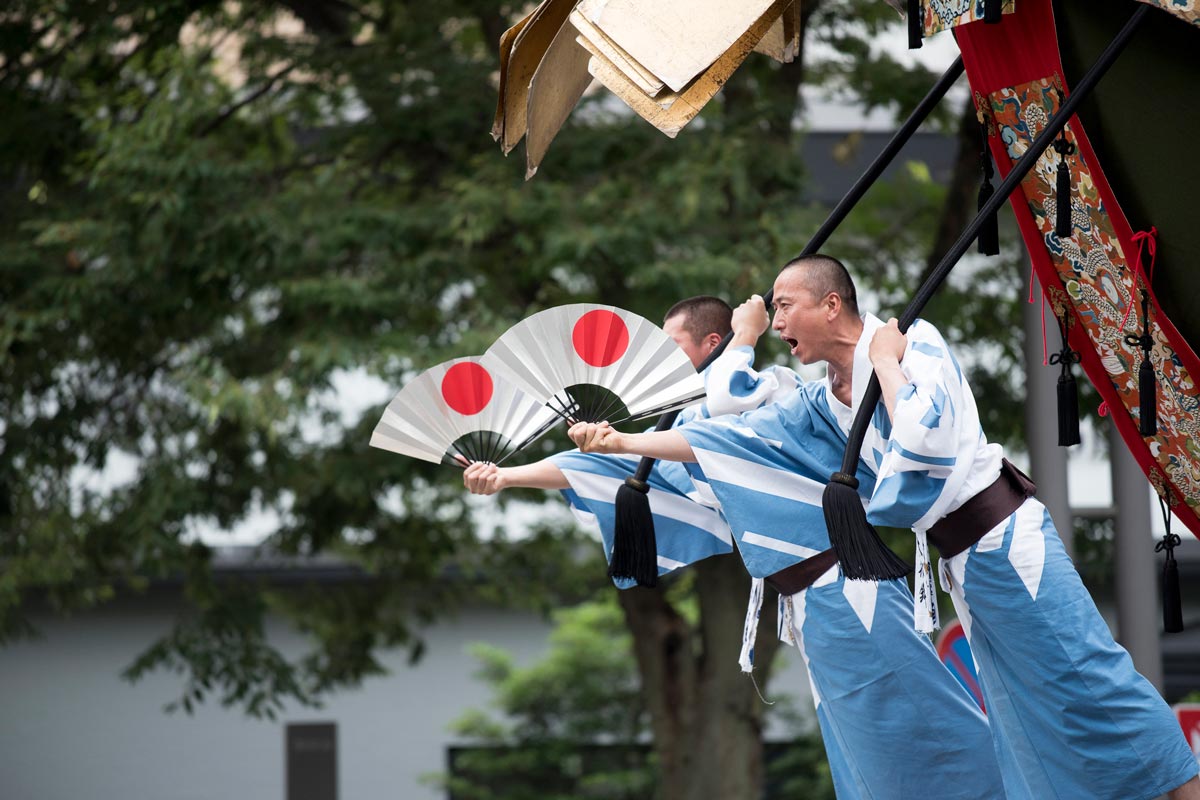
Kyoto’s Gion Festival (京都祇園祭, Gion Matsuri) is the city’s most significant event and one of the most famous festivals in Japan. Centered around Yasaka Shrine, it is recognized as a UNESCO Intangible Cultural Heritage. The festival’s roots date back to 869 AD, when the residents of Kyoto held a goryo-e (purification ritual) to pray for protection against a devastating plague. While the celebrations span the entire month of July, the primary highlights are the two Yamaboko Parades held on July 17 and July 24.
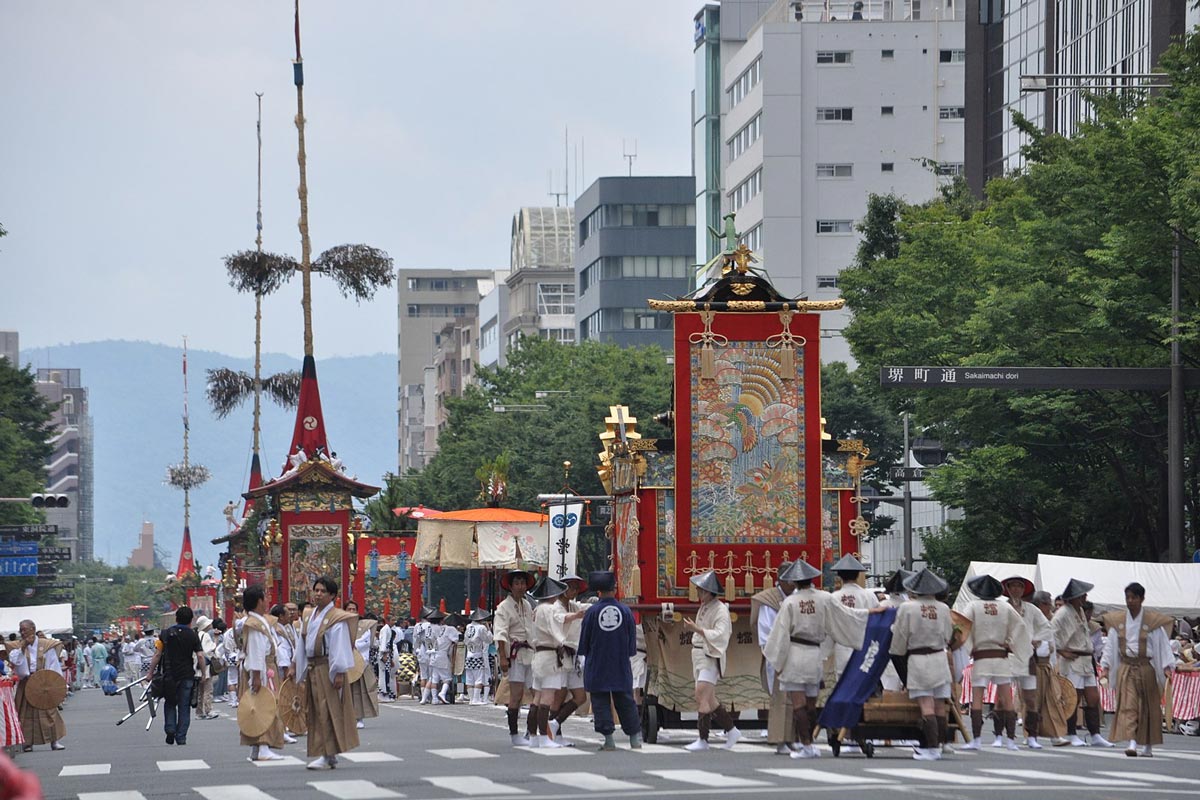
There are two types of floats: the yama and the hoko (referred to collectively as yamaboko). The hoko are the most massive, reaching up to 25 meters in height and weighing up to 12 tons. These “moving museums” are intricately decorated with historic tapestries from around the world and are impressively built from scratch each year without the use of a single nail. The first parade (Saki-matsuri) on the 17th features 23 floats, while the second parade (Ato-matsuri), which was reintroduced in 2014, features 11 floats. You can see photographs of each individual float here.
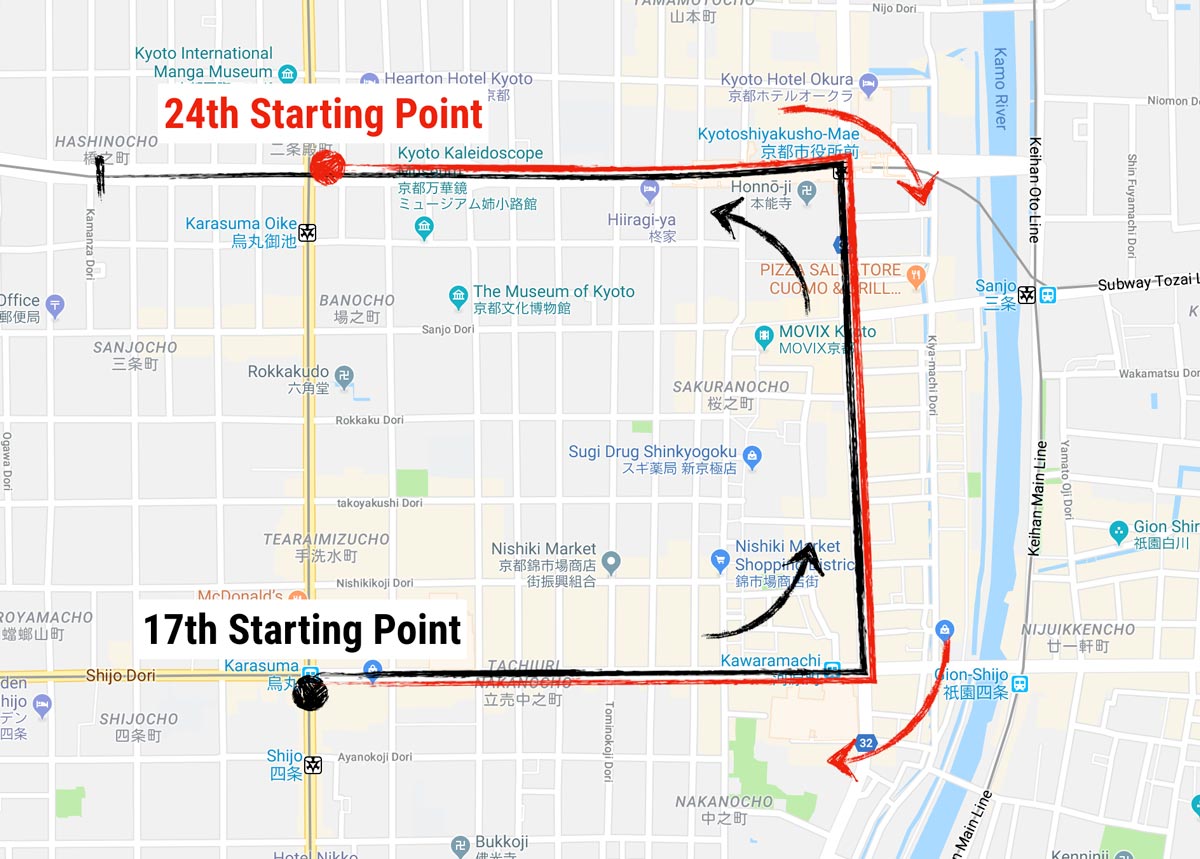
The parade routes differ to allow the divine spirits a complete circuit of the city. The Saki-matsuri sets off at 9:00 AM from Shijo-Karasuma, moving east and then north to finish at Karasuma-Oike by 1:00 PM. The Ato-matsuri begins at 9:30 AM on the 24th at Karasuma-Oike, following the same path in reverse to return the spirits toward Yasaka Shrine, concluding by midday.
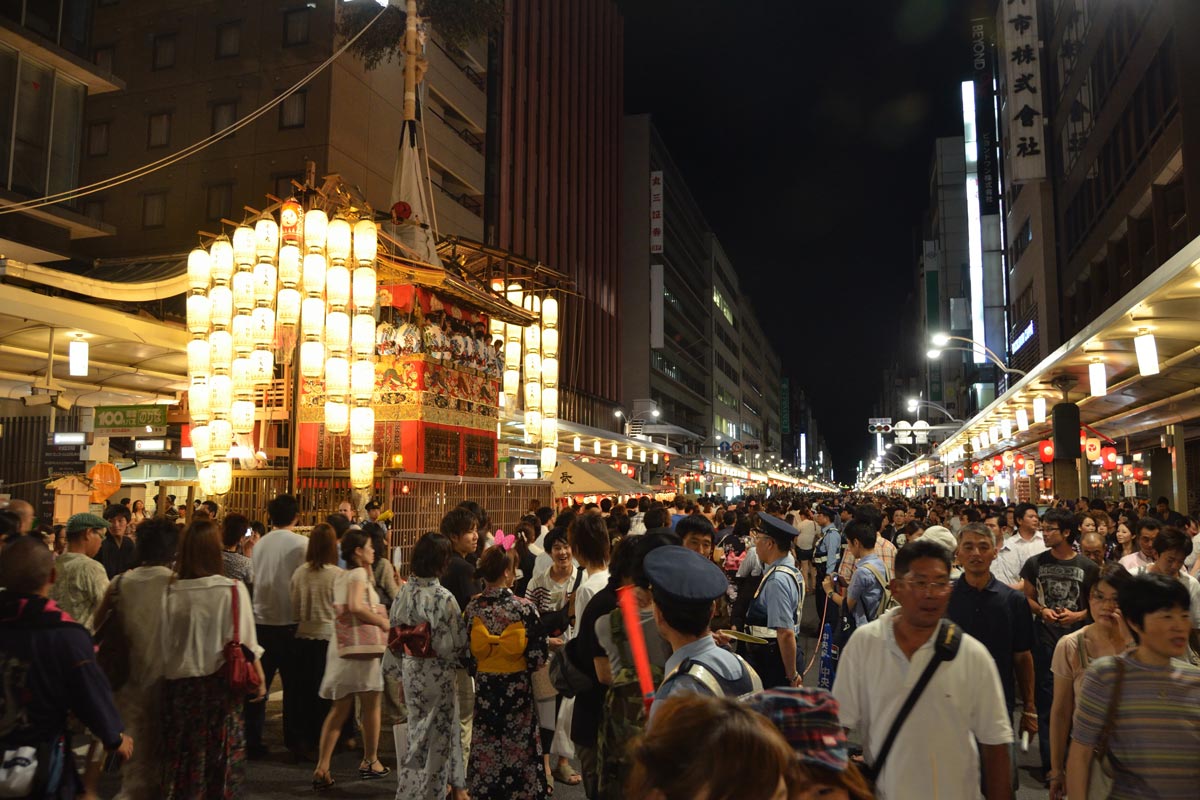
For three nights prior to each parade, Kyoto’s downtown area is pedestrianized for a festive evening celebration called yoiyama (宵山). These nights offer the quintessential Gion experience: streets lined with food stalls (yatai), crowds in yukata, and the Konchi-ki-chin music of the festival flutes. The yamaboko floats are parked along the streets, illuminated by lanterns and open for the public to admire up close.
Also noteworthy is the concurrent Byobu Matsuri (Folding Screen Festival), held during the yoiyama nights in the Shinmachi and Muromachi districts. Local merchant families and historic houses open their front rooms to the public, displaying priceless antique folding screens (byobu) and family heirlooms. This tradition offers a rare glimpse into the private world of Kyoto’s traditional merchant class (machishu), who have been the financial and cultural backbone of the Gion Matsuri for centuries.