
Given the task of designing the ideal middle-class town in Tokyo, one would probably come up with something close to Kichijoji (吉祥寺). It has a very suburban and relaxing atmosphere, yet is just a 12-minute ride from Shinjuku—something which has meant that it consistently ranks in the top three most desirable places to live in Tokyo. It is a district that perfectly balances the frantic commercial energy of a major hub with the bohemian, “slow-life” philosophy of a lakeside village.
Inokashira Park: The Soul of the District
The defining feature of Kichijoji is Inokashira Park, which celebrated its centennial in 2017. The park’s central pond was once the primary source of the Kanda River, providing Tokyo with its first organized water supply during the Edo period. Today, it is a premier destination for hanami (cherry blossom viewing), as the branches of hundreds of sakura trees hang low over the water.
Visitors can rent the park’s iconic swan boats, though local urban legend warns that couples who ride in them together are destined to break up, cursed by the jealous goddess Benzaiten, whose shrine sits on a small island in the pond. Beyond the water, the park houses the Inokashira Park Zoo, specialized in indigenous Japanese species and famous for its “Squirrel Garden,” where visitors can walk among dozens of free-roaming squirrels.
Ghibli Museum: A Whimsical Pilgrimage
Located on the southwestern edge of Inokashira Park is the world-renowned Ghibli Museum. Designed by the legendary Hayao Miyazaki, the building is a work of art in itself, featuring spiral staircases, hidden passages, and a life-sized Robot Soldier from Castle in the Sky guarding the rooftop garden. The museum does not follow a set path, encouraging visitors to “get lost together.” While technically in neighboring Mitaka, the 15-minute walk through the park from Kichijoji Station is the preferred route for most fans. Note: Tickets must be booked months in advance and are notoriously difficult to secure.
Harmonica Yokocho: Post-War Nostalgia
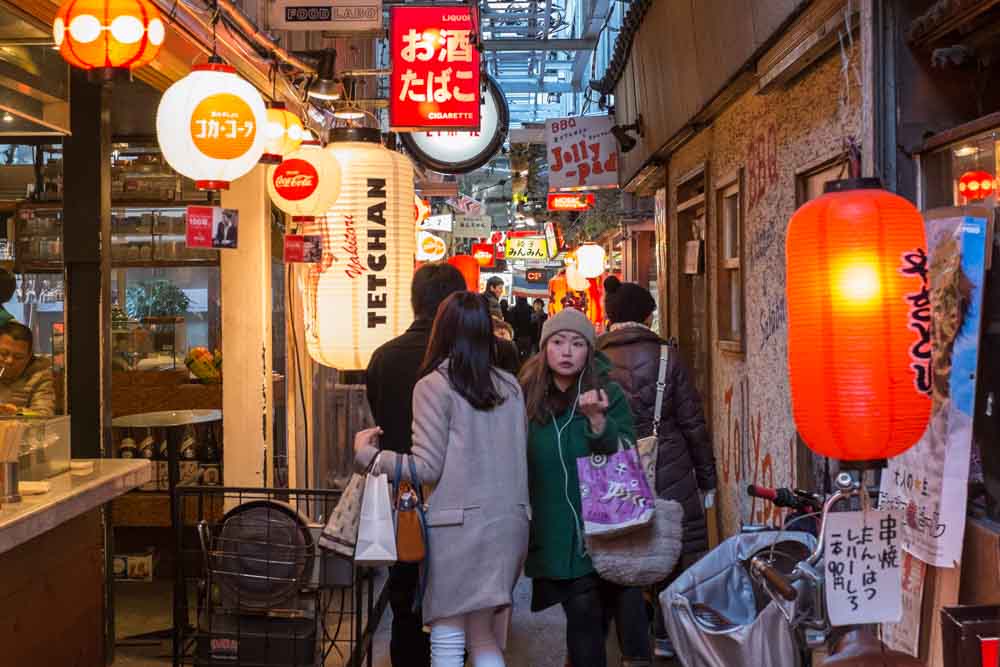
Directly across from the North Exit of the station lies Harmonica Yokocho, a dense network of five narrow alleys. The name comes from its appearance—the tiny, uniform stalls resemble the reeds of a harmonica. Originally a black market after World War II, it has transformed into a culinary sanctuary. By day, you will find fishmongers and flower shops; by night, the area glows with red lanterns as tiny izakaya, standing bars, and gourmet bistros open their doors. It is the best place in the city to experience “shitamachi” grit within a modern, upscale suburb.
The Shopping Paradox: Sunroad vs. Nakamichi-dori
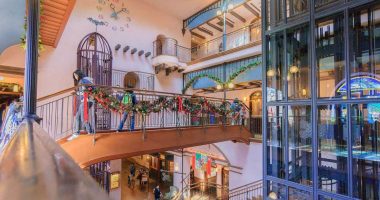
Kichijoji offers two very different shopping experiences. Sunroad is a massive, glass-roofed shotengai (shopping arcade) that serves as the commercial heart of the district, filled with drugstores, chain retailers, and shoe outlets.
In contrast, Nakamichi-dori—which runs along the west side of the station—is the epicenter of Tokyo’s zakka (lifestyle goods) culture. This street is lined with independent boutiques, handmade ceramic shops, and vintage toy stores. It is here that the “Kichijoji style” is born: a blend of high-quality organic materials, minimalist design, and a focus on domestic craftsmanship.
Culinary Landmarks: The Satou Queue
No guide to Kichijoji is complete without mentioning Satou Steak House. At almost any hour, a long queue snakes down the street for their legendary Minchi-katsu (deep-fried breaded ground beef balls) made from premium Matsusaka wagyu. For those seeking a quieter experience, the district is also a hub for Jazz Cafes (Jaza Kissa). Sonei, one of the oldest in the city, allows patrons to listen to high-fidelity vinyl records in near-silence, preserving a listening culture that is rapidly disappearing from the rest of Tokyo.
Historical Note: Despite the name, you won’t find a “Kichijo Temple” in Kichijoji. The original Kichijo-ji temple was located in Bunkyo Ward. After the Great Fire of Meireki in 1657 destroyed the area, the displaced residents were relocated to this undeveloped plot of land. They named their new home “Kichijoji” in honor of the temple they left behind, creating a neighborhood named after a memory.
Logistics and Access
Kichijoji is exceptionally well-connected, serving as the terminal for the Keio Inokashira Line and a major stop on the JR Chuo Line. Its accessibility makes it an ideal base for exploring West Tokyo or as a day-trip destination for those staying in Shinjuku.
| Station | Line(s) | Travel Time |
|---|---|---|
| Kichijoji (JR) | Chuo Line (Rapid), Sobu Line | 12 mins from Shinjuku |
| Kichijoji (Keio) | Inokashira Line (Express) | 18 mins from Shibuya |
| Mitaka | JR Chuo Line | 5 mins (for Ghibli West Gate) |
To experience Kichijoji like a local, we recommend arriving at 10:00 AM. Grab a coffee on Nakamichi-dori, spend your afternoon wandering the trails of Inokashira Park, and head to Harmonica Yokocho just as the lanterns begin to flicker on at 5:00 PM. It is a town that doesn’t demand a checklist; it simply demands that you slow down.