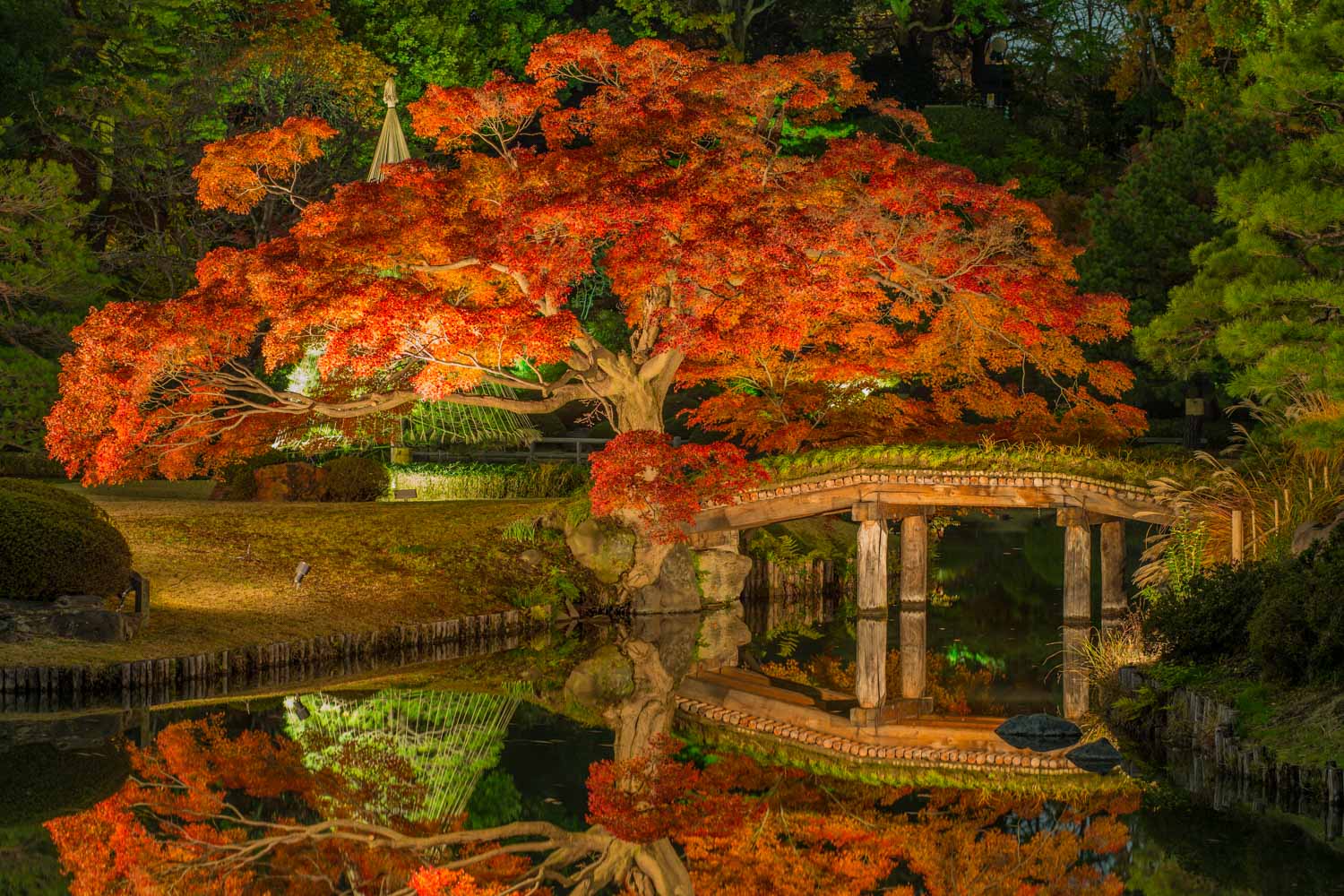
Autumn Colours Near Tokyo
Autumn is undoubtedly one of the most rewarding times to visit Japan. While the spring cherry blossom season carries a frantic, celebratory energy, the autumn months offer a more contemplative and stable experience. The skies are characterized by a deep, clear blue, and the days are generally crisp and sunny with significantly lower rainfall than the summer months. For many travelers, the predictability of the weather makes autumn the superior choice for extensive outdoor exploration and photography.
While Tokyo may not possess the ancient, concentrated temple density of Kyoto, the capital is uniquely defined by its massive landscape gardens and the golden ginkgo avenues that line its modern boulevards. The autumn season in the capital typically peaks from mid-November to early December. Unlike the fleeting cherry blossoms, which may only look their best for a few days, the autumn foliage remains vibrant for several weeks, making it much easier to time a visit successfully.
The Golden Corridor and Traditional Gardens
In the heart of the city, the most iconic autumn sight is often not red, but a brilliant, uniform gold. The ginkgo tree—Tokyo’s official metropolitan tree—takes center stage during this period. For a casual stroll, Yoyogi Park is an excellent place to start; it is centrally located, offers free entrance, and features a large grove of ginkgo trees that carpet the ground in yellow. However, those seeking a more curated aesthetic should visit the city’s historical landscaped gardens. Among these, Koishikawa Korakuen, Rikugien, and Hamarikyu deserve special mention for their meticulous seasonal design.
Koishikawa Korakuen is particularly famous for its scarlet maples that frame the “Full Moon Bridge,” while Hamarikyu offers a unique saltwater pond that reflects the oranges and reds against the backdrop of the Shiodome skyscrapers. These gardens were designed to be viewed as a series of living paintings, where every stone and branch is positioned to maximize the visual impact of the changing seasons. The reflection of the trees in the still waters of these garden ponds creates a sense of depth and tranquility that is hard to find elsewhere in the metropolis.
Escaping to the Mountains and Coastal Temples
To the west of the city center, Mount Takao attracts massive crowds throughout November. While the hike is pleasant and accessible via cable car, the density of the colors is often surpassed by destinations further south. Kamakura remains the most popular day-trip destination for autumn enthusiasts. The mix of Zen temple architecture and coastal hills creates a stunning setting for the changing leaves. The temples of Kamakura are known for their late-blooming maples, which often stay vibrant well into December. Because of its proximity to both Tokyo and Yokohama, it can become extremely crowded; visitors should aim for a weekday trip if possible to avoid the heaviest foot traffic.
For those seeking something more offbeat, the Omiya Bonsai Village in Saitama offers a miniature perspective on the season. Watching the deep reds and oranges take hold of trees that are over a century old yet only a few feet tall is an experience you can really only get in Japan. This site is far less crowded than the major city parks and offers a quiet sanctuary for those who appreciate the horticultural artistry behind the season’s beauty.
Night Viewing and the Light-Up Tradition
Finally, no autumn visit to the capital is complete without experiencing a “light-up” event. The autumn light-up at Rikugien is genuinely spectacular. During this limited-time event, the garden remains open after dark, and the trees surrounding the central pond are illuminated with precision lighting. The sight of a fiery maple standing next to a stone bridge, perfectly reflected in the dark water, is the stuff of postcards. It provides a completely different perspective on the foliage, emphasizing the textures of the leaves and the structural beauty of the garden in a way that daylight cannot.