Hamamatsucho & Shiba-Koen
The Hamamatsucho and Shiba-Koen district is the ultimate “Welcome to Tokyo” experience. Serving as the primary terminus for the Tokyo Monorail from Haneda Airport, it is often the first neighborhood travelers encounter upon arrival. This is a place where the high-energy pulse of a global transit hub meets the tranquil, centuries-old sanctuary of the Tokugawa Shogunate. From the high-tech skyscrapers of the waterfront to the orange-and-white lattice of Tokyo Tower, the area offers a condensed map of Japan’s transition from the Edo period to the space age. Currently, Hamamatsucho is undergoing a multi-phase transformation of immense technical ingenuity, replacing the aging World Trade Center architecture with the BLUE FRONT SHIBAURA and World Tower Residence complexes. These developments have significantly improved the district’s walkability, creating elevated pedestrian decks that link the JR and Monorail station directly to the Takeshiba Waterfront.
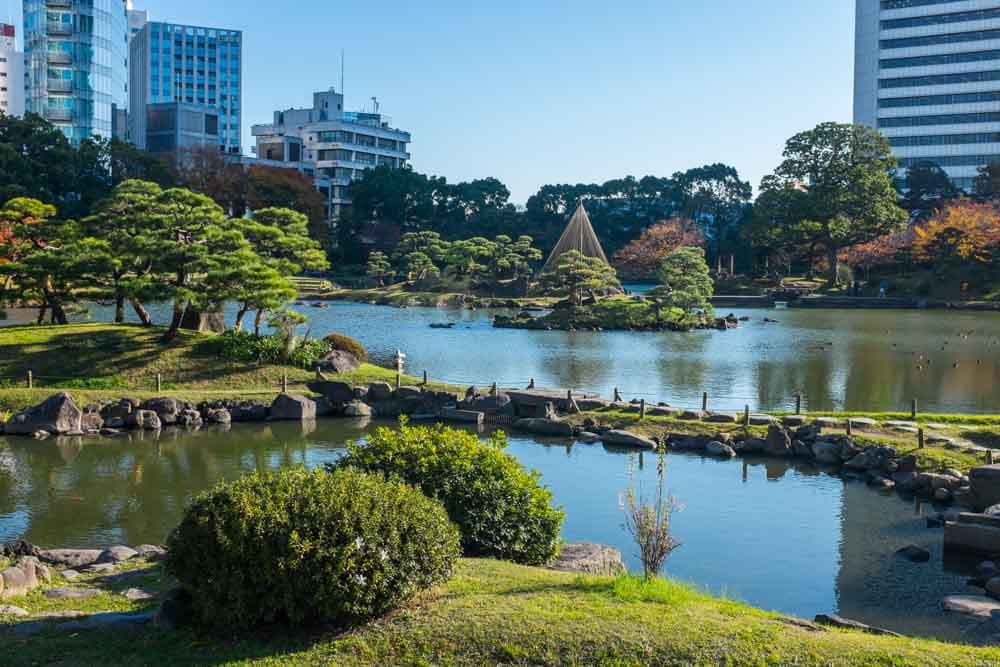
A short walk east leads to WATERS takeshiba, a sophisticated hub featuring the Mesm Tokyo hotel and the Shiki Theatre. This area serves as a vital bridge to the rest of the Pacific, acting as the main terminal for high-speed ferries bound for the Izu and Ogasawara Islands. For those seeking an architectural lull amidst the steel and glass, the Kyu-Shiba-rikyu Garden sits directly next to the JR tracks. It remains a resolute guardian of Edo-period landscape design, offering a high-value experience of tidal ponds and man-made stone hills that feel entirely detached from the rattling trains nearby. Moving ten minutes west from Hamamatsucho Station brings you into Shiba-Koen (Shiba Park). Established in 1873, it is one of the oldest public parks in Japan, featuring the lush Momiji-dani (Autumn Leaf Valley) and the Shiba Maruyama Kofun—one of Tokyo’s largest ancient burial mounds, which provides a unique, elevated vantage point for photographers.
The Sanctuary, the Icon, and the City Skyline
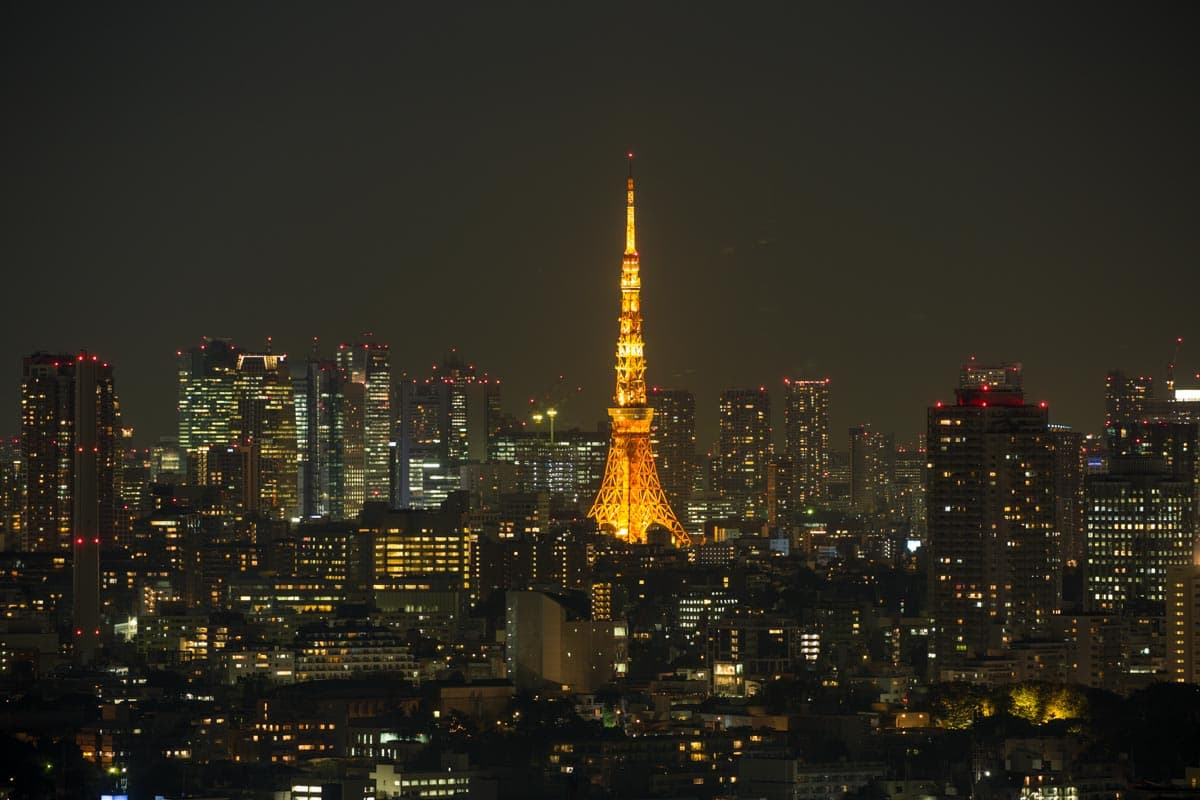
Dominating the park’s northern edge is Zojoji, the family temple of the Tokugawa Shogunate. Its massive red gate, the Sangedatsumon, is the only structure to survive the original 17th-century complex and remains the oldest wooden building in Tokyo. The temple grounds act as a high-value historical sanctuary, housing the Tokugawa Shogunate Cemetery where six of the fifteen shoguns are buried. The visual “vibe” here is arguably the most iconic in the city: the ancient, dark wood of the temple hall set against the vibrant orange of Tokyo Tower rising directly behind it. Standing at 333 meters, the tower remains an irreplaceable symbol of Japan’s post-war economic miracle. Though surpassed in height by the Tokyo Skytree, it retains a sophisticated charm through its Main Deck (150m) and the mirror-filled Top Deck (250m). For the more adventurous, the 600-step outdoor staircase challenge provides an “industrial-chic” perspective of the tower’s technical ingenuity, while Foot Town at its base caters to modern tastes with RED° TOKYO TOWER, a massive eSports and VR theme park.
As evening descends, the district’s nightlife reveals two distinct vibes. The side streets near the Daimon Gate are the traditional domain of the salaryman, packed with unpretentious motsuyaki (grilled offal) joints and standing bars like the legendary Akitaya. In contrast, the areas closer to the park and the Prince Park Tower Tokyo offer a different kind of lull—sophisticated rooftop lounges where guests can enjoy unobstructed views of the tower’s nightly illumination. Whether you are navigating the high-energy waterfront or the silent temple grounds, Hamamatsucho and Shiba-Koen provide a high-fidelity introduction to the multifaceted soul of Tokyo.
| Destination | Nearest Station | Primary Line(s) |
|---|---|---|
| Monorail / JR Hub | Hamamatsucho | Tokyo Monorail, JR Yamanote |
| Zojoji / Tokyo Tower | Daimon / Onarimon | Oedo, Asakusa, Mita Lines |
| Shiba-Koen South | Shibakoen | Toei Mita Line |
| Waterfront / Islands | Takeshiba | Yurikamome Line |