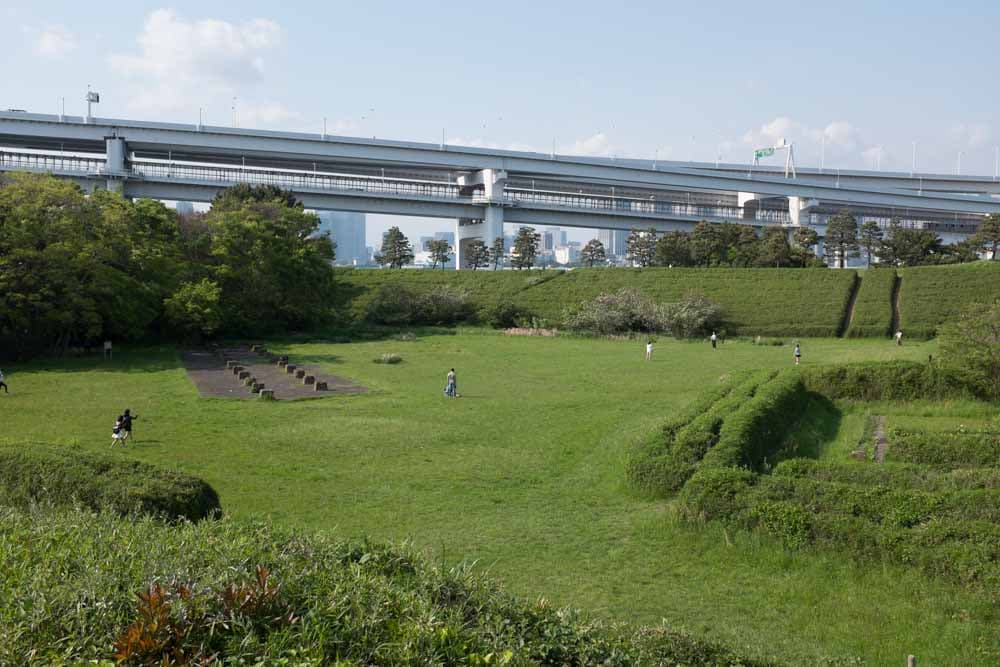
Daiba Park
Daiba Park (台場公園) may not be the most expansive of Tokyo’s green spaces, but it is undoubtedly one of its most historically significant. Located at the northern tip of the Odaiba waterfront, this small, square-shaped park is actually a preserved relic of the mid-19th century. It is one of the original daiba (artillery batteries) constructed in 1853 by the Tokugawa shogunate. While modern Odaiba is known for its futuristic shopping malls and digital art museums, Daiba Park serves as a quiet, grassy reminder of a time when the city was bracing for foreign invasion.
The Fortress of the Black Ships
The construction of the park was a direct response to the arrival of Commodore Matthew Perry and his “Black Ships.” Fearing that the American naval presence would lead to the forced opening of Japan, the shogunate ordered the rapid creation of eleven island fortresses to defend the approach to Edo (modern-day Tokyo). Ultimately, only six were completed, and Daiba Park—officially known as the No. 3 Battery—is the most accessible of the two that still remain today. The island is surrounded by high, steep stone walls that were designed to withstand naval bombardment, and the interior landscape still bears the structural scars of its military past.
As you walk along the raised perimeter of the park, you can see the well-preserved foundations of former barracks and ammunition depots. These stone-lined pits once housed the soldiers and the gunpowder necessary to fuel the massive cannons that pointed toward the horizon. While the original artillery pieces are no longer on-site—many having been moved to museums or locations like Yasukuni Shrine—the elevated artillery emplacements remain clearly visible. These platforms provide a tactile connection to the frantic defensive efforts of the late Edo period, offering a stark contrast to the leisurely atmosphere that defines the area today.
A Quiet Vantage Point Over Tokyo Bay
In 1928, the battery was officially opened to the public as a park, and it has since become one of the best “hidden” viewpoints in the city. Because it is slightly removed from the main tourist promenade of the Odaiba Marine Park, it offers a much quieter environment for those looking to escape the crowds. The slopes of the old fortress provide a spectacular, unobstructed view of the Rainbow Bridge as it stretches toward the city center. At night, the bridge’s lights reflect off the quiet waters of the bay, creating a panoramic scene that includes the Tokyo Tower and the glittering skyline of the Minato ward.
The park is accessible via a long walkway that connects it to the mainland, making it feel like a secluded island retreat. It is a popular spot for photography enthusiasts and local residents who come to picnic amongst the cherry blossoms in the spring. Despite its small footprint, Daiba Park manages to bridge two very different eras of Japanese history: the isolationist anxieties of the shogunate and the cosmopolitan, high-tech energy of 21st-century Tokyo. For any visitor exploring the waterfront, it is a must-visit location that proves that even the smallest park can hold the weight of a nation’s history.