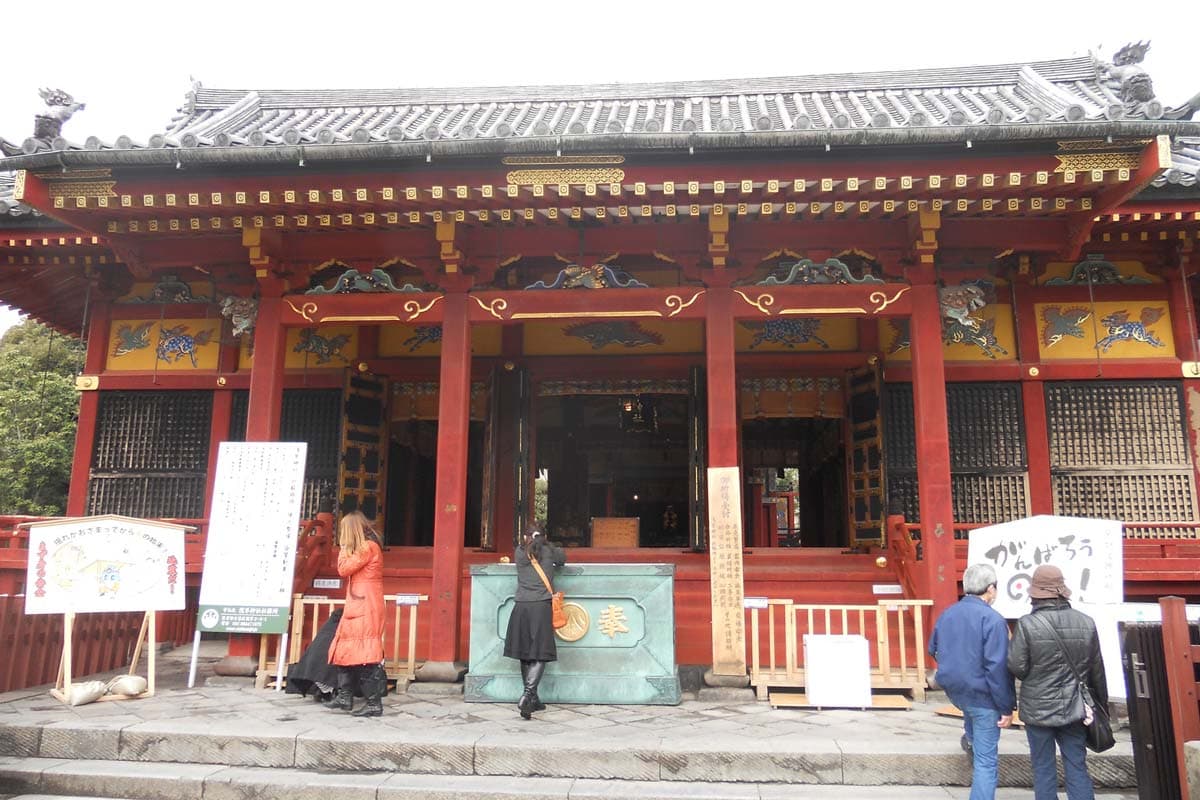
Asakusa Shrine
Located just to the east of the cavernous main hall of Sensoji Temple, Asakusa Shrine (浅草神社) provides a tranquil, Shinto-centered contrast to its world-famous Buddhist neighbor. While Senso-ji is dedicated to the Bodhisattva Kannon, Asakusa Shrine is dedicated to the three mortal men who founded the temple: the brothers Hinokuma Hamanari and Takenari, who fished a golden statue of Kannon from the Sumida River in 628 AD, and Hajino Nakatomo, the village headman who converted his home into a temple to house it. This unique dedication to human founders has earned the shrine its popular nickname, Sanja-sama (Shrine of the Three Guardians).
The Shogunate Legacy and Sanja Matsuri
The current shrine building is a rare and vital architectural survivor, commissioned in 1649 by the third Tokugawa shogun, Tokugawa Iemitsu. Built in the sophisticated Gongen-zukuri style—where the main hall and the offering hall are joined under a single roof—the structure features vibrant vermilion lacquer and intricate carvings of mythical birds and beasts. Unlike many of the surrounding structures that were lost to the firebombing of World War II, Asakusa Shrine miraculously survived intact, leading to its designation as an Important Cultural Property of Japan. The grounds offer a distinct “lull” from the frantic energy of the Nakamise shopping street, allowing visitors to appreciate the delicate Edo-period craftsmanship in a more meditative atmosphere.
The shrine’s influence on local culture is most visible during the Sanja Matsuri, held annually over the third weekend of May. As one of Tokyo’s three major Shinto festivals, it is a high-octane celebration where the three tutelary spirits of the founders are placed into ornate mikoshi (portable shrines) and paraded through the streets of Asakusa. The event draws millions of spectators and is famous for its raw energy, traditional music, and the participation of thousands of neighborhood residents. Outside of the festival season, the shrine remains a cornerstone of the community, where locals still come to pray for the prosperity of their businesses and the safety of their families, continuing a spiritual tradition that has remained unbroken for over a millennium.
| Visitor Information | |
|---|---|
| Address | 2-3-1 Asakusa, Taito-ku, Tokyo 111-0032 (Google Maps) |
| Opening Hours | 9:00 AM – 4:30 PM (Shrine grounds open 24 hours) Closed: Open daily |
| Price | Free admission |
| Website | Visit Website |
| Access | ||
|---|---|---|
| Station | Line(s) | Access Details |
| Asakusa Station | Ginza, Asakusa Lines | 7-minute walk through the Senso-ji grounds |
| Asakusa Station | Tsukuba Express | 10-minute walk |
| Asakusa Station | Tobu Skytree Line | 7-minute walk |