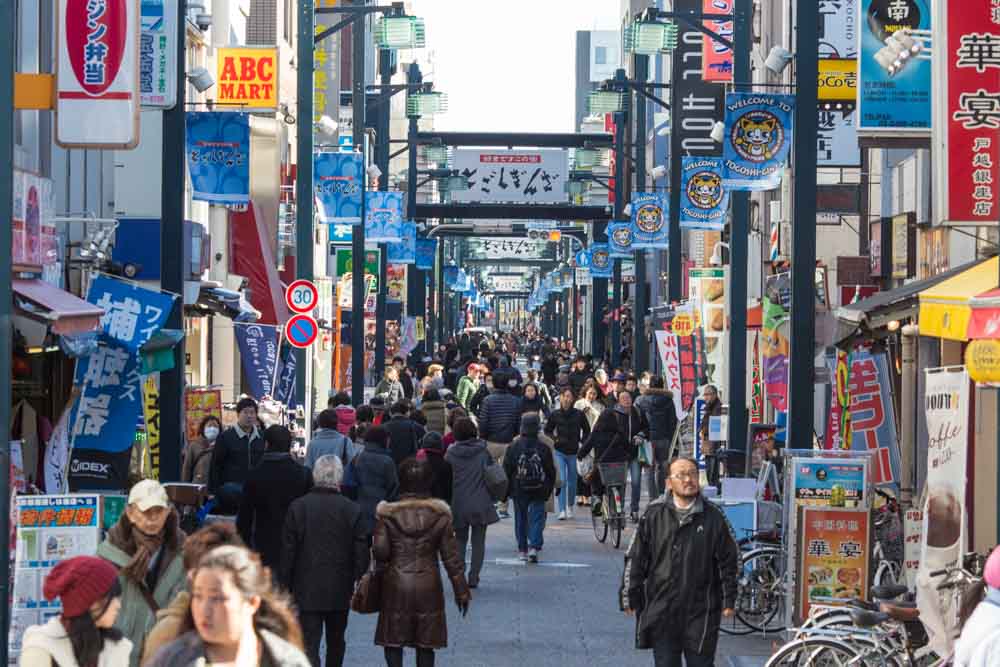
Togoshi-Ginza
Togoshi-Ginza (戸越銀座) stands as a legendary fixture of Tokyo’s shitamachi (low city) culture. Located in Shinagawa Ward, it holds the title of the longest shoten-gai (shopping street) in the Kanto region, spanning a high-functioning 1.5-kilometer corridor. This district is actually a collective of three separate merchant associations that have bridged the gap between their individual domains to create a seamless, 400-shop experience. Interestingly, while the “Ginza” name is now found across Japan, Togoshi-Ginza was the very first to adopt it. Following the Great Ginza Fire of 1872, the central Ginza district was rebuilt with bricks, and the leftover rubble was transported here to improve the drainage of the local marshlands. This act of technical ingenuity not only paved the way for local development but sparked a national naming trend that continues to this day.
Today, the street has transitioned from its industrial roots into a high-fidelity paradise for tabe-aruki (eating while walking). The neighborhood has built a high-value culinary identity around the Korokke (croquette), with over 20 different shops offering unique variations ranging from traditional potato to creative oden-filled centers. This focus on street food is supported by a dedicated “Croquette Map” provided by the merchant association, ensuring that “food tourists” and locals alike can navigate the diverse range of storefronts selling everything from fresh taiyaki to local pickles in a vibrant, communal atmosphere.
Community Mascot and the Black-Water Onsen
The neighborhood’s friendly spirit is personified by its mascot, Togoshi Ginjiro (Gin-chan), a stray cat whose image provides a welcoming vibe across the district’s banners and merchandise. Beyond the retail energy, the area offers a resolute guardian of traditional relaxation: the Togoshi-Ginza Onsen. This modern public bathhouse serves as an architectural lull for weary shoppers, utilizing natural “black water” (kuro-yu) rich in organic minerals to provide a high-value sento experience. To enjoy the district at its most sophisticated pace, visitors should arrive during the mid-afternoon pedestrian hours, when the absence of vehicle traffic allows for a leisurely stroll through one of Tokyo’s most authentic community hubs.
| Station | Line(s) | Notes |
|---|---|---|
| Togoshi-ginza | Tokyu Ikegami Line | Drops you directly in the middle of the street. |
| Togoshi | Toei Asakusa Line | A 2-minute walk from the eastern end. |
| Osaki | JR Yamanote Line | A 15-minute walk from the western end. |