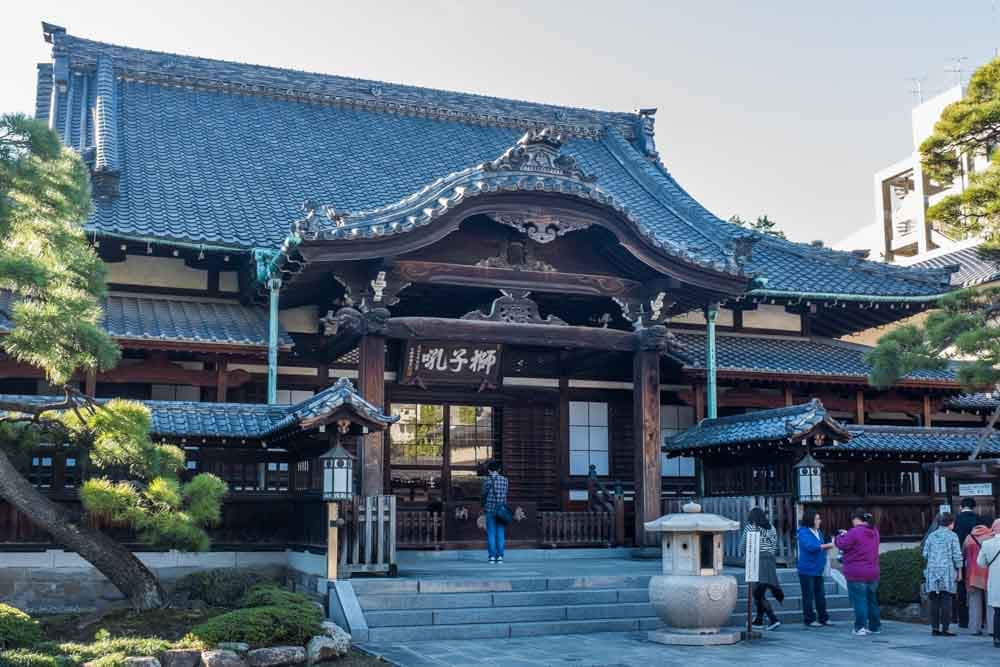
Sengakuji Temple
Sengakuji Temple (泉岳寺) was built just south of Edo Castle (on the grounds of which Tokyo Imperial Palace now stands) by Tokugawa Ieyasu in 1612. It was founded in memory of Imagawa Yoshimoto, a powerful feudal lord to whom Ieyasu had been pledged as a “hostage” during his youth—a common practice used to enforce trust between rival clans. After a fire destroyed the original main building in 1641, the temple was moved to its current location in Takanawa and reconstructed. While much of the complex was lost during World War II, the current structures, rebuilt in 1953, maintain the solemn “lull” of a Soto Zen sanctuary.
Sengakuji would likely be just another quiet temple in Tokyo, known primarily by locals, were it not for the “Ako Incident”—a legendary event that took place on a snowy night in December 1702, which would go on to define the Japanese ideal of Bushido (the way of the warrior).
The 47 Ronin: An Epic of Loyalty
On the morning of March 14, 1701, Asano Takumi no Kami, the daimyo of Ako, drew his katana in the Pine Gallery of Edo Castle and attacked his superior, Kira Kozuke no Suke. Kira had reportedly tormented and humiliated Asano, leading to this sudden loss of temper. Because drawing a weapon within the castle was strictly forbidden, the Shogun, Tokugawa Tsunayoshi, ordered Asano to commit ritual suicide (seppuku) that very day. His estate was confiscated, and his 300 retainers were cast out as ronin (masterless samurai).
While Kira escaped punishment, Asano’s retainers, led by chief retainer Oishi Kura no Suke, harbored a deep bitterness. They spent nearly two years plotting in secret, leading seemingly ordinary lives to avoid suspicion. Finally, on the night of December 14, 1702, 47 of these ronin stormed Kira’s residence near Ryogoku. After a fierce battle, they beheaded Kira, exacting their long-awaited revenge. They then marched nearly ten kilometers through the night to Sengakuji to present their enemy’s head at their master’s grave.
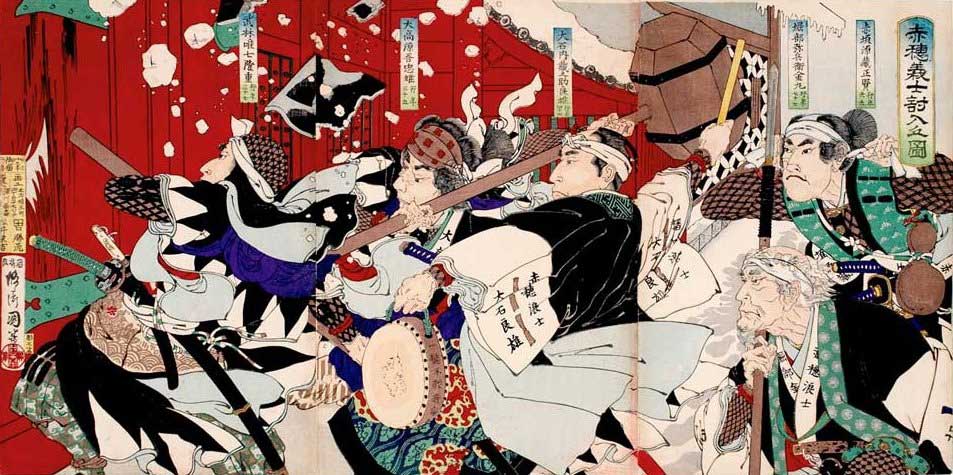
The Shogun faced a legal and moral dilemma. While the ronin had broken the law, their absolute loyalty moved the public and many within the government. Ultimately, they were allowed to commit seppuku, preserving their honor as samurai. Today, their graves sit in a small, smoke-filled enclosure to the side of the temple, where visitors from across the world come to offer incense. Nearby, the Kubi-arai Well (Head-Washing Well) still stands, marking the spot where the ronin rinsed Kira’s head before presenting it to their fallen lord.
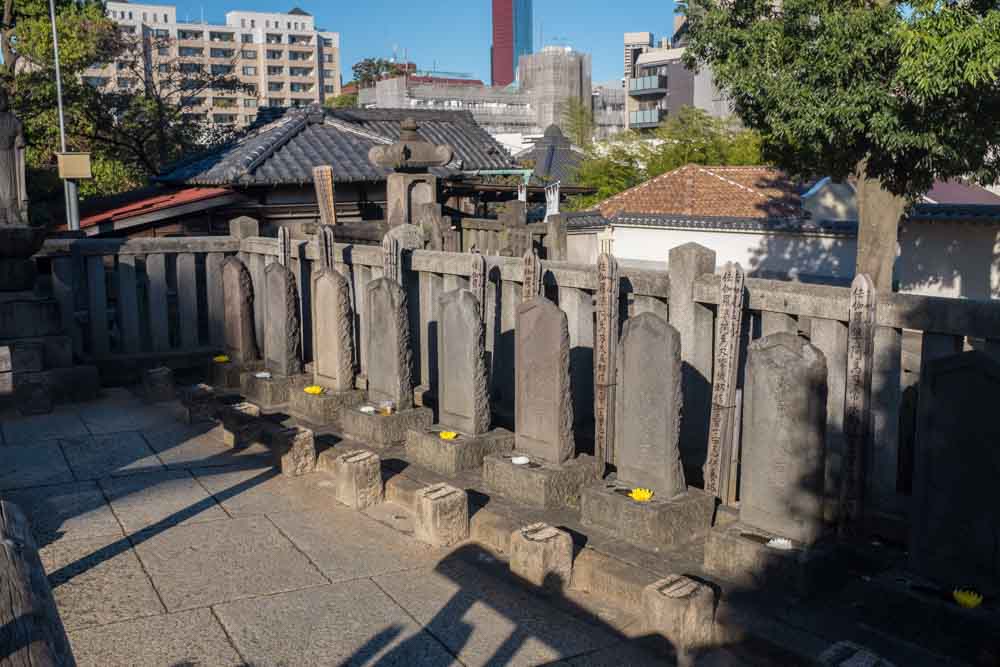
To further explore this history, visitors can enter the Ako Gishi Memorial Museum on the grounds, which houses authentic relics belonging to the ronin, including letters and armor. The story is celebrated every December at the Ako Gishi Sai festival, where a parade of “warriors” marches through the streets to the temple gates, ensuring that the legacy of the 47 Ronin remains a vibrant part of Tokyo’s cultural fabric.
| Visitor Information | |
|---|---|
| Address | 2-11-1 Takanawa, Minato-ku, Tokyo 108-0074 (Google Maps) |
| Opening Hours | April–Sept: 7:00 AM – 6:00 PM Oct–March: 7:00 AM – 5:00 PM *Museum: 9:00 AM – 4:00 PM |
| Price | Grounds: Free / Museum: ¥500 (Adults), ¥400 (Middle/High School) |
| Website | Official Website |
| Access | ||
|---|---|---|
| Station | Line(s) | Details |
| Sengakuji Station | Toei Asakusa / Keikyu Lines | 1-minute walk from Exit A2. |
| Takanawa Gateway | JR Yamanote / Keihin-Tohoku | 8-minute walk. |