Ryogoku Kokugikan
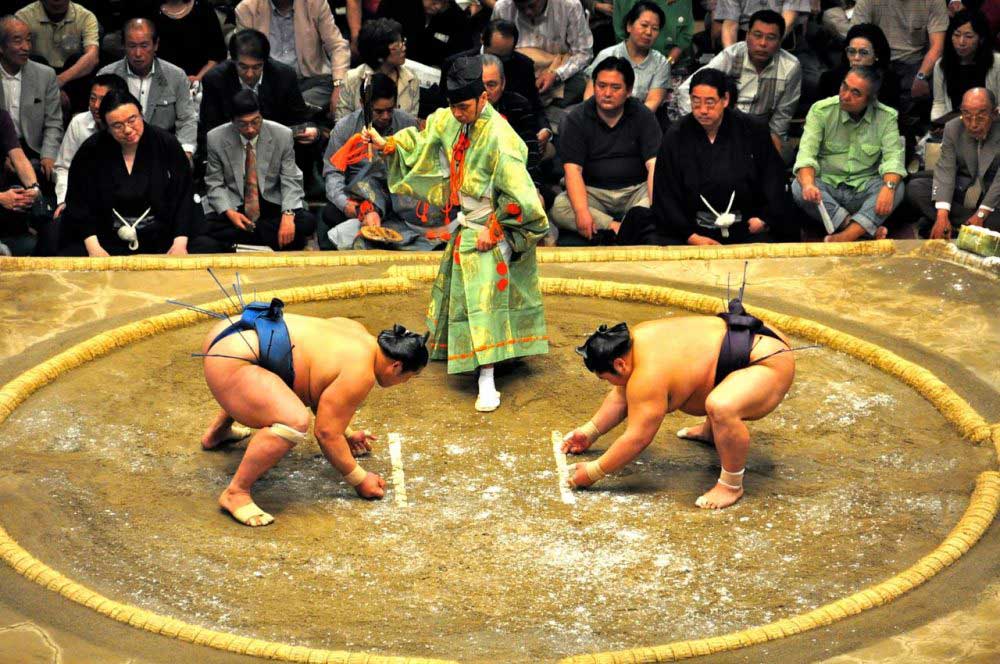
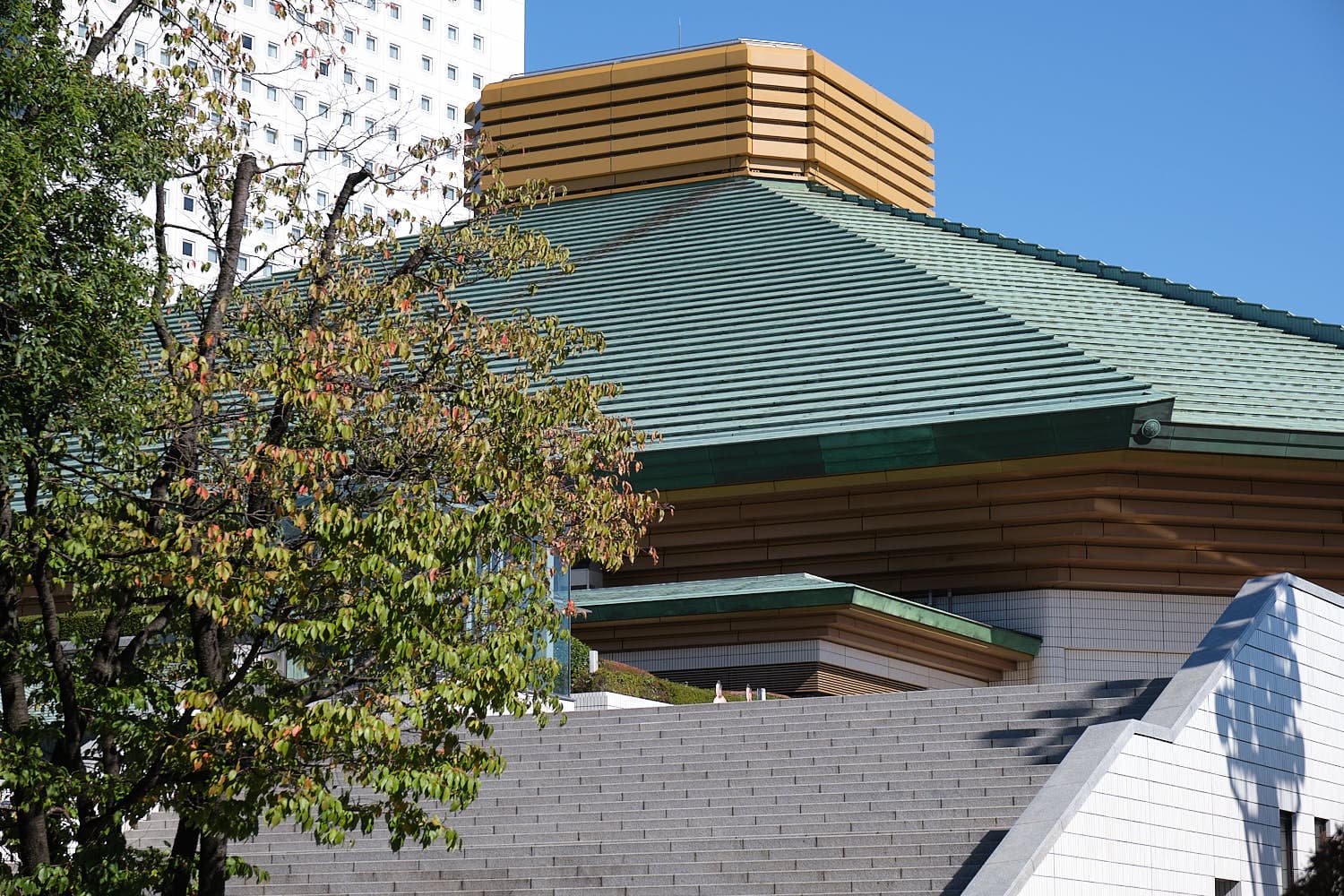
Ryogoku Kokugikan (両国国技館), often referred to simply as “Sumo Hall,” is the spiritual and physical headquarters of Japan’s national sport. Situated in the heart of the historic Ryogoku district, this massive indoor arena is the fourth iteration of the Kokugikan, opening its doors in 1985 to replace the aging Kuramae Kokugikan. While it serves as a multi-purpose venue for boxing and concerts, its primary identity is defined by the three honbasho (official sumo tournaments) it hosts annually in January, May, and September.
The Honbasho: A 15-Day Ritual
Each tournament lasts for 15 days, during which the neighborhood of Ryogoku is transformed. The atmosphere begins at the station, where massive nobori (colorful banners) bearing the names of top wrestlers flutter in the breeze, and the rhythmic sound of yagura-daiko (sumo drums) signals the start of the day’s bouts from a tower outside the arena. Inside, the matches progress through the day, beginning with the junior divisions in the morning and culminating in the highly anticipated top-tier Makuuchi matches in the late afternoon. For those visiting on non-tournament days, the Sumo Museum on the first floor offers a rotating selection of historical woodblock prints, ceremonial silk aprons (kesho-mawashi), and official ranking lists (banzuke) that date back centuries.
Securing a ticket during a tournament is a rite of passage. While standard stadium seating is available on the upper tiers, the most sought-after experience is the masu-seki—traditional box seats on the lower level. These are square, matted areas where four spectators sit on cushions, sharing tea and snacks in a communal style that has remained unchanged since the Edo period. For international visitors, it is important to note that tickets for the Tokyo tournaments typically sell out within minutes of being released online, often more than a month in advance.
Architecture and the Legendary Underground Kitchen
Architecturally, the Kokugikan is centered around the dohyo (the clay ring), which is considered sacred ground. Suspended directly above the ring is the tsuriyanane, a massive roof in the shinmei-zukuri style of Shinto shrines. This roof is notable because it is suspended from the ceiling by cables rather than being supported by pillars, ensuring that every one of the 11,000 spectators has an unobstructed view of the action. This design choice was a modernization of traditional sumo outdoor venues where pillars often blocked the sightlines of the audience.
One of the Kokugikan’s best-kept secrets lies beneath the stadium. In the basement, the arena houses a massive yakitori factory. It is the only stadium in the world with such a facility, established because yakitori (grilled chicken) is the traditional “good luck” food of sumo. Because chickens stand on two legs, they symbolize a wrestler remaining upright and not being thrown to the ground. During tournaments, the basement facility produces tens of thousands of sticks of chicken daily, which are sold in distinctive yellow boxes that have become an essential part of the Kokugikan experience. Additionally, during the tournaments, the basement cafeteria often opens to the public to serve chanko nabe, the high-protein stew that serves as the staple diet of the wrestlers.
| Station | Line(s) | Proximity |
|---|---|---|
| JR Ryogoku | Chuo-Sobu Line | West Exit (2-minute walk) |
| Ryogoku (Toei) | Oedo Line | A3 Exit (5-minute walk) |