Nezu Shrine
Nezu Shrine (根津神社) is frequently cited as one of Japan’s oldest and most historically significant Shinto sites, serving as a primary cultural anchor for the Yanaka district. Established according to legend nearly 1,900 years ago by the mythical prince Yamato Takeru, the shrine’s current architecture is a rare and vital testament to the grandeur of the early 18th century. Unlike many of Tokyo’s spiritual landmarks, which were lost to the Great Kanto Earthquake or the firebombing of World War II, the main structures of Nezu Shrine have remained entirely intact since 1706. This remarkable resilience has earned the entire complex a designation as an Important Cultural Property of Japan, offering visitors a rare opportunity to see authentic Edo-period craftsmanship in its original context.
Shogunate Architecture and the Azalea Hillside
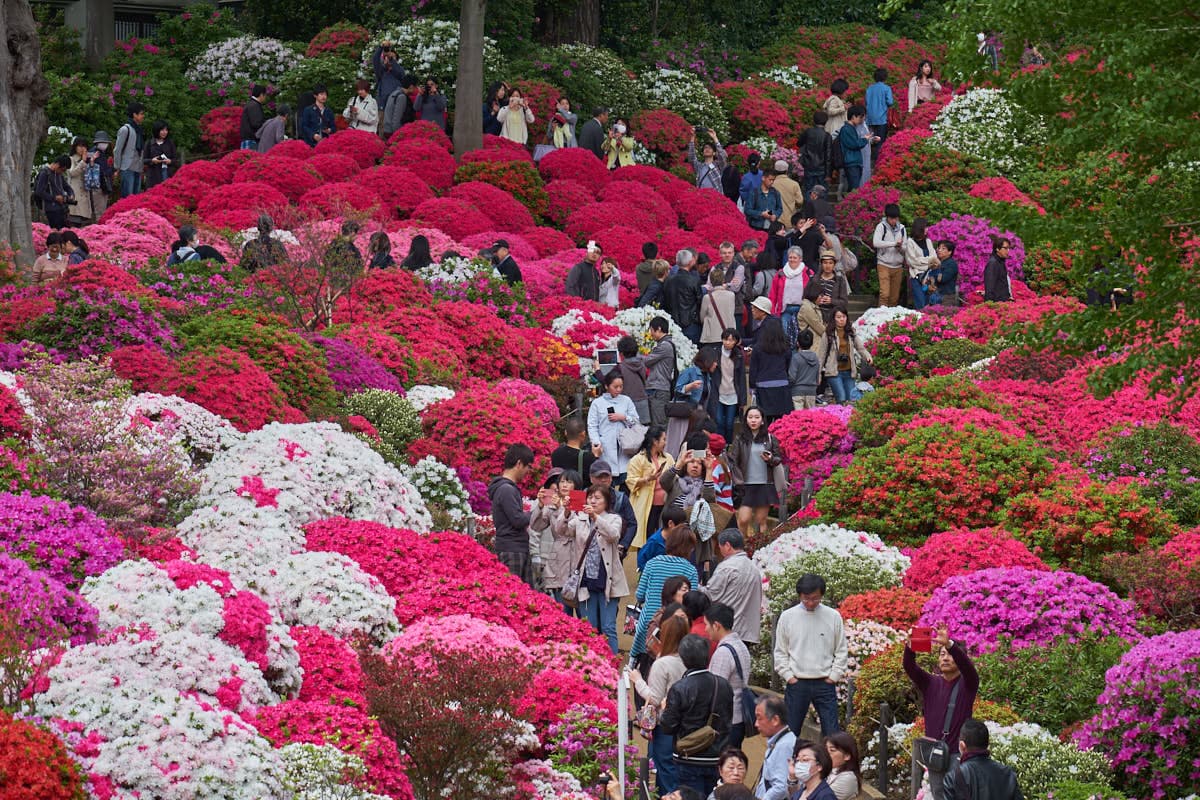
The current form of the shrine was commissioned by the fifth Tokugawa shogun, Tokugawa Tsunayoshi, to mark the occasion of his successor moving into the estate. The buildings are constructed in the Ishi-no-ma-zukuri style, a sophisticated architectural arrangement where the honden (main hall) and haiden (offering hall) are interconnected under a complex, unified roof system. The vibrant vermilion lacquer, intricate gold-leaf carvings, and heavy thatched roofs provide a striking visual contrast to the lush, forested hillside that surrounds the complex. This hillside is perhaps the shrine’s most famous feature during the spring months, as it is home to the Bunkyo Tsutsuji Matsuri (Azalea Festival). During this time, over 3,000 azalea plants from roughly 100 different varieties bloom in manicured mounds, creating a vibrant tapestry of pinks, purples, and whites that blankets the slope.
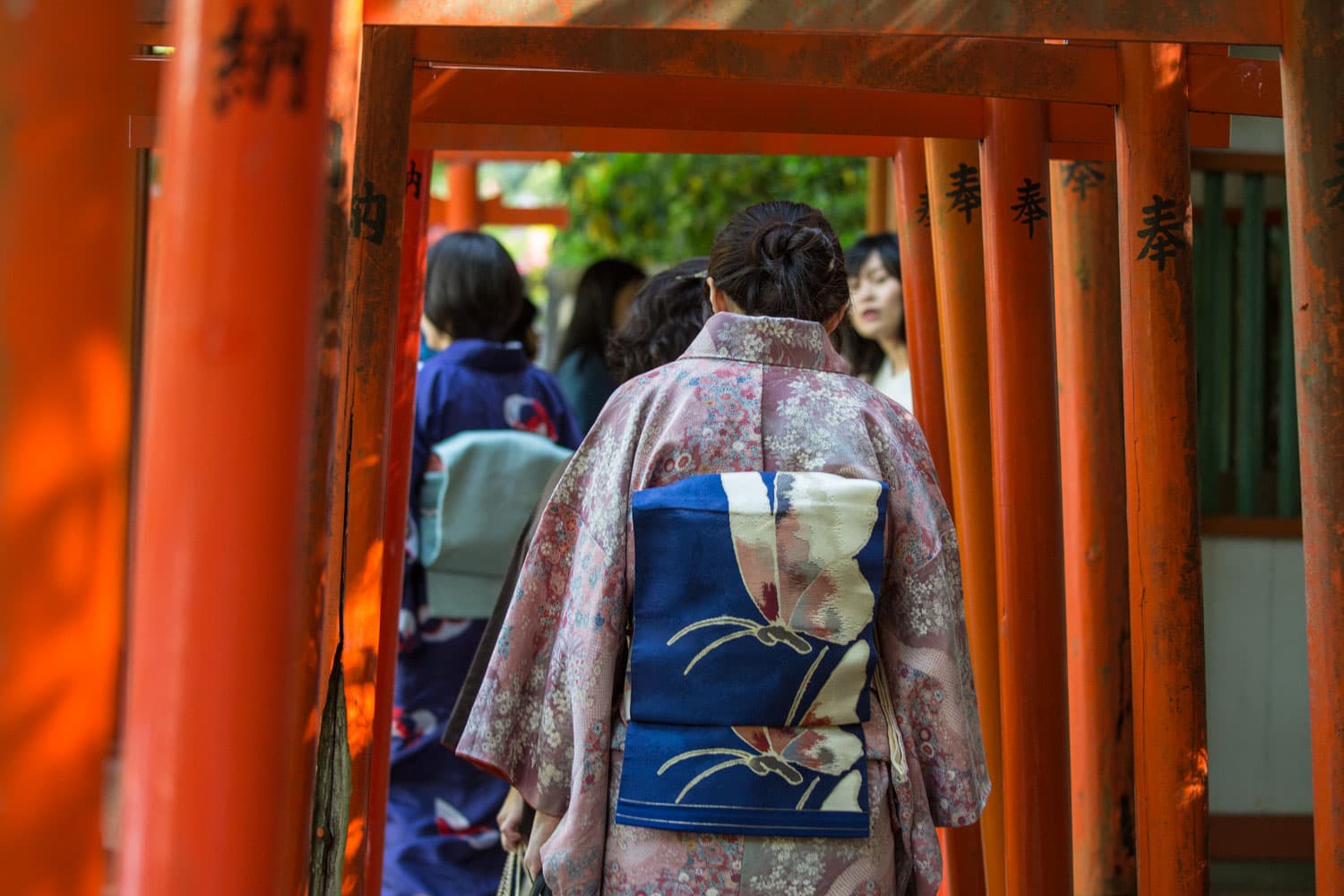
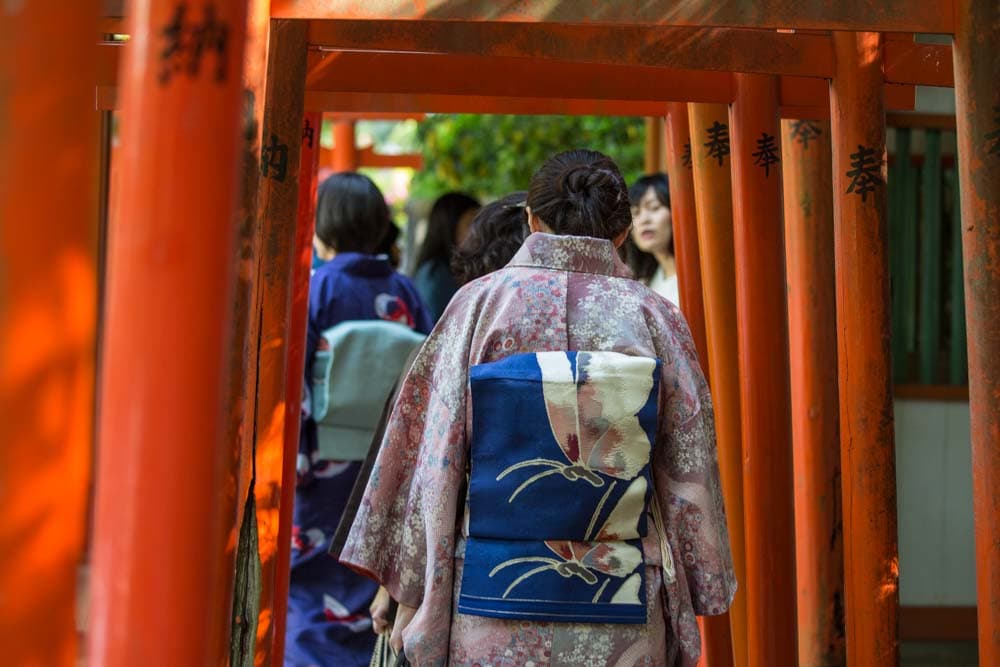
Winding through this floral hillside is the Senbon Torii, a dense tunnel of small vermilion gates that leads to the Otome Inari sub-shrine. While smaller in scale than the famous gates of Kyoto, the path offers pleasant journey through the gardens, providing unique vantage points over the shrine’s main halls and the central koi pond. Even outside of the blooming season, the shrine remains a peaceful sanctuary of the Yanesen neighborhood, characterized by its quiet “lull”. Whether visiting for the grand architectural legacy of the Tokugawa shogunate or the simple beauty of the torii-lined paths, Nezu Shrine remains one of the most rewarding and authentic cultural experiences in northern Tokyo.
| Visitor Information | |
|---|---|
| Address | 1-28-9 Nezu, Bunkyo-ku, Tokyo 113-0031 (Google Maps) |
| Opening Hours | 6:00 AM – 5:00 PM (Mar–Sept) / 6:00 AM – 4:30 PM (Oct–Feb) Closed: Open daily |
| Price | Free admission (Azalea garden entrance: ¥500 during festival) |
| Website | Visit Website |
| Access | ||
|---|---|---|
| Station | Line(s) | Access Details |
| Nezu Station | Tokyo Metro Chiyoda Line | 5-minute walk |
| Sendagi Station | Tokyo Metro Chiyoda Line | 5-minute walk |
| Todaimae Station | Tokyo Metro Namboku Line | 5-minute walk |