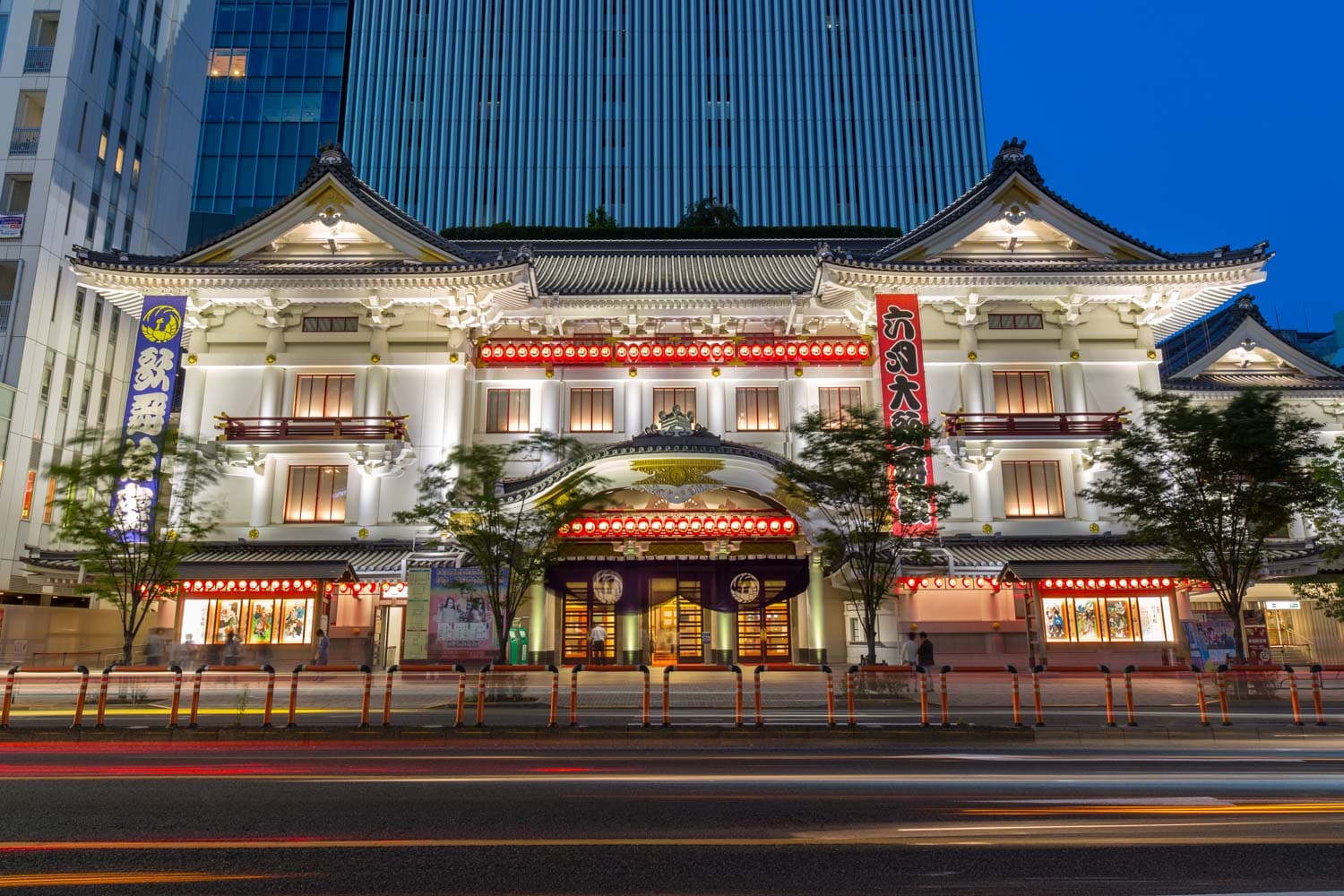
Kabuki-za
Kabuki-za (歌舞伎座) is the preeminent venue in Tokyo for Kabuki, hosting world-class performances on a near-daily basis. As a true icon of the Ginza district, the theater represents a bridge between the feudal artistry of the Edo period and the high-octane commercialism of modern Tokyo. The original Kabuki-za was constructed in 1889, but its history is one of resilience; the structure was lost first to a catastrophic fire, then to the Great Kanto Earthquake of 1923, and later to the air raids of World War II. After being rebuilt in 1950, the theater was eventually demolished in 2010 to undergo its most ambitious transformation—reopening in 2013 as part of a complex that integrates the traditional Momoyama-style aesthetic with a sleek, 29-story office tower known as Ginza Kabukiza Tower.
A Masterpiece of Heritage and Modern Design
The current iteration of the theater maintains the classical grandeur of its predecessors, featuring the iconic curved gables and tiled roofs that evoke the architectural spirit of the 16th century. Inside, the grand lobby is draped in vibrant red carpets and illuminated by traditional lanterns, creating a sense of ceremony long before the curtain rises. Beyond the main stage, the building serves as a cultural hub; the fifth floor houses the Kabukiza Gallery, which showcases costumes and props, while the basement features Kobikicho Square, a lively marketplace filled with Kabuki-themed souvenirs and snacks. For those who wish to delve deeper into the mechanics of the art form, the theater also offers a rooftop garden and a small sanctuary dedicated to the deities of the stage. You can also read more about the history and techniques in our guide to Kabuki Theatre.
Purchasing Tickets and the Single-Act Experience
Purchasing tickets for a performance at Kabuki-za can be done through two primary methods. For those who want the full experience—which typically includes two or three different plays and can last four to five hours—tickets should be reserved in advance through the official Ticket Web Shochiku portal. Prices vary significantly depending on seating, ranging from approximately ¥4,000 for upper-level seats to over ¥20,000 for prestigious box seats. For international visitors, renting an “Earphone Guide” is highly recommended; these provide a real-time English translation and explanation of the plot, stylized gestures, and historical context, ensuring the performance remains accessible despite the archaic language used on stage.
For travelers on a tighter schedule or budget, the Hitomaku-mi (Single Act) ticket is an exceptional option. This allows you to watch just one part of the program (usually about 60 to 90 minutes) for a fraction of the cost, typically between ¥1,000 and ¥2,000. These tickets are generally sold on the day of the performance at a dedicated box office to the left of the main entrance. While these seats are located at the very back of the theater, they offer a perfect, low-commitment introduction to the world of Kabuki. Whether you attend a full evening program or a quick single act, a visit to Kabuki-za remains an essential Tokyo experience.
| Visitor Information | |
|---|---|
| Address | 4-12-15 Ginza, Chuo-ku, Tokyo 104-0061 (Google Maps) |
| Opening Hours | Showtimes typically start at 11:00 AM and 4:00 PM (Varies by program) Closed: Open daily (Subject to performance schedule) |
| Price | Full Program: ¥4,000 – ¥20,000+ / Single Act: ¥1,000 – ¥2,000 |
| Website | Visit Website |
| Access | ||
|---|---|---|
| Station | Line(s) | Access Details |
| Higashi-ginza Station | Hibiya, Asakusa Lines | Directly connected via Exit 3 |
| Ginza Station | Ginza, Hibiya, Marunouchi Lines | 5-minute walk from Exit A7 |
| JR Yurakucho Station | JR Yamanote Line | 15-minute walk from the Ginza Exit |