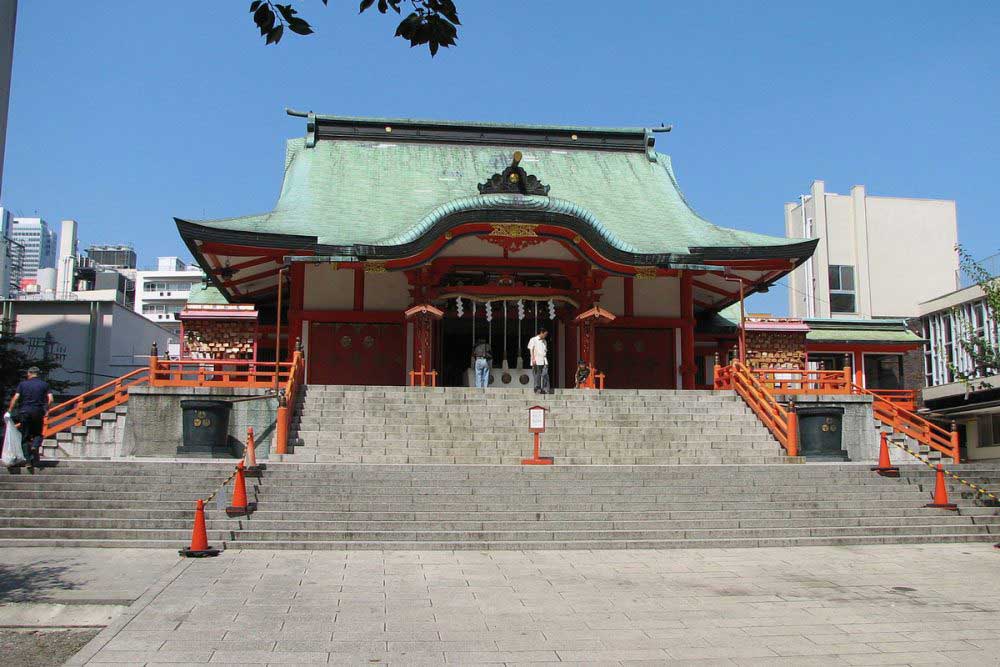
Hanazono Shrine
Tucked away behind the high-rise commercial buildings of Yasukuni Dori, Hanazono Shrine (花園神社) is a vibrant vermilion oasis that has stood as a spiritual landmark in Shinjuku since the early Edo period. Originally established in the mid-17th century, the shrine was relocated to its current site when the land was a lush flower garden belonging to the Hanazono family—a history preserved in its name, which translates to “Flower Garden Shrine.” Today, it serves as the primary protector of the district, specifically sought out by the local business community and the denizens of the nearby Kabukicho and Golden Gai entertainment quarters.
The Patron of Business and Performing Arts
While the main hall is dedicated to Inari, the deity of fertility and worldly success, the grounds house several significant sub-shrines. Most notable is the Geino Asakura Shrine, a small sanctuary dedicated to the performing arts. Because of Shinjuku’s long history as a hub for theater and nightlife, actors, musicians, and dancers frequently visit to leave offerings and pray for the success of their careers. The shrine grounds also feature a pair of impressive bronze lion-dogs (komainu) that were cast during the Edo period, serving as fierce guardians of the sanctuary’s entrance against the urban chaos of the surrounding metropolis.
The shrine is perhaps most famous for hosting the Tori no Ichi Festival every November. During this “Cock Fair,” the grounds are transformed into a bustling marketplace filled with stalls selling kumade—ornate bamboo rakes decorated with lucky charms, designed to “rake in” wealth and good fortune for the coming year. The event draws tens of thousands of visitors and is a defining cultural moment for the Shinjuku community. Whether you are visiting for the festival or seeking a moment of stillness amidst the neon lights, Hanazono Shrine remains one of the most significant and accessible spiritual centers in Tokyo.
| Visitor Information | |
|---|---|
| Address | 5-17-3 Shinjuku, Shinjuku-ku, Tokyo 160-0022 (Google Maps) |
| Opening Hours | Open 24 hours (Shrine office: 9:00 AM – 5:00 PM) Closed: Open daily |
| Price | Free admission |
| Website | Visit Website |
| Access | ||
|---|---|---|
| Station | Line(s) | Access Details |
| Shinjuku-sanchome Station | Marunouchi, Fukutoshin, Shinjuku | Exit E2 (Immediate access) |
| Shinjuku Station | JR Yamanote, Chuo, Shinjuku | East Exit (7-minute walk) |