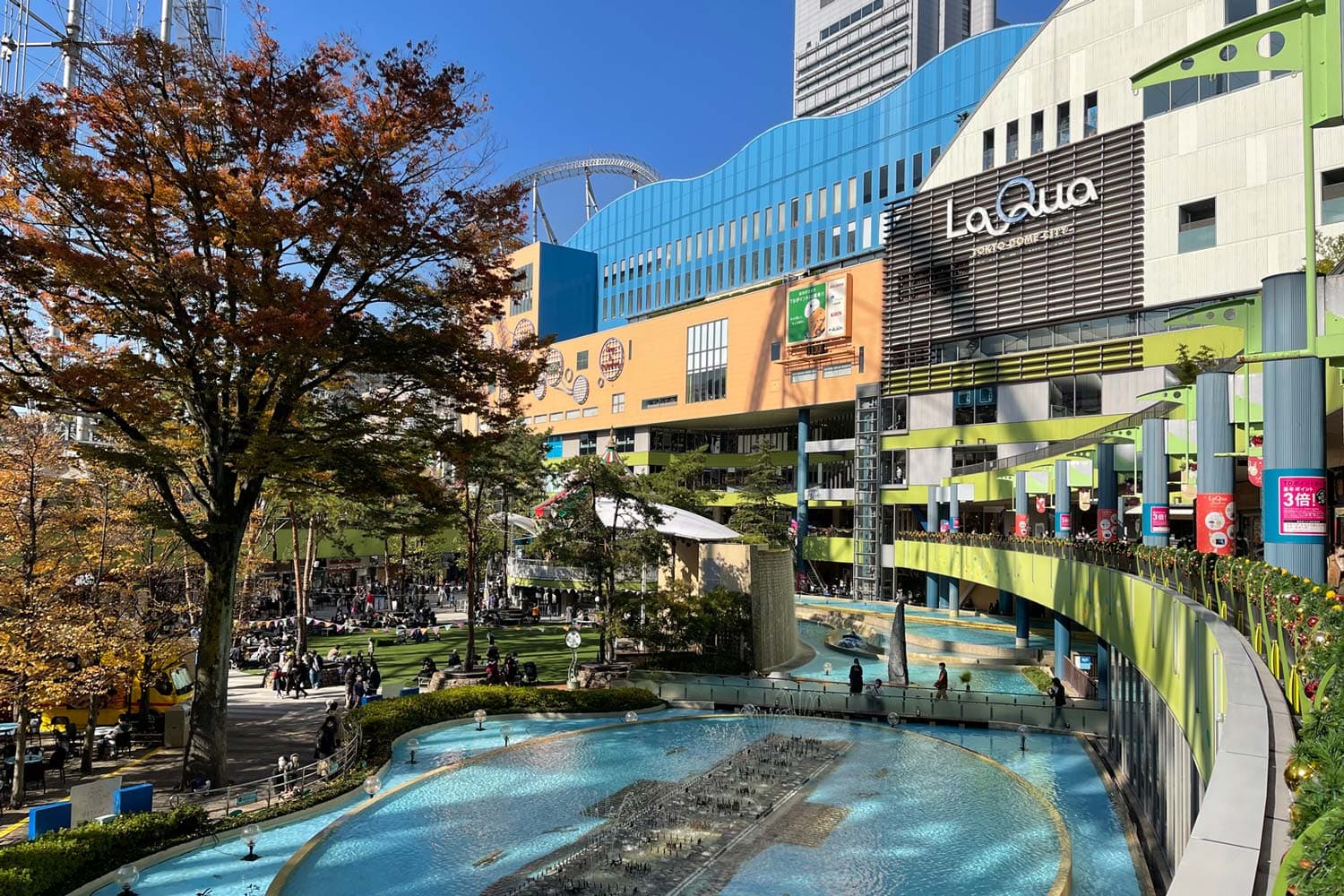
Tokyo Dome City
Tokyo Dome City is a massive, multifaceted entertainment complex located in Bunkyo Ward, serving as a year-round “city within a city” for sports fans, thrill-seekers, and wellness enthusiasts. At its heart stands the Tokyo Dome—affectionately known as the “Big Egg”—which is Japan’s first roofed stadium and the iconic home ground of the Yomiuri Giants baseball team. However, the “City” surrounding the dome is an expansive urban playground that seamlessly blends high-speed adrenaline with high-end relaxation.
Adrenaline and Innovation: The Amusement Complex
The most visible draw is the Tokyo Dome City Attractions, a unique “open-gate” amusement park. Unlike typical theme parks, it does not charge an admission fee, allowing visitors to stroll through the grounds for free and pay only for the individual rides they wish to experience. The skyline is dominated by the Thunder Dolphin, a white-knuckle roller coaster that reaches speeds of 130 kph and features a terrifying 80-degree drop. Its most famous engineering feat is its pathing: the coaster dives through a hole in the roof of the LaQua building and zips through the center of the Big-O, the world’s first centerless Ferris wheel. This architectural marvel offers a 15-minute rotation with high-tech touchscreens inside the gondolas, providing a serene, slow-motion contrast to the screaming riders passing through its core.
Families and fans of Japanese pop culture are often drawn to Theatre G-Rosso, the specialized venue for “Super Sentai” (superhero) shows, which have been a staple of the area for decades. Additionally, Gallery AaMo provides a rotating schedule of sophisticated exhibitions ranging from modern art to popular media archives. Between the various attractions, the complex is peppered with over 60 restaurants and specialized retail outlets, making it a self-contained ecosystem that can easily fill an entire day.
Wellness and Culture in the Heart of the City
For those seeking a more sedate experience, Spa LaQua is widely considered one of Tokyo’s premier urban wellness retreats. This upmarket spa utilizes natural hot spring water pumped from 1,700 meters underground. It features a sprawling array of indoor and outdoor baths, saunas, and specialized “Stone Saunas” (Ganban-yoku), all designed in a lush, tropical-resort style. The facility is a favorite for locals looking to escape the city’s frantic pace without leaving the Yamanote loop, often staying late into the night thanks to its 22-hour operating schedule.
Logistically, the area is one of the most accessible in Tokyo. It is situated at the intersection of several major transit lines, making it an easy hop from central hubs. It is particularly spectacular during the winter months when the entire area is transformed by the Tokyo Dome City Winter Illumination, one of the largest and most elaborate light displays in the capital, featuring themed light tunnels and synchronized music performances.
| Station | Line(s) | Best For… |
|---|---|---|
| Korakuen | Marunouchi, Namboku Lines | Direct access to LaQua and Spa |
| Suidobashi | JR Chuo-Sobu, Mita Lines | Main Stadium and Amusement entry |
| Kasuga | Oedo, Mita Lines | North Entrance and Gallery AaMo |