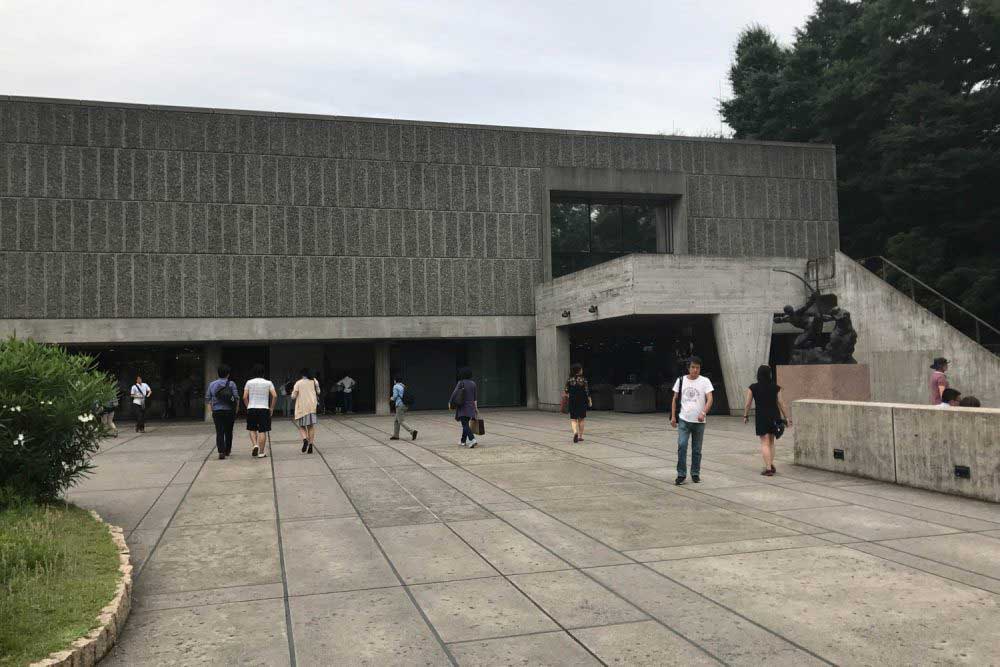
National Museum of Western Art
The National Museum of Western Art (国立西洋美術館) was established in 1959 from the art collection of Matsukata Kojiro. Matsukata, a wealthy industrialist, amassed thousands of Western works with the dream of creating a museum in Japan that would bridge the gap between European and Japanese artistic traditions. Today, the museum stands as a resolute guardian of this legacy in Ueno Park, housing over 6,000 pieces ranging from the late Middle Ages to the early 20th century. It remains the only national institution in Japan dedicated entirely to Western art, offering a sophisticated cultural “lull” for visitors seeking a different perspective within the city’s museum district.
The building itself is a masterpiece of technical ingenuity, designed by the world-renowned architect Le Corbusier. In recognition of its significance to Modernist architecture, the main building was designated a UNESCO World Heritage site in 2016. Today the museum’s most famous art pieces are by the French sculptor Rodin. Three of his works can be seen outside the museum: The Thinker, The Burghers of Calais, and the monumental Gates of Hell. These bronze figures establish a powerful “vibe” before you even step through the doors, serving as a visceral introduction to the high-value collection housed within.
Inside, the galleries provide a meditative space where light and shadow play across masterpieces by Monet, Renoir, Rubens, and Van Gogh. The museum’s layout was based on Le Corbusier’s concept of a “Museum of Unlimited Growth,” intended to expand outward in a spiral as the collection grew. While it frequently hosts major international traveling exhibitions, the permanent collection remains the heart of the experience. Whether you are admiring the brushwork of a French Impressionist or the brutalist geometry of the concrete columns, the museum offers a unique architectural and artistic detour that perfectly captures the international spirit of modern Tokyo.
| Visitor Information | |
|---|---|
| Address | 7-7 Ueno Park, Taito-ku, Tokyo 110-0007 (Google Maps) |
| Opening Hours | 9:30 AM – 5:30 PM (Fri/Sat until 8:00 PM) *Closed Mondays. |
| Price | ¥500 (approx.) |
| Website | Official Website |
| Access | ||
|---|---|---|
| Station | Line(s) | Details |
| Ueno Station | JR Lines / Ginza / Hibiya | 1-minute walk from the Park Exit (JR). |
| Keisei Ueno | Keisei Line | 7-minute walk. |