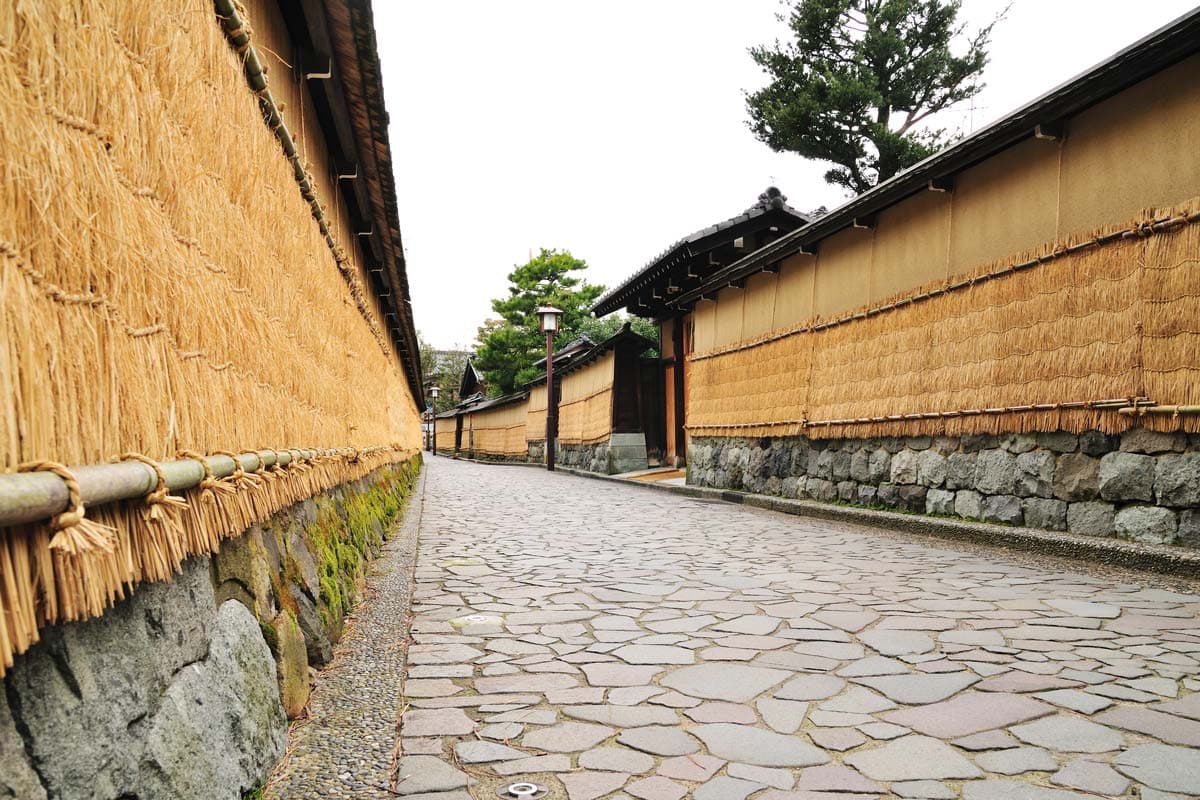
Nagamachi Samurai District
Nagamachi (長町) serves as a pristine window into the feudal hierarchy of Kanazawa. Situated just beyond the defensive perimeter of Kanazawa Castle, this district was once the residential enclave for the city’s middle- and high-ranking samurai families. Today, it remains one of Japan’s most evocative historical neighborhoods, defined by its winding cobblestone paths, rushing canals, and iconic ochre-colored earthen walls (tsuchikabe).
One of the district’s most unique visual features appears in winter: the komo. These are traditional straw mats hung over the earthen walls to prevent the mud from cracking and peeling during the harsh freeze-thaw cycles of the Hokuriku region. The sound of the Onsho and Kuratsuki canals—which once transported goods and protected the castle from fire—provides a rhythmic soundtrack as you wander past tile-roofed gates and hidden courtyards.
The crown jewel of the area is the Nomura Clan Samurai Home. For a small admission fee, visitors can enter a restored residence featuring exquisite heirlooms and a multi-tiered garden that has been ranked among the top in the country. The garden uses the local canal water to create a stunning series of small waterfalls and ponds. Nearby, the Shinise Kinenkan Museum (entry is a modest 100 yen) offers a glimpse into the lives of the wealthy merchant class who supported the samurai elite. Housed in a former pharmacy, it features a reconstructed Edo-period shop floor, a tea room, and displays of local Kaga handicrafts like temari balls and silk painting.
For those looking to explore without spending a yen, the Takada Family House and the Kaga-Hanshi Stables offer free admission. These sites illustrate the lifestyle of mid-ranking retainers, showcasing the functional yet aesthetic balance of their private quarters and gardens. Nagamachi is best explored on foot, allowing the contrast between the rigid samurai gates and the delicate greenery of the residential gardens to fully sink in.