Rikugien Cherry Blossom Light-Up
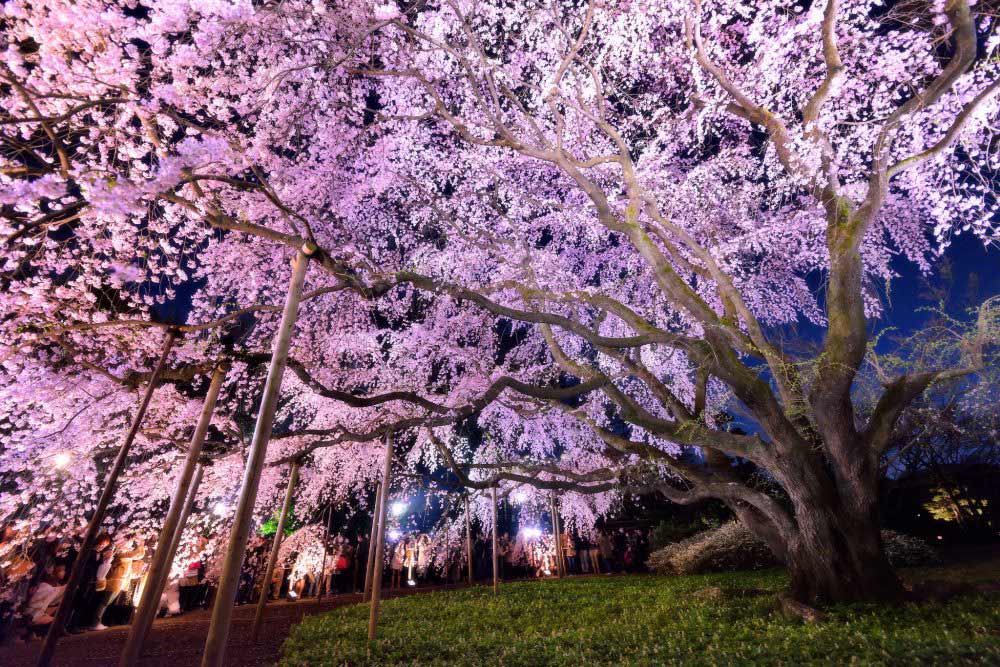
Rikugien Garden, a designated Special Place of Scenic Beauty, hosts an annual evening illumination event to showcase its seasonal flora. The garden was established around 1700 by Yanagisawa Yoshiyasu, an aide to the fifth Tokugawa shogun, and was designed as a “strolling” garden reflecting scenes from classical Waka poetry. The spring light-up typically begins at sundown and follows a designated one-way route to manage the large volume of visitors. While the garden contains various cherry species, the primary focal point is the large weeping cherry tree (shidarezakura) situated near the entrance. This specimen stands approximately 15 meters tall and its branches extend 20 meters wide, creating a waterfall-like effect of blossoms that are highlighted by floodlights against the dark evening sky.
In addition to the central weeping cherry, the illumination extends to other parts of the 8.7-hectare grounds, including the stone bridges and the central pond, which reflect the lit trees and traditional architecture. The event provides a rare opportunity to view the Edo-period landscape design after dark, as the garden usually closes in the late afternoon. For a more efficient entry, visitors are encouraged to use the Somei Gate when it is opened specifically for the festival, as it is located closer to Komagome Station than the main gate. Arriving shortly before sunset allows for observing the garden’s transition from daylight to the illuminated nightscape. Visitors should also note that the use of tripods and monopods is generally prohibited during the light-up period to maintain the flow of traffic along the narrow, fixed paths. See here for a run-down of places to see the cherry blossoms in Tokyo.
Address6-16-3 Hon-Komagome, Bunkyo, Tokyo, 113-0021, Japan (Google Maps)
CategoryNature
Japanese六義園の桜ライトアップ
Official URLOfficial websiteLink