
Aomori Nebuta Matsuri
The Aomori Nebuta Matsuri (青森ねぶた祭) is a premier summer event held from August 2 to 7. While it originated from Tanabata traditions intended to wash away “sleepiness” (nemuri-nagashi) before the harvest, it has evolved into one of Japan’s most visually stunning festivals. The event is famous for its massive, humanoid floats depicting mythical gods, legendary warriors, and kabuki characters. These floats are masterfully constructed using wire frames and wood, wrapped in vibrant washi paper, and illuminated from within to create a glowing, translucent effect that is a favorite of photographers worldwide. You can view archives of the award-winning floats on the official website.
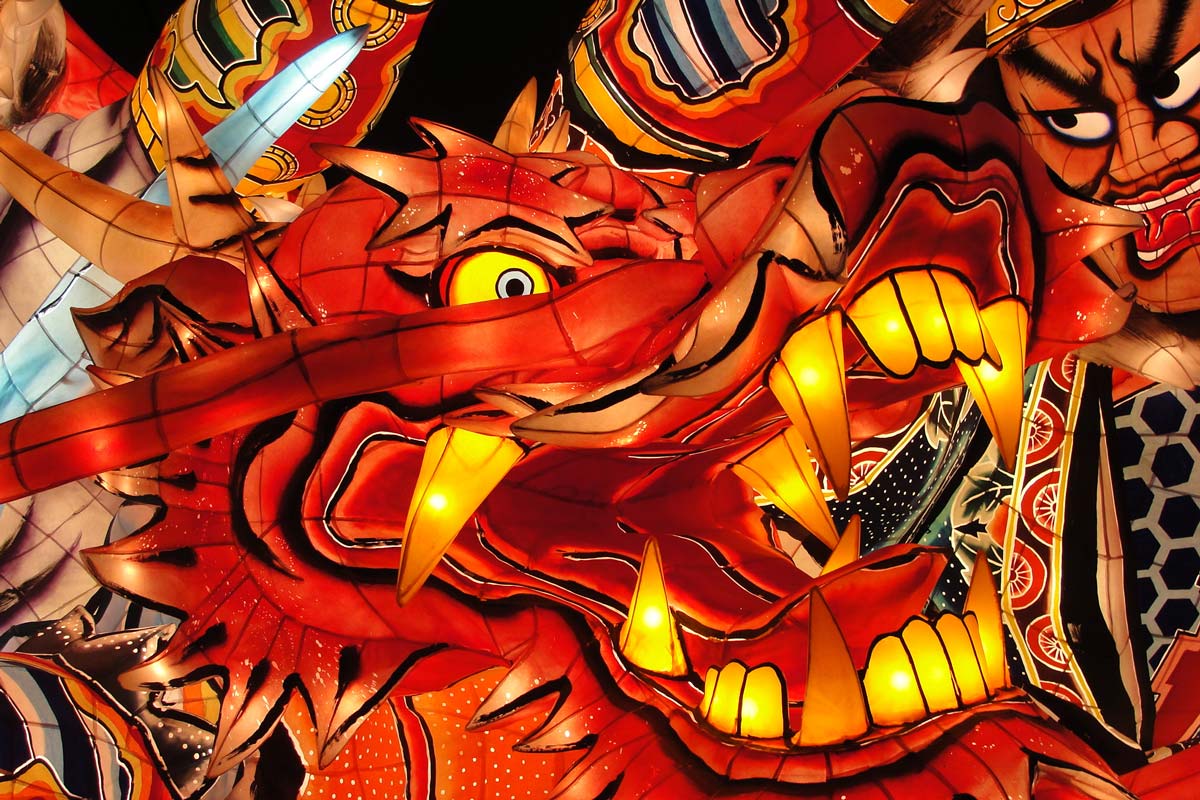
The festival reaches its peak from August 4 to 6, when more than 20 large-scale floats parade through the city each evening starting at 7:10 PM. On the final day, August 7, the parade moves to an afternoon time slot (1:00 PM), followed by a spectacular evening finale where the top-rated floats are placed on boats and paraded through Aomori Harbor alongside a massive fireworks display. See the official English guide for the latest route maps and schedules.
A unique feature of the Aomori festival is the haneto dancers. Unlike many festivals where participation is restricted to professional groups, anyone is welcome to join the dancing provided they are wearing the official haneto costume. These traditional outfits, characterized by colorful sashes and small bells (suzu), can be rented or purchased at local department stores. Participants dance to the thunderous beat of giant taiko drums and the piercing sound of bamboo flutes, chanting “Rassera, Rassera!” as they move. See this page for costume and rental information (Japanese only).
Due to the festival’s immense popularity, hotel accommodations in Aomori City are often booked a year in advance, leading many visitors to stay in nearby cities like Hirosaki or Hachinohe and commute via the Shinkansen or local lines. While the evening processions are free to watch from the sidewalk, the most unobstructed views are from the reserved tiered seating, which is sold via lottery starting in late June. If you plan to join as a haneto dancer, ensure your costume is worn correctly, as “imitation” outfits or casual clothing are strictly prohibited in the designated dance areas to maintain the festival’s traditional integrity.
Address青森駅, 1-1 Yanakawa, Aomori, Aomori, 038-0012, Japan (Google Maps)
CategoryJapanese Festivals
TagsNebuta
Japanese青森ねぶた祭
Official URLOfficial websiteLink